


Budgeting as a Couple When One of You Earns Less

Budgeting as a Couple When One of You Earns Less
Two people, two paychecks, one set of bills. When the paychecks are different sizes, the question of who pays what stops being arithmetic and starts being about fairness - and that is where most couples get stuck.
Budgeting as a couple comes down to two ways of dividing shared expenses, the math behind each, and the parts of a couple's budget that matter more than the split itself. How you manage your money together matters more than which of the two systems you pick. This guide is written to be read by both partners at once.
What does budgeting as a couple with different incomes actually mean?
Managing money together means agreeing on three things: which expenses are shared, how each of you funds them, and how much money each of you keeps that the other does not get a say in. The income gap does not decide any of this. Your agreement does.
Most conflict in a couple's budget comes from the third item being left undefined. Shared expenses get covered, and then both people quietly wonder whether what is left over is fair.
Why does an income gap make budgeting as a couple harder?
Because money in a relationship carries meaning beyond the balance. The person earning less often feels they are contributing less as a person, and the person earning more often feels watched - as if every purchase is a statement about who is in charge.
Neither reaction is irrational, and neither goes away on its own. What tends to happen instead is avoidance: the topic gets skipped, small resentments accumulate, and the first real conversation about money happens during an argument about something else.
The gap itself is rarely the problem. How the household handles it is.
What do couples usually get wrong when one earns less?
The most common mistakes are structural rather than emotional. Each one produces a predictable result:
- Forcing an even dollar split. The lower earner carries a much heavier load relative to what they bring in.
- Never discussing money directly. Debts and financial goals stay hidden until they surface at the worst moment.
- Leaving no personal spending money. Every purchase turns into a request.
- Letting one person make all financial decisions. The other loses both agency and practice.
- Ignoring unpaid work. Whoever handles childcare, caregiving, or the household feels invisible in the numbers.
- Overpaying out of guilt. The higher earner covers everything, and the other's sense of contributing erodes.
None of these are caused by the income difference. They are caused by a structure nobody chose deliberately.
How do you calculate your monthly income as a couple?
Add up how much money each month lands in your accounts after taxes and payroll deductions, for both partners, from every source. Gross salary is the wrong number to plan with, because you never see it. This combined take-home figure is what every later decision rests on.
Count salary or wages, freelance income, benefits, and any regular investment income. Subtract federal and state income tax, Social Security, and Medicare. What remains is the monthly income you plan with.
Do this together, with both sets of pay statements open, and redo it whenever income changes. A budget built on last year's income is budgeting for last year's life.
If you have never built a household budget from scratch, our guide on how to build a family budget covers the mechanics, and the family budget template gives you a structure to fill in.
How should you sort expenses before you split them?
Sort every household expense into three buckets: fixed, variable, and discretionary. Do this before you divide anything - you cannot agree on who pays what until you agree on what counts as a shared expense.
Fixed expenses stay the same each month: rent or mortgage, auto loan payments, insurance premiums, internet and phone.
Variable expenses are necessary but move around: groceries, utilities, gas and transit, out-of-pocket healthcare.
Discretionary expenses are wants: restaurants and delivery, clothing, hobbies, travel.
Nearly every argument about overspending happens in the third bucket of the budget. When both of you are pointing at the same list, the conversation moves from blame to a decision about a number.
How do you split bills: 50/50 or by income?
There are two workable systems. An equal split has each partner pay the same dollar amount toward shared expenses. A proportional split has each partner pay the same share of their own income, so the dollar amounts differ but the strain does not.
With similar incomes, the two produce almost the same result and the equal split is simpler. Once one income is meaningfully larger, the equal split shifts real pressure onto the lower earner while the higher earner barely feels it.
Neither one is morally superior. They optimize for different things: an equal split for simplicity, a proportional split for equal strain.
How do you calculate a proportional split?
Divide each person's take-home pay by the combined take-home pay to get their share, then bill each person that share of every joint expense. The formula is: individual share x shared expense = what that person pays.
Say one partner brings home $4,000 a month and the other brings home $2,000. Combined take-home is $6,000. The first partner's share is two thirds, the second partner's is one third.
Now say the monthly expenses you share - rent, utilities, groceries, insurance - come to $3,000 a month:
- Partner A pays two thirds of $3,000 = $2,000
- Partner B pays one third of $3,000 = $1,000
Both of them spend exactly half of their own take-home pay on the household. Partner A keeps $2,000 for personal spending and savings; Partner B keeps $1,000. The dollar figures are different. The pressure is identical.
What does an equal split look like with the same numbers?
Using the same $6,000 household and the same $3,000 in monthly expenses, an equal split has each partner paying $1,500. That is where the imbalance shows up.
Partner A, earning $4,000, spends 37.5% of take-home on the household and keeps $2,500. Partner B, earning $2,000, spends 75% and keeps $500. One person has five times more discretionary money than the other, out of a household where the earnings gap was two to one.
That is the mechanism behind the resentment. Partner B is not overspending or underperforming - they are absorbing a structural disadvantage that looks like fairness on the invoice.
Same household, two systems:
| Partner A ($4,000) | Partner B ($2,000) | |
|---|---|---|
| Equal split | pays $1,500 - keeps $2,500 - 37.5% of income | pays $1,500 - keeps $500 - 75% of income |
| Proportional split | pays $2,000 - keeps $2,000 - 50% of income | pays $1,000 - keeps $1,000 - 50% of income |
Which split should you choose?
Choose the equal split when your incomes are close - within roughly a fifth of each other - and you would rather not track percentages. Choose the proportional split when one income is clearly larger, when the lower earner has little left after shared costs, or when bills have started to feel unfair to either of you.
A practical test: run both versions on your real numbers, as in the table above, and look at what each of you keeps. If the leftover amounts are wildly different, the equal split is doing damage you have not named yet.
Budgeting as a couple runs on transparency: whichever budget approach you pick, write it down and keep the calculation visible to both partners. A split neither person can reproduce on paper stops feeling fair the moment money gets tight.
What counts as a shared expense?
Shared expenses are the ones the household would still have if one of you were away for a month: housing, utilities, groceries, shared insurance, joint transportation, agreed savings goals, and subscriptions both of you use. Not every dollar has to be shared - everything else is personal.
Personal clothing, individual hobbies, gifts, one partner's commute if the other works from home - these stay on individual accounts and out of the split. Disagreements here are worth having explicitly, once, rather than repeatedly at the checkout.
Pre-relationship debt is the common gray area. Legally it belongs to whoever took it on. Practically, the minimum payments drain the household either way, so many couples fund the payoff proportionally as a shared line.
Which account setup makes a split easier to run?
The setup that removes the most friction is one joint account for shared expenses plus one personal account each. Both partners transfer their share of the funds into the joint account on payday, and whatever stays in the personal accounts requires no explanation to anyone.
Combining finances fully into a single account is simpler to administer and works when both partners trust each other completely and spend similarly. With a wide income gap, though, it tends to produce the dynamic where the lower earner feels they need permission for ordinary purchases.
Keeping everything separate and settling up monthly gives maximum autonomy and the most bookkeeping. Our guide on joint versus separate accounts compares all three setups.
Why does each partner need money of their own?
Because without it, the lower earner loses the ability to make any independent financial decision, and that changes the relationship more than the income gap ever will. The effects run in both directions: one partner grows dependent and quietly anxious, the other drifts into the role of gatekeeper. Money you do not have to justify is what keeps two adults in the household, rather than one adult and one dependent. Why budgets with no personal spending fall apart covers the mechanism in full.
How much money should each partner keep to spend and save on their own?
Fund it as a fixed line in the budget, after shared expenses and savings, and split that line equally - the same dollar amount for each partner, regardless of who earned more. A modest single-digit percentage of combined take-home pay is a reasonable starting point.
In the $6,000 household above, setting aside $600 a month means $300 each. Both partners spend theirs however they want and neither owes the other an accounting.
The amount matters less than the two rules attached to it: identical sums, and no questions. An unequal personal allowance reintroduces the earnings hierarchy at exactly the point where it does the most harm.
How do you avoid the asking-for-permission dynamic?
Automate the personal transfers so the money is already in each account before either partner thinks about spending. The permission dynamic is a plumbing problem, not a communication problem, and it responds to plumbing fixes.
It forms gradually: one partner starts checking before buying anything non-essential, the other starts commenting on purchases. Neither set out to create the pattern - it grew out of the account structure.
When personal money arrives on payday like any other fixed expense, "is it okay if I buy this?" stops being a financial question, because the answer was settled a month in advance.
How do you set shared financial goals when incomes differ?
Fund shared goals with the same percentages you use for shared bills, and rank the goals together before assigning any money to them. If one partner covers two thirds of the rent, they cover two thirds of the emergency fund contribution.
Start by setting aside money for an emergency fund: three to six months of essential household expenses, in savings you can reach quickly. Then high-interest debt, then medium-term goals - a move, a car, a trip.
Most goal conflict is a ranking problem in disguise. One partner wants the debt gone, the other wants a down payment. List every goal, including the ideas you have not priced yet, order them together, and give each one a funding percentage so neither person's priority gets dropped.
How do you protect the lower earner's retirement?
Treat retirement contributions as a shared goal funded from shared money, not as something each partner handles out of their own leftover savings. Otherwise the earnings gap compounds for decades and turns into a wealth gap that outlasts any monthly budget.
This is the part couples most often miss. Shared bills get divided carefully, and then retirement accounts grow at whatever rate each individual paycheck allows. Thirty years later, one person has retirement security and the other does not.
Two straightforward fixes: contribute to both partners' retirement accounts from the joint pool, and open a retirement account in the name of a partner who is out of the workforce.
When is splitting by income the wrong answer?
Sometimes it is. Three situations where an income-based split solves nothing or hides something:
When your incomes are close. If you earn within a fifth of each other, percentages add bookkeeping without changing outcomes. Split evenly and spend the effort elsewhere.
When the gap exists because one of you does unpaid work. If one partner reduced hours or left a job to handle childcare, caregiving, or the household, income shares misdescribe the situation entirely. On paper the arrangement becomes 100/0. In reality both partners are working, and one is doing work that would cost real money to replace. Here the household budget should fund an equal personal allowance for both, keep both names on accounts, and continue retirement contributions for the partner who stepped back. Running a strict proportional split in this case measures the wrong thing.
When one partner controls the other's access to money. If one person cannot see the accounts, needs sign-off on ordinary purchases, is discouraged from working, or has found debt taken out in their name, no split will fix that. Income differences are a circumstance; controlling access to money is a behavior. If that describes your household, the National Domestic Violence Hotline (1-800-799-7233) offers private support, and a practical first step is opening an individual account in your own name.
Does it matter whether the gap is temporary or permanent?
Yes, mostly in how formal the arrangement needs to be. A temporary gap - school, parental leave, a job search - works with a proportional split and an agreed end date, because both partners know the numbers will move. Set a review date, and if student loans are involved, agree now on who repays what later.
A permanent gap, where one partner works in a lower-paying field by choice or circumstance, needs a written plan: a contribution structure, equal personal allowances, retirement funded for both, and an annual review of the finances rather than a renegotiation every time something shifts.
The difference is not the math. It is whether you are building a bridge or a road.
How do you start the money conversation without it turning into a fight?
Open with ideas about the future rather than figures. "What do we want our finances to look like in three years?" invites a shared answer; "here's what I make and here's what you make" invites a defense.
Pick a neutral time and place. A relaxed evening works better than the moment a bill arrives, and both partners should arrive with their own numbers already gathered, so nobody is discovering anything under pressure.
Once you both know what you are aiming at, budgeting as a couple becomes a way to manage your money toward it instead of a scoreboard.
What should a monthly budget check-in cover?
Keep it to half an hour with the same five items each time: what went well, actual spending versus plan, anything large coming up next month, progress on goals, and one category where you could save money.
Start with wins, genuinely - a paid-off card, a month under budget on groceries. Meetings that open with a problem get avoided within three months, and a short check-in that reliably happens beats a long one that keeps getting postponed.
Which phrases help, and which ones make it worse?
Helpful phrasing describes your own state and points at a shared goal; unhelpful phrasing generalizes about the other person or ends the conversation.
Worth using:
- "I feel uneasy when we talk about the credit card, because..."
- "Our goal is the emergency fund. How do we get there faster?"
- "What would make you feel more financially secure?"
Worth dropping:
- "You always spend too much." - an accusation plus a generalization
- "That's your debt, not ours." - draws a line through the household
- "We can't afford it." - ends the discussion without exploring anything
If either of you finds yourself saying some version of "it's always even, and I earn much less," that is not a tone problem. It is the split telling you it needs to change.
What are the signs that financial resentment is building?
Resentment shows up as behavior long before it shows up as a conversation. Watch for these:
- Money conversations get avoided entirely. Quiet is not agreement.
- Spending happens in secret. Usually a sign that someone feels they have no legitimate money of their own. Our guide on financial infidelity and hidden debt covers what to do when it surfaces.
- Comments about the other person's purchases. "Must be nice" is a symptom.
- Scorekeeping. Mental tallies of who paid for what, produced during unrelated arguments.
- Monitoring the lower earner's spending. Small purchases getting reviewed is a structural failure, not a discipline issue.
Each of these responds better to a change in the budget than to a promise to communicate better.
When should you bring in a professional?
Bring in help when the same money argument repeats without resolution, when one partner is withholding financial information, or when a major life change has broken the structure you had.
A financial counselor works on the mechanics: budgets, debt, planning. A financial therapist works on the behavior behind money conflict. Sliding-scale nonprofit credit counseling exists for households that cannot pay full rates.
Needing outside help is not evidence that the relationship is failing. Managing money together is one of the hardest things two people coordinate.
Does marriage change how you should budget?
It changes the legal backdrop more than the monthly mechanics. Married couples can file taxes jointly, and assets acquired during the marriage are generally treated as marital property - protection cohabiting partners do not automatically have.
Unmarried partners file separately, have no automatic inheritance rights, and own what is in their own name. That matters most when one partner earns much less or contributes mainly through unpaid work.
If you are not married and one income is significantly larger, a written agreement about property and contributions is worth considering. Our guide on prenups and financial agreements explains what these documents cover.
Related guides
- Joint vs. separate accounts for couples - structuring the accounts behind your split
- Financial infidelity and hidden debt - when secret spending surfaces
- Budgeting for childcare costs - childcare when one income is smaller
- Elder care and the family budget - caring for aging parents, including lost income
- Prenups and financial agreements - legal clarity for couples with an earnings gap
- Budget changes after having a baby - how a new child reshapes the budget

Denis Goncharenko
Head of Content
Editorial Policy: no secondary statistics. Every claim is linked to an official source and dated — datasets and methods are open for review.

Was this article helpful?
Same blogs
Why Car Insurance Went Up and What Actually Moves the Premium
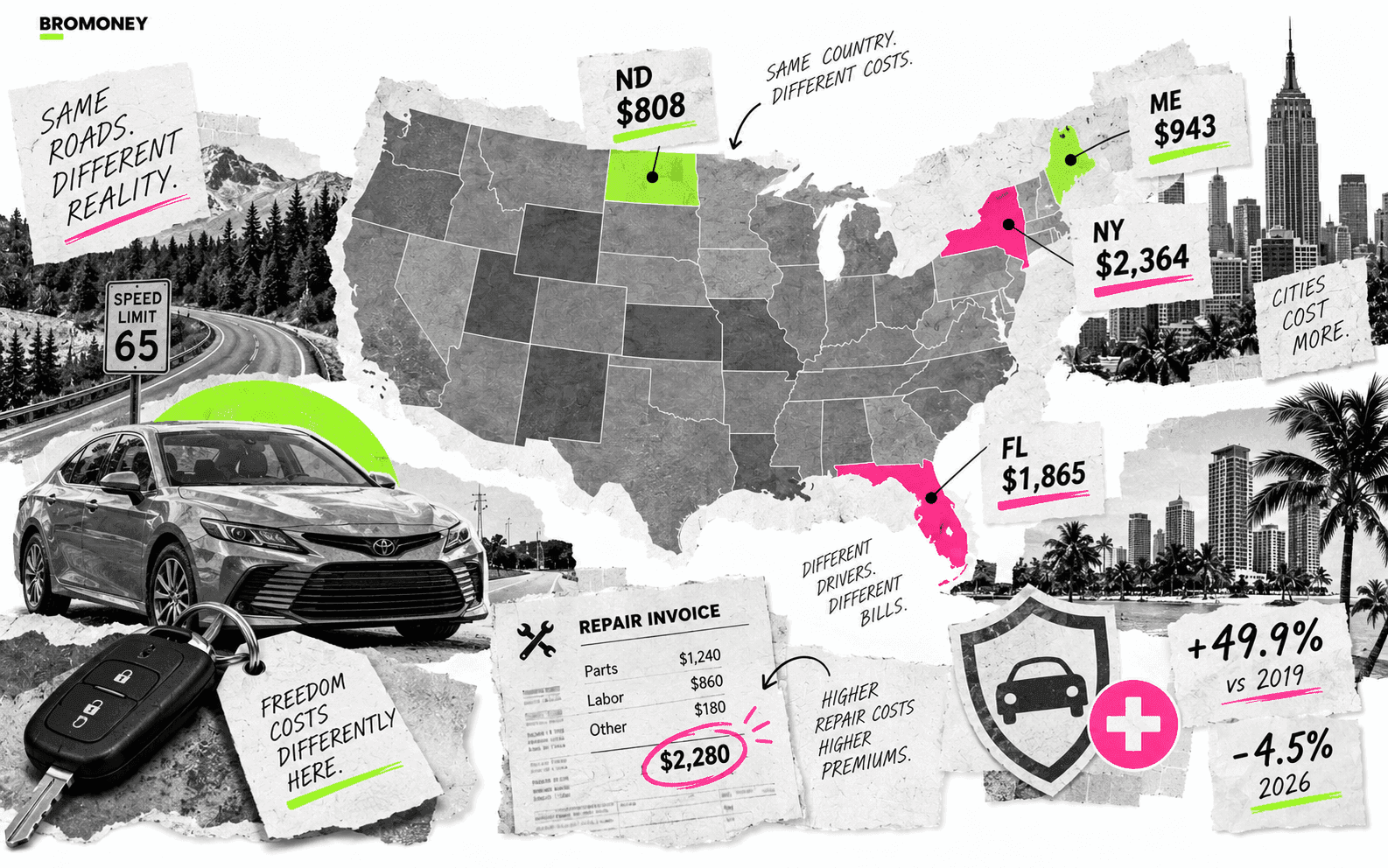
Car insurance spending rose 12.3 percent in 2024, one of only two costs BLS called statistically significant. NAIC's 2023 state averages, why rates are falling even as the level sits 49.9 percent above 2019, what actually drives claims costs, and which levers on your policy are worth checking.

Stop Blaming the Latte: Impulse Buying Isn't the Whole Budget Story
BLS data shows apparel and entertainment spending barely moved in 2024, while car insurance, housing and groceries rose - some by double digits. Why the numbers behind the top impulse-buying articles don't hold up, and a review method that starts with the bills, not the coffee.

Cost of Living by State: Prices, Rent and Wages
A 51-row table built from U.S. federal series (BEA, Census, HUD, EIA, DOL), not the private volunteer survey most rankings use. Housing costs vary six times more than goods across states, cheap states aren't always affordable, and minimum wage sits below a modelled living wage everywhere checked.