


What Elder Care Costs in the U.S. - by Care Type
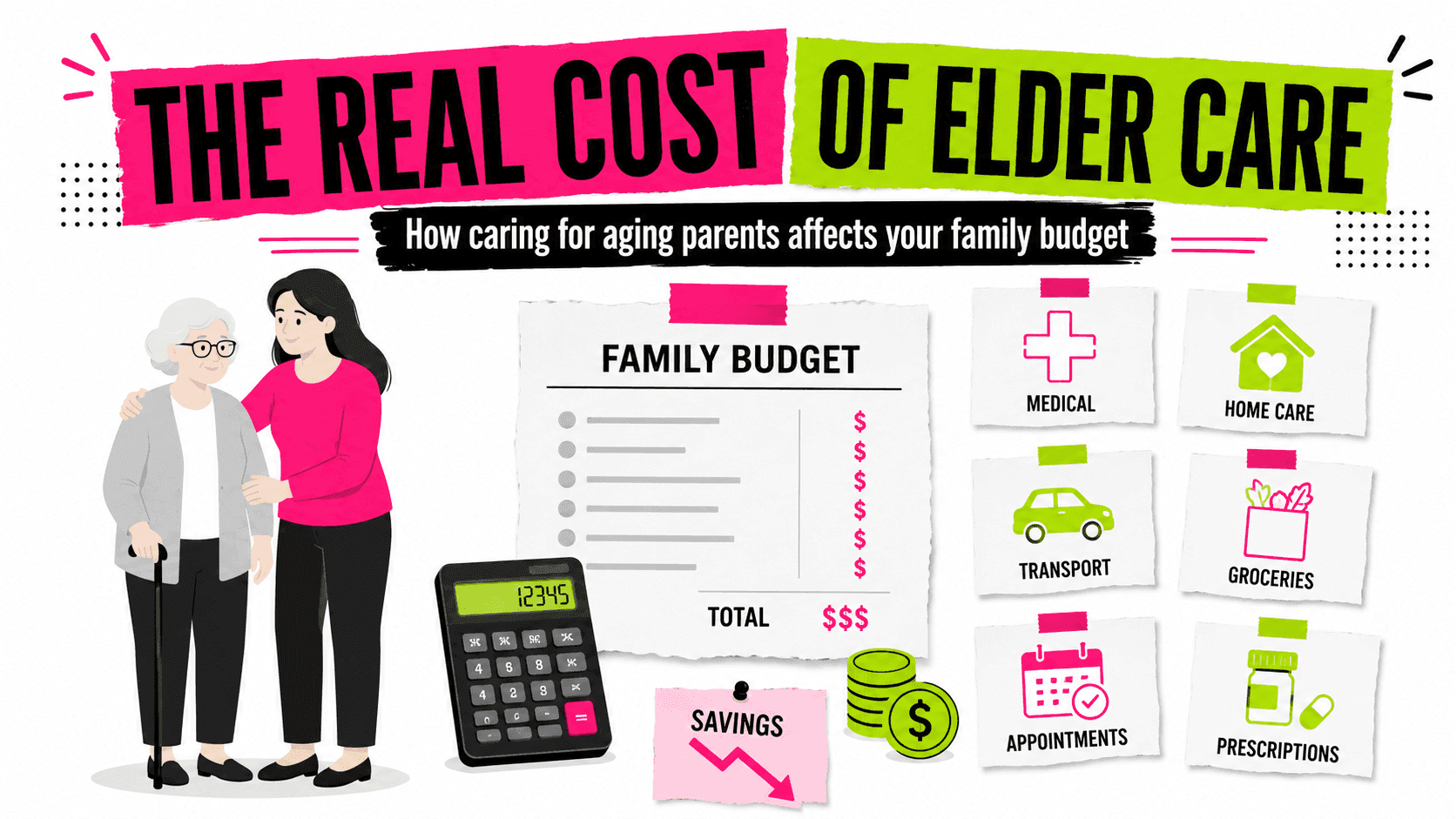
What Elder Care Costs in the U.S. - by Care Type
Most families meet these numbers in a bad week - after a fall, a diagnosis, a call from a neighbor. Here are the national medians by care type, what Medicare will not pay for, and how the money lands in a budget. Every figure is sourced and dated.
What does elder care cost per month?
In 2025 the national median was $6,200 a month for assisted living, $9,581 for a semi-private nursing home room and $10,798 for a private room, according to an industry survey by CareScout. In-home non-medical care ran $35 an hour and adult day health care $95 a day.
| Care type | 2025 median | 2024 | Change |
|---|---|---|---|
| Assisted living | $6,200 / month | $5,900 | +5% |
| Nursing home, semi-private | $9,581 / month | $9,277 | +3% |
| Nursing home, private room | $10,798 / month | $10,646 | +1% |
| Adult day health care | $95 / day | $100 | -5% |
| In-home non-medical care | $35 / hour | - | +3% |
Source: CareScout Cost of Care Survey, 2025 national medians. An industry survey, not government data - no federal agency publishes current medians for private-pay care.
Does Medicare pay for long-term care?
No. Medicare.gov states: "Since most long-term care is non-medical, Medicare and most health insurance, including Medicare Supplement Insurance (Medigap), don't pay for long-term care services, including care in a nursing home or in the community." The page is blunt about the consequence: you pay all costs.
Families assume the program that covers a hip replacement also covers the years of help with bathing and dressing that follow. Medicare.gov points to two other routes: Medicaid, if your parent meets your state's rules, or private long-term care insurance.
What does in-home care cost per hour?
$35 an hour was the 2025 national median for non-medical caregiver services, up 3 percent year over year, per the CareScout Cost of Care Survey. At that rate and 44 hours of care a week over 52 weeks, the same survey puts the annual cost at $80,080.
Forty-four hours a week is the survey's own assumption - roughly six hours a day, not round-the-clock care. CareScout also merged two categories once priced separately: homemaker and home health aide services are now reported together as "non-medical caregiver." For budgeting, use the hourly figure and your parent's real hours, not the survey's.
Why does an hour of care cost $35 when the aide earns $16.78?
Because $35 is what an agency charges a family and $16.78 is what the worker takes home. The Bureau of Labor Statistics reports median pay of $16.78 an hour, or $34,900 a year, for home health and personal care aides in May 2024. The gap covers overhead, payroll taxes, scheduling, insurance and margin.
The spread matters too: the lowest-paid 10 percent of aides earned under $25,600 a year, the highest-paid 10 percent over $44,190 - BLS Occupational Outlook Handbook.
This is why families consider hiring privately - but know what the agency rate buys: screening, liability coverage, payroll, and a replacement when your aide is sick.
What does assisted living cost?
$6,200 a month in 2025, per the CareScout Cost of Care Survey. The 2024 median was $5,900, so the line rose 5 percent in a single year - the largest increase among the categories the survey tracks.
Assisted living sits between home and a nursing home: housing, meals and help with daily tasks, without skilled medical care. Price it as rent plus care, because that is how most communities bill it. Ask what triggers a move to a higher care tier, and what that tier costs today - families skip the second question.
What does a nursing home cost?
$9,581 a month for a semi-private room and $10,798 for a private room in 2025, per the CareScout Cost of Care Survey. For 365 days of private-room care the same survey puts the national median at $129,575 a year.
Nursing home prices rose more slowly than assisted living last year - 3 percent semi-private, 1 percent private - but that is one year of data, not a trend to budget against.
What does adult day care cost?
$95 a day in 2025, per the CareScout Cost of Care Survey, which puts the same service at $2,058 a month on its cost map. It was the only category that got cheaper: the 2024 median was $100 a day, a 5 percent decline.
Most families find this option last. A parent spends the working day in a supervised setting and comes home at night - where the caregiver still holds a job, it often beats the equivalent hours of in-home care.
Is there a national price for memory care?
No reliable one, so this page prints no figure. The 2025 CareScout national table does not break memory care out as its own line, and no federal agency publishes a median for it. The figures circulating online come from commercial senior-living aggregators.
What holds without a number: dementia care usually costs more than standard assisted living in the same building, because it needs secured space and higher staffing. Get written quotes from two nearby communities.
How likely is it that your parent will need long-term care?
Almost 70 percent. LongTermCare.gov, run by the Administration for Community Living at HHS, states that "someone turning age 65 today has almost a 70% chance of needing some type of long-term care services and supports in their remaining years." Treat it as a planning baseline, not a prediction for one person. Source: LongTermCare.gov.
How long does long-term care usually last?
An average of 3.7 years for women and 2.2 years for men, per LongTermCare.gov. The average is not the planning case: the same page reports that one-third of today's 65-year-olds may never need long-term care, while 20 percent will need it longer than five years.
Duration varies by setting - average time in a nursing facility is about a year, used by 35 percent of people. So there are two budgets: the likely one and the tail.
Who provides most of the care, and for how many hours?
Families do. The Bureau of Labor Statistics counted 38.2 million people age 15 and over - 14 percent of the population - giving unpaid eldercare in 2023-2024, and 47 percent of them were caring for a parent. On days they provided care, they spent an average of 3.9 hours doing it.
Employed caregivers averaged 2.8 hours a day, those not employed 4.8, and 14 percent had been at it for 10 years or more. Source: BLS, Unpaid Eldercare in the United States.
To price what you absorb, multiply your care days by the $35 rate above - not for guilt, but to know what the household would owe without you.
What does caregiving do to a caregiver's job?
It interrupts it. The Government Accountability Office reports that an estimated 68 percent of working parental and spousal caregivers experienced job impacts - "going to work late, leaving early, or taking time off during the day to provide care." Spousal caregivers were hit harder: 81 percent against 65 percent.
Source: GAO-19-382, using data from a 2015 study. These interruptions never show up in a budget, because nothing gets billed. They show up later, in a smaller bonus.
What is the link between caregiving and the caregiver's own retirement?
GAO found spousal caregivers ages 59 to 66 held an estimated 50 percent less in individual retirement account (IRA) assets, 39 percent less in non-IRA assets and 11 percent less in Social Security income than married non-caregivers. GAO is careful about what that means.
The report's next sentence: "However, caregiving may not be the cause of these results as there are challenges to isolating the effect of caregiving from other factors that could affect retirement assets and income." Read it as an observed association, not proof of cause. Source: GAO-19-382.
The practical point survives the caveat: if a sibling gives up paid hours, treat the missed retirement contributions as a shared cost.
Can you deduct nursing home costs on your taxes?
Sometimes. IRS Publication 502 states you can include in medical expenses "the cost of medical care in a nursing home, home for the aged, or similar institution," including meals and lodging "if a principal reason for being there is to get medical care." Includible is not the same as deductible.
Two conditions sit between them: you have to itemize, and only the part of your medical expenses above 7.5 percent of your adjusted gross income counts, per IRS Publication 502 (2025). For a parent, add a third - they generally have to qualify as your dependent.
Can you claim a parent as a dependent?
Only if their income is low enough. To meet the IRS gross income test for a qualifying relative, "a person's gross income for the year must be less than $5,200" for tax year 2025, per IRS Publication 501. You must also generally provide more than half of their total support for the year.
That threshold is indexed, so check the current publication before you file. Keep receipts for rent, food, medical bills, insurance, transportation and facility payments through the year, not in April.
How do you build the budget in stages?
Price the next stage before you need it, not the current one. Care escalates in a predictable order - unpaid family help, paid hours at home, adult day care, then a facility - and each step has a median price above.
Start from a working household budget, not a blank page. Our guide to building a family budget covers the structure; elder care goes in as its own line.
Which elder care costs are irregular rather than monthly?
The ones that break budgets: a wheelchair ramp, a stairlift, a bathroom renovation, a move-in deposit, travel to a parent in another state. Large, unscheduled, and easy to leave out of a plan built around rent and utilities.
Give them their own category. The method in one-time versus recurring expenses applies directly: fund irregular costs a little each month so they do not land on a card.
How do siblings and couples split the cost fairly?
Rarely by an even split, because incomes are rarely even. A proportional share - each person contributing in relation to what they earn - holds up better than a 50/50 rule that quietly becomes unpayable for whoever earns least. The same arithmetic works inside a couple; see budgeting when partners earn different amounts.
When a sibling gives hands-on hours instead of cash, count those hours at the $35 rate.
What if you are also raising kids?
Then you are running two care budgets at once, and they belong on separate lines. Child costs and parent costs peak on different schedules; mixing them hides which is growing.
If the child side is not mapped yet, how a budget changes after a baby covers it. The rule for the elder care half: do not fund it by draining the children's budget, the emergency fund or your retirement contributions.
What if the care cost no longer fits the budget?
Then the number to find is not what care costs, but how much your household can carry each month - and for how many months. Work that out first: the answer decides whether you are looking at a cheaper care setting, more family contribution or a state program.
A category-by-category method is here: how to size what your budget can absorb. Run it with the medians above.
Which documents should be in place before a crisis?
A durable power of attorney for finances, a healthcare proxy, and a clear record of accounts and policies. All three have to be signed while your parent still has capacity - after that the family may need a court, which is slower and costlier. The cheapest item in the plan, and the one most often left too late.
Who this page is not for
Three groups will find these numbers unhelpful. If your parent's care is paid by Medicaid, the private-pay medians above are not what your household will face - your state's eligibility and cost-sharing rules govern instead.
If you live in a high-cost metro or a rural county, a national median can sit far from the local quote. And if your parent is a veteran, benefits may change the picture entirely.
How should you read these numbers?
As two grades of evidence. The prices come from the CareScout Cost of Care Survey - a commercial industry survey, used because no federal agency publishes current medians for private-pay long-term care. The coverage, wage, caregiving and tax figures come from Medicare.gov, BLS, GAO and the IRS.
Everything is dated: prices 2025, aide wages May 2024, caregiving counts 2023-2024, tax figures tax year 2025, probability estimates 2020. Care prices change quickly - recheck before you commit.
Frequently asked questions
How much does it cost to care for a parent at home?
$35 an hour at the 2025 national median for non-medical caregiver services, per the CareScout Cost of Care Survey, which puts a full year at $80,080 on an assumption of 44 hours a week. Your cost depends on your parent's real hours.
Will Medicare pay for a nursing home?
Not for long-term custodial care. Medicare.gov states that Medicare and most health insurance, including Medigap, do not pay for long-term care services, "including care in a nursing home or in the community," and that you pay all costs. The Medicare page points to Medicaid or private insurance instead.
Is assisted living cheaper than a nursing home?
Yes, at the national medians: $6,200 a month in 2025 against $9,581 for a semi-private nursing home room and $10,798 for a private room, per the CareScout Cost of Care Survey. That holds only while your parent's needs fit assisted living.
Can I deduct my parent's medical expenses?
Only if you itemize, the expenses clear 7.5 percent of your adjusted gross income, and your parent qualifies as your dependent for medical-expense purposes. IRS Publication 502 (2025) sets that threshold and counts nursing home costs as medical expenses when medical care is the principal reason for being there.

Denis Goncharenko
Head of Content
Editorial Policy: no secondary statistics. Every claim is linked to an official source and dated — datasets and methods are open for review.

Was this article helpful?
Same blogs

Saving Money on Groceries Is Not a Test of Willpower
Federal data shows six grocery categories moving at different rates, not one bill rising evenly. Why the national CPI, the CES spending survey, and USDA's own forecast are each the wrong number to budget against - and how to build your own monthly figure from 8 to 12 weeks of receipts instead.
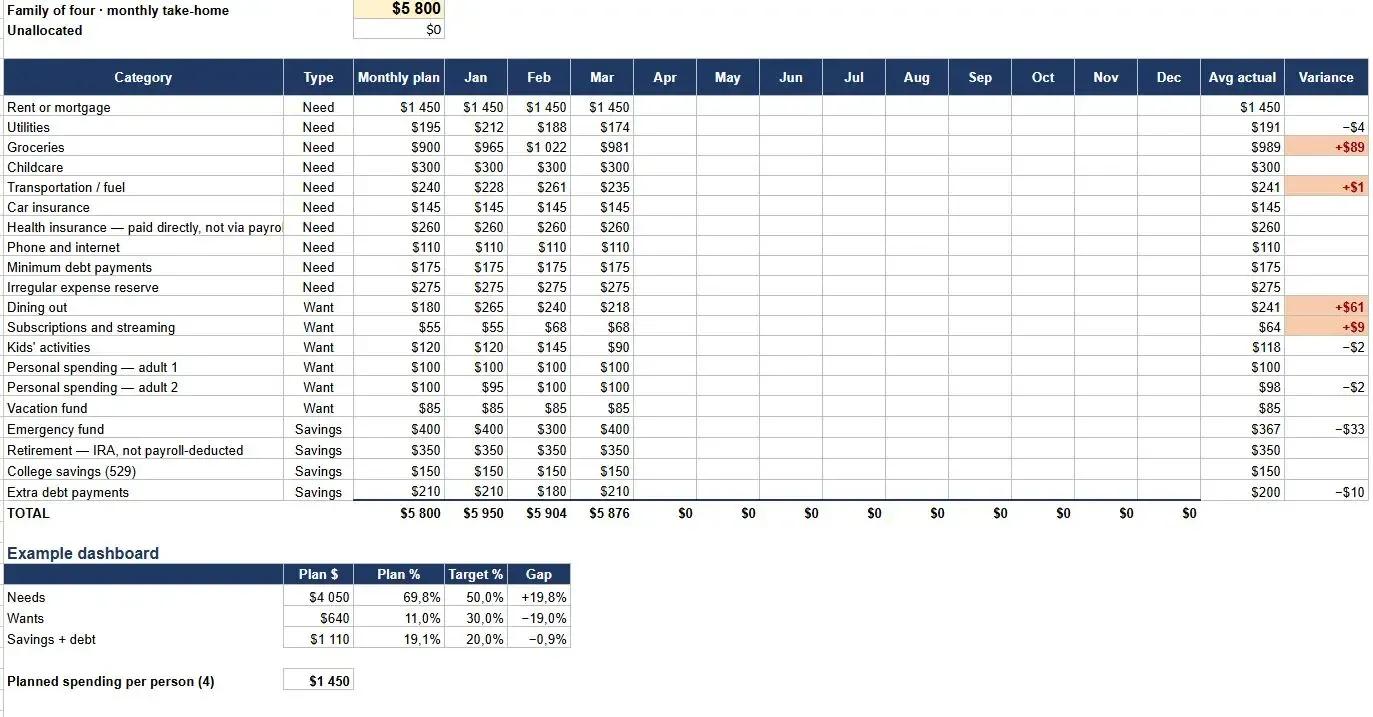
Free Family Budget Template for Excel and Google Sheets
A free household budget spreadsheet for families of three to five, with categories pre-filled and a separate tab that spreads yearly bills like insurance and registration across all twelve months. No email, no sign-up, works in Excel and Google Sheets.

Why Parent PLUS Loans Have Become a Hidden Retirement Crisis for American Parents
Parent PLUS loans can follow parents into retirement, reduce savings, and expose Social Security benefits to offset after default. Here is what near-retirement borrowers should know.