


Why Parent PLUS Loans Have Become a Hidden Retirement Crisis for American Parents

Millions of American parents carry federal student debt into retirement, but most policy debates still frame student loans as a student problem. Parent PLUS loans sit in the blind spot: the parent signs, the parent owes, and the payment often lands when income starts to fall.
The practical issue is not guilt. It is cash flow. A Parent PLUS balance competes with 401(k) contributions, emergency savings, medical costs, and Social Security income. If you are near retirement, the right move is to understand the loan mechanics before choosing consolidation, repayment, or refinancing.
What Is a Parent PLUS Loan? How It Differs From Other Student Debt
Parent PLUS is a federal loan made to the parent of a dependent undergraduate student. The student benefits from the education. The parent carries the legal repayment obligation.
Key Terms and Conditions in 2025-26
For the 2025-26 award year, the Parent PLUS rate is 9.25% fixed. Federal Student Aid lists the loan fee at 4.228%, deducted from each disbursement.
The borrowing limit is the school’s cost of attendance minus other aid. That means tuition, housing, fees, and other approved costs create the ceiling. There is no traditional annual or lifetime cap for the parent.
The underwriting screen is thin. Federal Student Aid checks for adverse credit history, such as recent serious delinquency or bankruptcy. It does not test debt-to-income ratio. In practice, that is the design flaw: a parent can qualify even when the future payment does not fit retirement cash flow.
Comparison With Subsidized and Unsubsidized Loans
| Parameter | Direct Subsidized | Direct Unsubsidized | Parent PLUS |
|---|---|---|---|
| Borrower | Student with financial need | Student | Parent of dependent student |
| Rate | 6.70% | 6.70% undergraduate / 8.25% graduate | 9.25% |
| Annual limit | $5,500-$12,500 | Up to $20,500 | Cost of attendance minus aid |
| Interest during school | Government pays | Accrues immediately | Accrues immediately |
| Direct IDR access | Yes | Yes | No - consolidation required |
| PSLF eligible | Yes | Yes | Yes - after consolidation |
The table shows why Parent PLUS debt behaves differently. The parent gets the higher rate, the broadest borrowing ceiling, and weaker repayment flexibility.
The 'Hidden Crisis' Explored: Uncovering the Impact
The $110 Billion-Plus Debt Problem
Federal Student Aid’s portfolio data shows Parent PLUS debt above $110 billion. The number matters because these loans sit with households that are closer to retirement than the students they helped.
The Federal Reserve Bank of Dallas described the program as “a rescue or a trap” because it combines high borrowing capacity with no debt-to-income test. That is not a small technical detail. It is the mechanism that lets college bills become retirement debt.
Media Silence and Policy Coverage
Parent PLUS stays hidden because the public story focuses on student borrowers. Parents are fewer, older, and less organized. They also tend to view the loan as a family sacrifice rather than a consumer-credit risk.
The Century Foundation called Parent PLUS borrowers “the hidden casualties of the student debt crisis.” The phrase fits. Relief campaigns and income-driven repayment debates often center on loans taken by students, while parent borrowers navigate narrower protections.
Mechanisms That Undermine Retirement Security Due to Parent PLUS Loans
The Erosion of Retirement Savings
Parent PLUS payments damage retirement plans in three ways: they reduce new savings, push back retirement dates, and increase the temptation to tap home equity or retirement accounts.
On client budgets, I see the same pattern: the parent tries to protect the child first, then repairs the retirement plan later. The problem is timing. A borrower in the last decade of work has fewer compounding years left. A missed contribution at that age is harder to replace.
The Century Foundation documented cases where parents used home equity or retirement savings to avoid default. That trade-off solves the monthly payment and weakens the retirement balance sheet.
Social Security Garnishment and Its Implications
Social Security offset is the harsh edge of default. If a federal student loan goes into default, the Treasury Offset Program can intercept federal payments, including Social Security benefits.
The federal government can withhold up to 15% of benefits above a protected floor. The same report found that in 2015, about 40,000 disabled or retired Parent PLUS borrowers had portions of Social Security withheld, and the Department of Education collected $171 million through offsets.
Brookings published a borrower letter that shows what the offset feels like in a household budget: “$295 has been deducted from my meager Social Security check... This leaves me with less than $1,600 per month to live on.”
That is why avoiding default matters more than chasing the lowest theoretical interest cost.
Who Bears the Brunt? Demographic Insights
The Generation Challenge: Baby Boomers vs Gen X
Gen X parents are now in the pressure zone. They borrowed while paying mortgages, helping children launch, and trying to finish their own retirement savings. Many are still working, which creates a narrow window to fix repayment before income drops.
Baby Boomer borrowers face a different version of the same risk. They are more likely to be repaying during retirement itself. The Dallas Fed found that among student loan borrowers in default age 65 and older, 33% held Parent PLUS loans. Among defaulted borrowers age 50 to 64, Parent PLUS also appeared as a major offset risk.
Racial Disparities in Debt Impact
Parent PLUS debt also reflects the racial wealth gap. Families with fewer assets rely more on borrowing to cover the same college bill.
The Georgetown Center on Poverty and Inequality found that Parent PLUS “disproportionately distributes unrepayable debt” by income, race, ethnicity, geography, and school sector. Its 2024 chartbook highlights heavier burdens for low-income parents, Black families, and students attending institutions in the South.
This matters for retirement because parent borrowing reduces intergenerational wealth twice. It limits what parents save for themselves and what they can later pass on.
Limited Protections for Parent PLUS Borrowers
Lack of Access to Income-Driven Repayment
Parent PLUS loans do not enter income-driven repayment directly. The parent must first consolidate into a Direct Consolidation Loan. After that, the main income-based route is Income-Contingent Repayment, or ICR.
ICR is less generous than other IDR plans. Federal rules calculate the payment as the lower of 20% of discretionary income or a payment based on a 12-year repayment formula, with forgiveness after 25 years. It can still save a retirement budget because the payment adjusts when income falls.
The deadline is the key planning point. TICAS explains that Parent PLUS borrowers need a Direct Consolidation Loan before July 1, 2026 to preserve access to certain income-based options, with later transition rules running to July 1, 2028.
Limited Lifelines: PSLF
Public Service Loan Forgiveness can work for Parent PLUS, but only for the parent borrower. The child’s job does not count.
The parent must consolidate, enroll in a qualifying repayment plan, work for a qualifying government or nonprofit employer, and make 120 qualifying payments. That path helps teachers, public employees, and nonprofit workers. It does little for private-sector parents near retirement.
Steps for Near-Retirement Parent Borrowers
Understanding Federal Consolidation and Repayment Options
Start with federal options before private refinancing. Consolidation keeps federal protections alive and opens the door to ICR.
First, apply for a Direct Consolidation Loan through Federal Student Aid. If IDR access matters, track the June 30, 2026 disbursement cutoff carefully. A submitted application is not the same as a disbursed consolidation loan.
Second, model the payment under retirement income. Use conservative assumptions. If you want a quick planning tool, Bromoney’s debt payoff calculator helps compare payoff speed and monthly cash flow.
Third, avoid default. Extended repayment can lower the monthly bill on eligible balances above $30,000, but it does not adjust for income and it increases total interest.
When Refinancing Makes (and Doesn't Make) Sense
Private refinancing only makes sense when the parent has stable income, excellent credit, and no need for federal protections. That is a narrow profile.
For most near-retirement borrowers, refinancing creates more risk than relief. Once the loan becomes private, the parent loses ICR, PSLF, federal disability discharge, and federal death discharge. A lower rate does not compensate for that if income falls after retirement.
Before refinancing, compare the payment to projected retirement income. Bromoney’s DTI calculator can help you test whether the new payment fits the budget after payroll income stops.
Insights From Researchers and Policymakers
Recent Studies and Proposed Legislative Reforms
Recent research points in the same direction: Parent PLUS needs better guardrails and clearer disclosures.
GAO-23-105892 found that older Americans’ student debt threatens retirement security, including through Social Security offsets. GAO-24-106411 also emphasized that borrowers need clearer information and stronger program management.
Policy proposals tend to focus on borrowing limits, better financial aid letters, broader IDR access, and more grant aid. Brookings warns that capping Parent PLUS alone misses the deeper issue if college prices and grant aid remain unchanged.
The practical takeaway is plain: do not wait for Congress. If you already have Parent PLUS debt, the available planning tools are consolidation, ICR, PSLF eligibility review, and strict default prevention.
Frequently Asked Questions About Parent PLUS and Retirement
Can Loans Be Forgiven Before Retirement?
Yes, but the conditions are narrow. PSLF requires 120 qualifying payments by the parent borrower while working for a qualifying employer. Total and Permanent Disability discharge applies when the parent borrower qualifies under federal rules. Borrower Defense applies only when the school’s misconduct supports the claim.
For many private-sector parents, the practical federal path is ICR forgiveness after 25 years. That is not fast relief. It is a long-term default-prevention strategy.
Is Garnishment a Real Threat to My Social Security?
Yes. Garnishment becomes a real threat after default, not after one missed payment. Once the debt enters federal collection, Social Security benefits can be offset under Treasury rules.
The defense is action before default. Consolidate if it preserves repayment options, enroll in the lowest available federal plan, and recertify income on time. If you are already in default, ask Federal Student Aid about rehabilitation or any active default-resolution program before the offset reaches your benefit check.

Denis Goncharenko
Head of Content
Editorial Policy: no secondary statistics. Every claim is linked to an official source and dated — datasets and methods are open for review.

Was this article helpful?
Same blogs
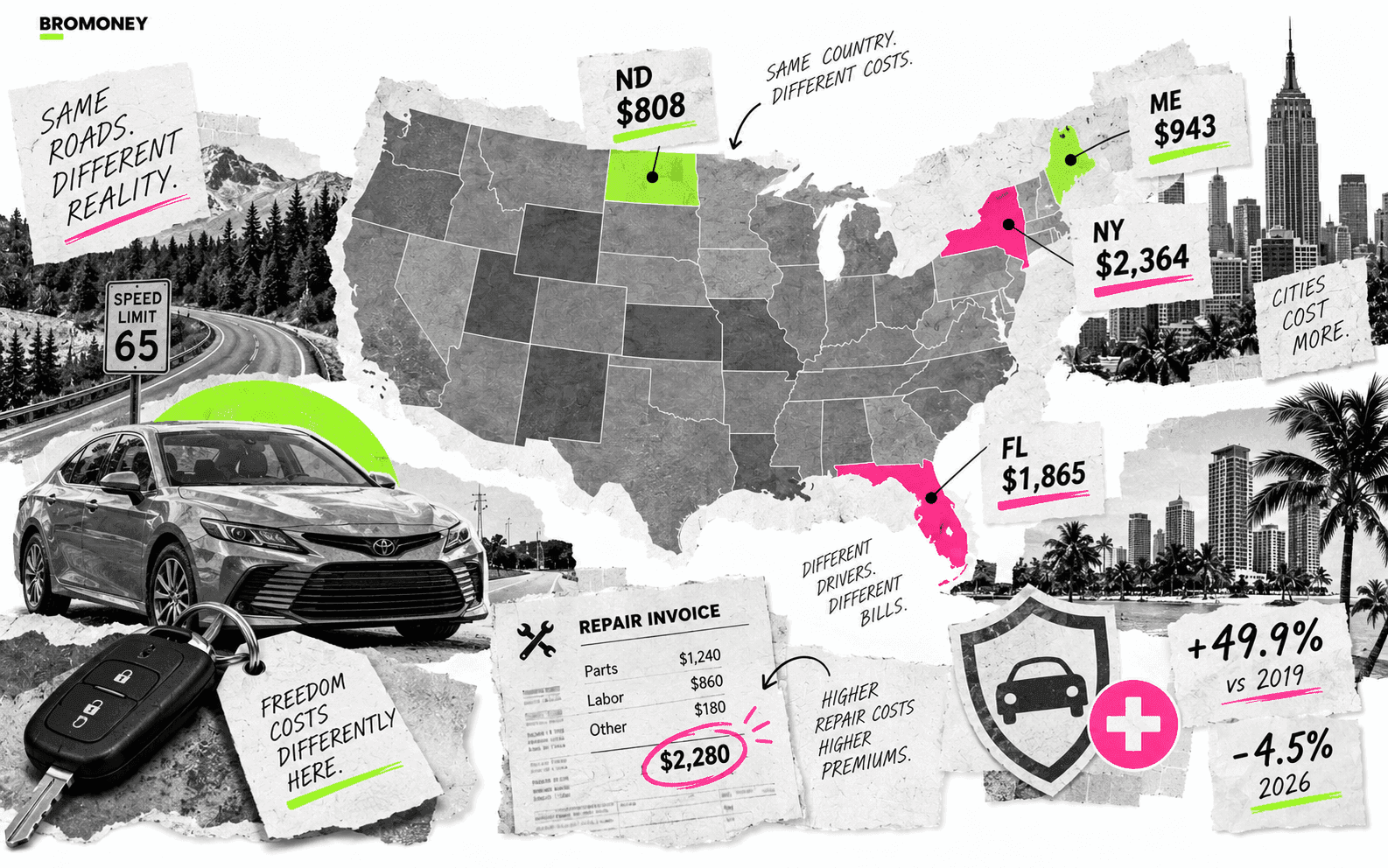
Why Car Insurance Went Up and What Actually Moves the Premium
Car insurance spending rose 12.3 percent in 2024, one of only two costs BLS called statistically significant. NAIC's 2023 state averages, why rates are falling even as the level sits 49.9 percent above 2019, what actually drives claims costs, and which levers on your policy are worth checking.

Stop Blaming the Latte: Impulse Buying Isn't the Whole Budget Story
BLS data shows apparel and entertainment spending barely moved in 2024, while car insurance, housing and groceries rose - some by double digits. Why the numbers behind the top impulse-buying articles don't hold up, and a review method that starts with the bills, not the coffee.

Cost of Living by State: Prices, Rent and Wages
A 51-row table built from U.S. federal series (BEA, Census, HUD, EIA, DOL), not the private volunteer survey most rankings use. Housing costs vary six times more than goods across states, cheap states aren't always affordable, and minimum wage sits below a modelled living wage everywhere checked.