Age & Residency
You generally need to be at least 18 and a U.S. resident to be considered as a borrower. Basic eligibility comes first, before the lender reviews the rest of your request.

A repair bill, medical balance, or a few payments you want under one schedule can feel easier to handle when the numbers are laid out. In Connecticut, personal loans are usually unsecured and paid back in fixed installments. You fill out one form, review the options available to you, and choose what fits. Lenders make the decision, so no outcome is promised.
Compare lenders and decide,
Get startedSecure 256-bit Connection
A personal loan is a lump-sum installment loan, often $1,000 to $40,000, repaid in fixed monthly payments over a set term, usually two to seven years. The borrower gets the funds at once, then repays the amount borrowed plus interest until the balance is paid off. It's usually unsecured, meaning no collateral is required, and it's also called an unsecured installment loan. In plain terms, it can help you consolidate higher-interest debt or cover one larger planned cost.
One form can put the loan amount, APR, and repayment schedule where you can actually compare them. Repayment structure: Fixed scheduled payments over a set term. That Connecticut structure helps you see what lands each month and what it costs over the full term before you choose a lender or walk away.
A rough credit stretch isn't a character flaw. Minimum credit score: None set by state law. Your credit history still matters to the lender's review, but Connecticut doesn't set a legal floor that shuts the door by itself, so you can review the options available to you without treating your score as the whole story.
For covered Connecticut small loans, state law generally caps APR at 36% for loans under $5,000 and 25% for loans from $5,000 through $50,000, using the Military Lending Act APR methodology. Federal Truth in Lending Act disclosures also show the APR, finance charge, payment schedule, and total of payments before you become contractually obligated.
Connecticut regulates covered small-loan activity through the Connecticut Department of Banking. Unless exempt, licensing can apply not only to a lender but also to persons that offer, solicit, broker, arrange, find, or assist a borrower in obtaining a covered small loan, including through lead-generation activity. Banks, credit unions, and certain other entities may be exempt or governed under separate frameworks.
The request may take a few minutes. Here's what most Connecticut lenders require before they can review your information and decide whether to offer credit.
You generally need to be at least 18 and a U.S. resident to be considered as a borrower. Basic eligibility comes first, before the lender reviews the rest of your request.
A lender will want to see income you can verify, which may include wages, benefits, or another steady source. They'll also look at your credit profile and current debt load to judge whether the payment is realistic, so bad credit may be considered, but it can come with tougher terms.
You usually need an active bank account so funds can be sent and monthly payments can be handled under the loan terms. Before you choose, make sure that account can support the payment date without squeezing essentials.
A home repair or medical bill feels different when you can see the monthly payment before saying yes. In Hartford, older housing can bring repair costs that don't wait. Bridgeport borrowers may be trying to bring several smaller payments under one schedule. In New Haven, timing a larger bill can matter because the cost of living already takes a bite. Wherever you are in Connecticut, the point is the same: compare the cost and repayment dates, then decide whether the numbers fit.
Connecticut's average FICO Score was 724 in 2025, according to Experian, above the national average of 713. A statewide average does not describe every borrower, and lenders use their own underwriting criteria. A hard inquiry may affect your credit score if a lender runs one.
Connecticut consumers with personal loans carried an average personal loan balance of $18,128 in 2025, according to Experian. That figure is specific to personal loans, not total household debt. Before adding another loan payment, compare the APR, term, payment schedule, and total of payments.
In the Federal Reserve's 2025 SHED, 63% of U.S. adults said they would cover a $400 emergency expense completely using cash or its equivalent. That means 37% would use another method or would not be able to cover it. This is a national figure, not Connecticut-specific.
The Connecticut Department of Banking is the place to check applicable consumer-credit licenses and file a complaint. For covered small loans, Connecticut law limits APR, late fees, and prepayment charges. After a court judgment, wage execution is generally limited to the lesser of 25% of disposable earnings or the amount above 40 times the higher of the federal or Connecticut minimum hourly wage, subject to additional exemptions.
Trying to sort out a personal loan can turn into a lot of phone calls and half-clear terms. Bromoney keeps the next step simpler: you fill out one form, then review the options available to you in your account with costs and repayment dates side by side. We're not a lender, and we don't make credit decisions. You compare the full-term cost, choose who to move forward with, or leave it there with no obligation. It's free to start. We take a responsible approach to your data and do our best to prevent unwanted calls. Bromoney is operated by Money Broker LLC (DE File No. 10406065).

Estimate exactly how much you'll owe before you commit. Enter your loan amount and repayment term to see total costs, including fees and interest, laid out clearly.
Calculate my loanConnecticut consumer lending is overseen by the Connecticut Department of Banking. For covered small loans, licensing can apply to non-exempt persons that make, offer, solicit, broker, arrange, find, or assist a Connecticut borrower in obtaining the loan, including through lead-generation activity. Covered small loans are generally subject to a 36% APR cap when the loan is under $5,000 and a 25% APR cap when the loan is from $5,000 through $50,000, using the Military Lending Act methodology. Covered small loans are also subject to specific late-fee and prepayment rules. Federal Truth in Lending Act disclosures apply before the borrower becomes contractually obligated.
Legal status
Regulated
Consumer lending in Connecticut is subject to state oversight. Nonbank lenders, banks, and credit unions follow the framework that applies to their license type.
Regulator
Connecticut Department of Banking
This agency oversees covered consumer lending, handles borrower complaints, and provides records you can use to check whether a lender is authorized in the state.
License required
For covered small-loan activities
Unless exempt, Connecticut licensing can apply to persons that make, offer, solicit, broker, arrange, find, or assist a borrower in obtaining a covered small loan, including through lead-generation activity. Banks, credit unions, and certain other entities may qualify for statutory exemptions.
Repayment structure
Fixed scheduled payments over a set term
A personal loan is paid back in equal installments on a set schedule. The schedule is established at signing and does not change on its own.
Collateral
Usually not required
Most personal loans are unsecured, so no property backs the debt. A secured version is a separate product type and would appear in the terms of a specific offer.
Minimum credit score
None set by state law
Connecticut law does not create a credit score threshold. The lender reviews the request and makes the credit decision.
APR limits for covered small loans
36% under $5,000; 25% from $5,000 through $50,000
For covered small loans, Connecticut generally limits APR to 36% for loans under $5,000 and 25% for loans from $5,000 through $50,000. The state uses the Military Lending Act APR methodology, which includes specified fees and charges.
Late fee
Limited by state law
For a covered small loan, a late fee may generally be charged only after an installment remains unpaid for at least 10 consecutive days and may not exceed the lesser of 5% of the outstanding installment payment or $25 per month. Interest may not be charged on the late fee.
Prepayment penalty
Prohibited for covered small loans
Connecticut prohibits a prepayment penalty on covered small loans.
Cost disclosure (TILA)
Required before you become obligated
For a covered product, the federal Truth in Lending Act requires APR, finance charge, and total of payments disclosures before you agree.
Wage garnishment cap
25% or amount above 40x applicable minimum wage, whichever is less
After a court judgment, Connecticut generally limits wage execution to the lesser of 25% of disposable earnings or the amount by which disposable earnings exceed 40 times the higher of the federal or Connecticut minimum hourly wage. Additional exemptions and exceptions apply.
The information on this page is educational and is not legal or financial advice. Which rules apply to a specific loan depends on the lender's or provider's status, the loan amount, APR, product structure, and any applicable exemption under Connecticut law. State rules can change. Consult the Connecticut Department of Banking and current Connecticut General Statutes for the rules in effect at the time of the transaction. Reviewed as of October 5, 2026.
Moving card debt to a balance-transfer card can give you breathing room during a lower-APR intro period. The catch is structure. You're still using revolving credit, the APR can change after the promo ends, and there usually isn't a fixed payoff date unless you make one and stick with it.
A home equity loan or another secured option may come with a lower cost because collateral backs the debt. That can help when you're borrowing for a major project, but your asset is on the line if payments aren't made, and the process can take more paperwork than an unsecured personal loan.
A credit union personal loan or local nonprofit option can be worth a look, especially if you're already a member or want a lower-cost place to borrow close to home. Loan amounts, APR caps, and local rules change by state, so check your state page before you choose.
Personal loans online don't work the same way in every state. Loan amounts, terms, APR, rate caps, and legal rules can change depending on where you live, whether you borrow to consolidate debt, cover a large expense, or compare options with bad credit. Choose your state below before you repay under local rules.


A Connecticut personal loan is a fixed amount of money repaid through scheduled payments over a set term, and it is often unsecured. Connecticut consumer lending is overseen by the Connecticut Department of Banking. For covered small loans, licensing can apply not only to the lender but also to non-exempt persons that offer, solicit, broker, arrange, find, or assist a Connecticut borrower in obtaining the loan, including through lead-generation activity. Banks, credit unions, and certain other entities may qualify for statutory exemptions. Before you become contractually obligated on a covered product, federal Truth in Lending Act rules require key cost disclosures.
Banks, credit unions, and nonbank consumer lenders may offer personal loans in Connecticut. Bromoney is a free loan marketplace, not a lender, and it does not make credit decisions. For covered small loans, Connecticut licensing rules can apply to non-exempt persons that make, offer, solicit, broker, arrange, find, or assist a borrower in obtaining the loan, including through lead-generation activity. Banks, credit unions, and certain other entities may be exempt or regulated under separate frameworks. You can verify an applicable license through the Connecticut Department of Banking.
Connecticut law does not set a minimum credit score for a personal loan. In the market, a bad credit score generally means a FICO score below 580, but that isn't a state-law category. A lower score doesn't make the answer automatic either way. The lender makes the call, and no outcome is promised.
A Connecticut personal loan's amount and term depend on the rules tied to the lender's license and the lender's own review. Your payment schedule is set when you sign and doesn't shift on its own. In your account, you can compare the loan amount, APR, payment size, and term before agreeing to anything. Here's the catch: a lower APR doesn't always mean you pay fewer dollars overall if the term is longer. Look at the total of payments along with the APR, not just the monthly number.
For covered Connecticut small loans, state law generally limits the APR to 36% for loans under $5,000 and 25% for loans from $5,000 through $50,000. Connecticut calculates this APR using the Military Lending Act methodology, which includes specified fees and charges. Other lender types or exempt products may be governed by different rules. Before you become contractually obligated on a covered loan, federal Truth in Lending Act disclosures show the amount financed, APR, finance charge, payment schedule, and total of payments.
No, a Connecticut personal loan is usually unsecured, so it typically isn't backed by property. Secured options exist separately, and if collateral or a co-borrower is required, you'll see that in the specific terms before you agree. Without collateral, costs can be higher as a general market reality. The lender decides the terms of the option in front of you.
A Connecticut personal loan request may involve a credit review. A hard inquiry is possible, and more than one lender may run one, and it can affect your credit score. After an account opens, payment activity may be reported to the major credit bureaus, but reporting practices differ by lender, so ask before you count on it to support your history. Missed payments, collections, or a court judgment can hurt your score, and negative credit reporting can remain for around seven years under federal law. A personal loan isn't credit repair. It's debt, with real costs if the payments don't land.
For a covered Connecticut small loan, a late fee may generally be charged only after an installment has remained unpaid for at least 10 consecutive days. The fee may not exceed the lesser of 5% of the outstanding installment payment or $25 per month, and interest may not be charged on the late fee. Continued nonpayment can lead to collections and, after a court judgment, wage execution. Connecticut generally limits the amount subject to wage execution to the lesser of 25% of disposable earnings or the amount by which disposable earnings exceed 40 times the higher of the federal or Connecticut minimum hourly wage, subject to additional exemptions and exceptions.
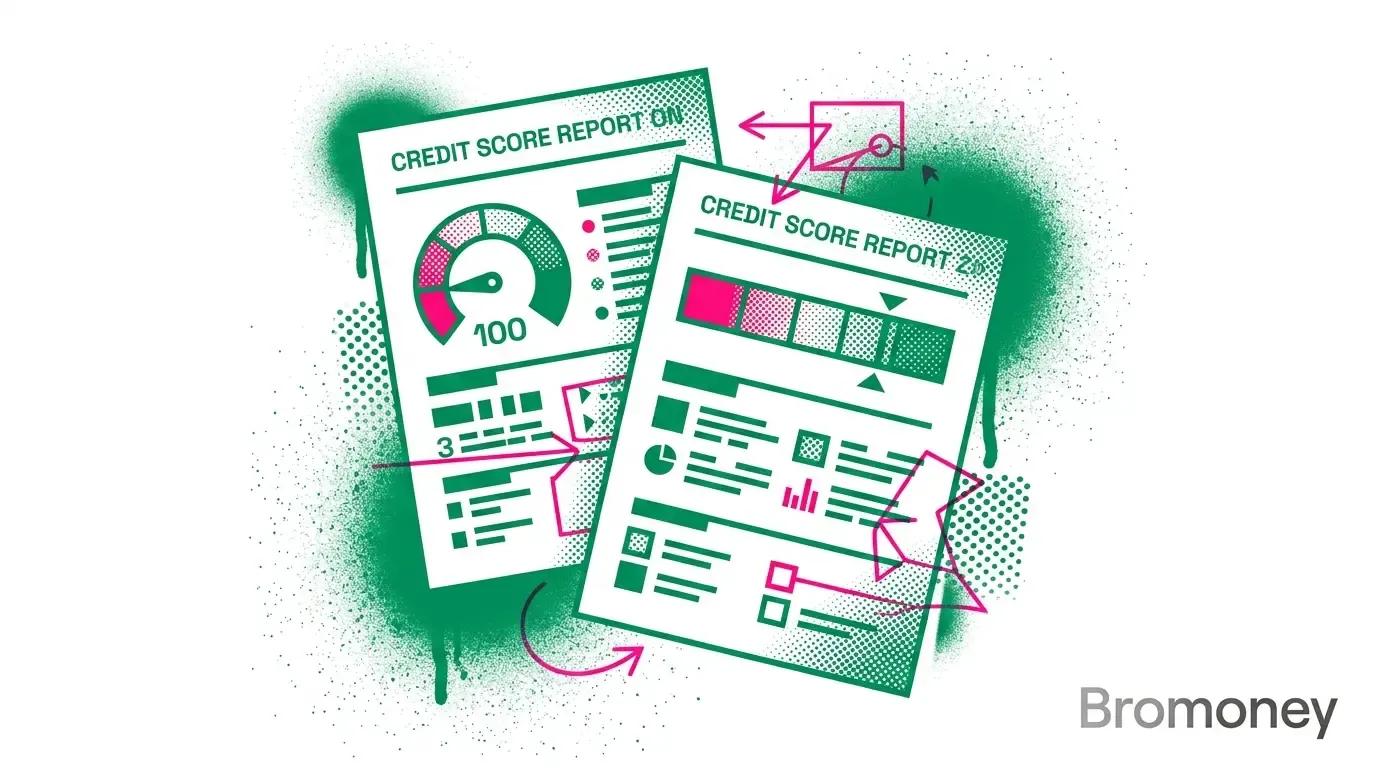
FICO and VantageScore can show different numbers for the same person because they use different models, bureau files, and update timing.
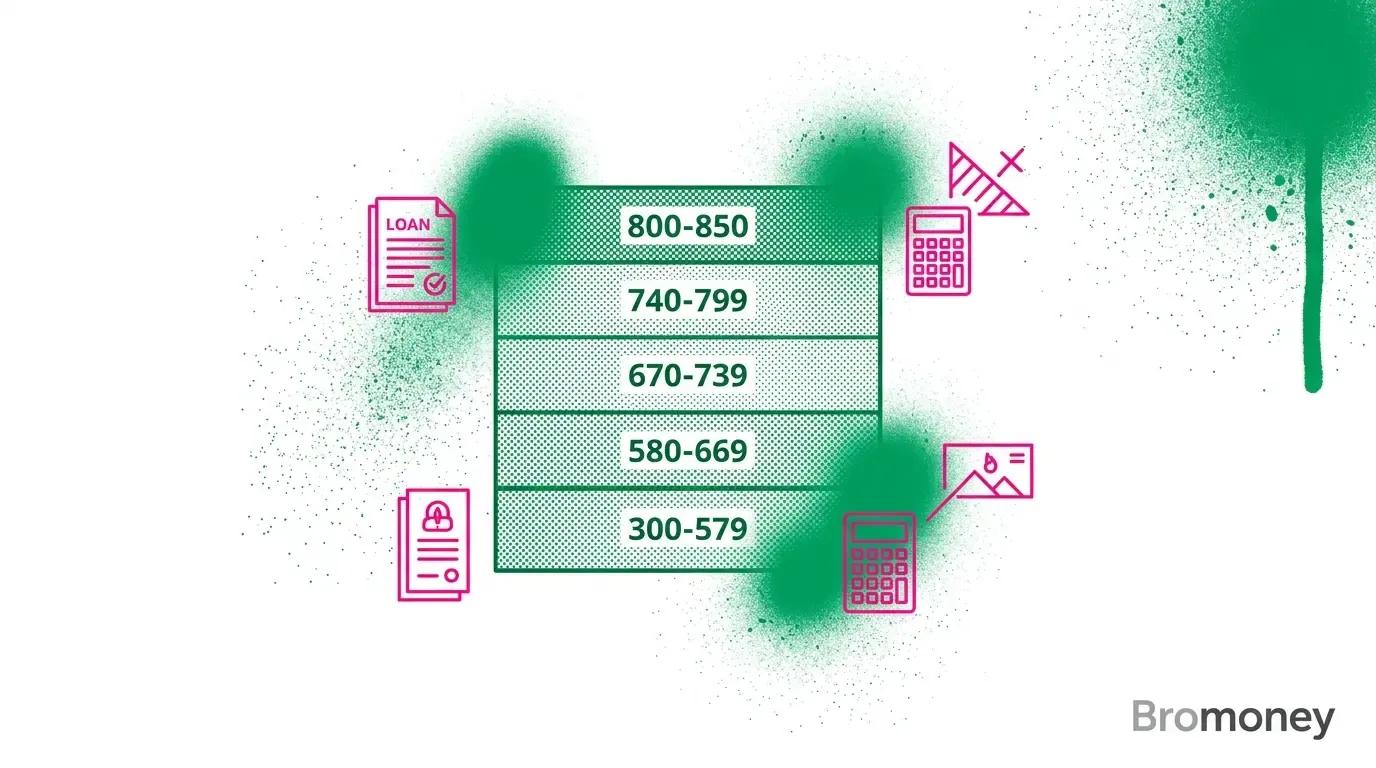
A practical guide to U.S. credit score ranges, including what 580, 650, 720, and 800 mean for mortgages, auto loans, credit cards, and rates.
A practical guide to private mortgage refinancing, including lender types, approval steps, costs, risks, and exit strategy.
We bridge the gap between your financial goals and premier lending services nationwide.
Bromoney is a free loan marketplace operated by Money Broker LLC (DE File No. 10406065). Bromoney is not a lender and does not make credit decisions. Checking your options can involve hard inquiries from more than one lender, and those inquiries can affect your credit score. A lower credit score does not disqualify you by law. The decision belongs to the lender, and no outcome is promised. Submitting a request shares your details with participating providers, who may contact you by phone, text, or email. Connecticut small-loan licensing rules can apply to certain non-exempt lending, brokering, arranging, assisting, and lead-generation activities. Before you become obligated, the disclosure for a covered product sets out the loan amount, APR, finance charge, payment schedule, and total of payments. Covered military borrowers are protected by the Military Lending Act's 36% MAPR limit.
You know the drill: one loan request, then waiting for the calls to start. Here you stay in control — we treat your information with care, you compare the options available to you, and you choose which lender or partner to move forward with. We can't speak for every partner, but we do our best to keep unwanted calls down.

Submitted over a secure connection