


Credit Score Ranges Explained: What 580, 650, 720, and 800 Actually Mean
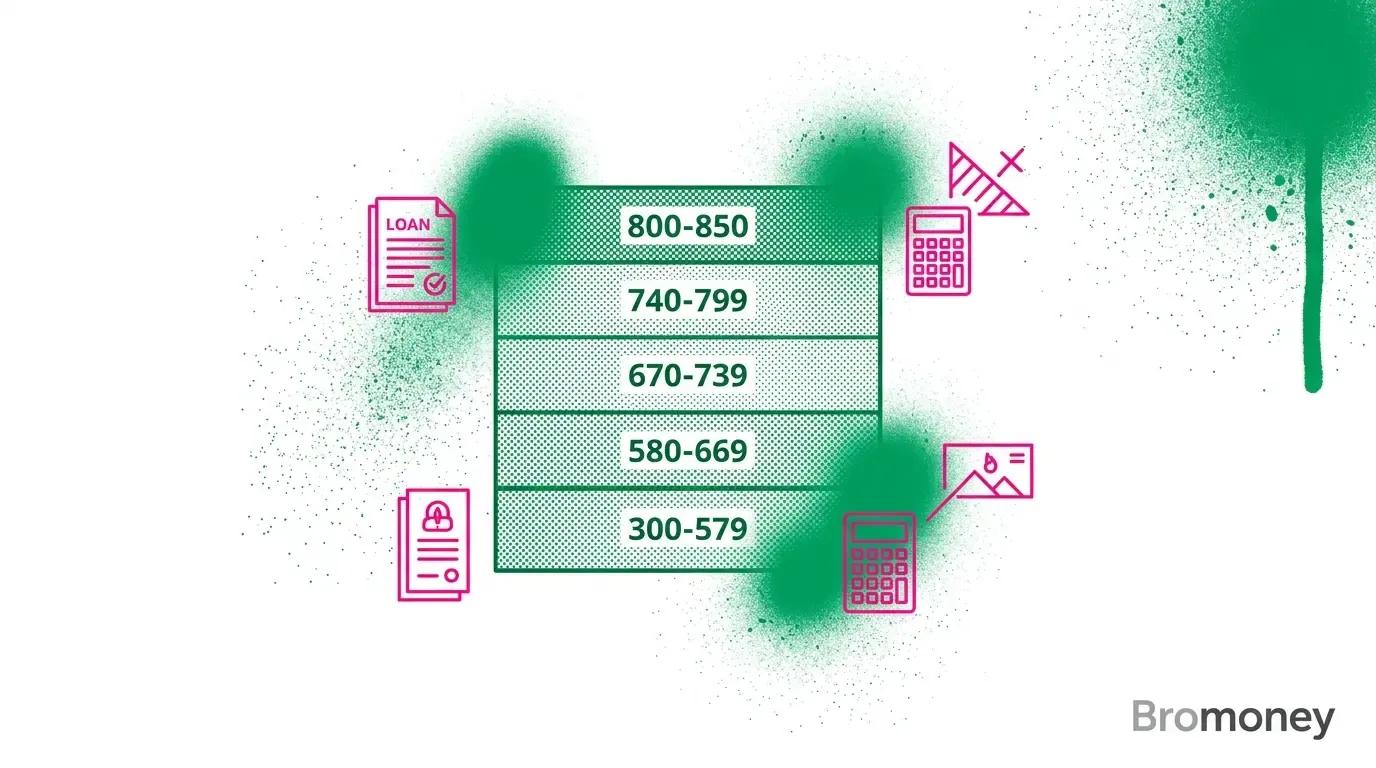
Your credit score is a risk signal, not a moral grade. The CFPB puts it plainly: a credit score predicts how likely you are to repay a loan on time, and lenders use it to decide approval, rate, and credit limit.
The number matters most when money is expensive. A borrower at 580 still has options. A borrower at 800 has leverage. The difference shows up in APR, deposits, down payment rules, and how many lenders compete for the file.
What Is a Credit Score and How Is It Measured? (300–850 Scale)
Most consumer credit scores use a 300-850 scale. Base FICO Scores and newer VantageScore models share that range, but they do not classify every number the same way. Industry-specific FICO models for auto and bankcard lending can use a broader 250-900 range.
You also do not have one fixed score. The number changes by bureau, model version, product type, and calculation date. If your bank app shows one score and a mortgage lender pulls another, that does not mean either is wrong. For a deeper model-level comparison, see our guide to FICO vs. VantageScore differences.
FICO Score Ranges vs. VantageScore Ranges: Side-by-Side Comparison
| Category | FICO Score | VantageScore 4.0 | How lenders usually read it |
|---|---|---|---|
| Poor / Very Poor | 300-579 | 300-600 | Higher risk; deposits, fees, or denial |
| Fair | 580-669 | 601-660 | Subprime or near-prime pricing |
| Good | 670-739 | 661-780 | Mainstream approval range |
| Very Good | 740-799 | Included in Good | Better rates and higher limits |
| Exceptional / Excellent | 800-850 | 781-850 | Lowest score-based risk |
The 5 Factors That Determine Your FICO Score
| Factor | FICO weight | What it measures |
|---|---|---|
| Payment history | 35% | On-time payments, late payments, collections |
| Amounts owed | 30% | Balances, utilization, accounts with balances |
| Length of credit history | 15% | Oldest, newest, and average account age |
| Credit mix | 10% | Revolving and installment accounts |
| New credit | 10% | Recent hard inquiries and new accounts |
Payment history and utilization do most of the work. In practice, I look there first because they explain most fast score movement. For a full breakdown, read our guide to credit score factors and FICO weights.
Credit Score Categories: From Poor to Exceptional
Experian reported the average U.S. FICO Score at 713 in 2025, down from 715 in 2024. That sits in the Good range, but lenders still review income, debt-to-income ratio, down payment, collateral, and recent credit behavior.
Poor Credit Score (300–579): What Lenders See
Below 580, lenders see elevated repayment risk. Unsecured approvals get harder. Credit cards may require a deposit. Auto loans and personal loans, if approved, usually price in the risk with higher APRs and stricter terms.
Fair Credit Score (580–669): Limited but Not Hopeless
Fair credit is not a dead end. It is a cost problem. FHA mortgages, secured cards, fair-credit cards, and subprime auto loans are realistic. The important line is near-prime: a 620 or 650 profile often gets reviewed differently than a 580 profile.
If you are in the 580-620 near-prime zone, focus on what is possible now and what should wait until the next tier.
Good Credit Score (670–739): Where Most Doors Open
At 670, FICO moves you into Good. Mainstream cards, prime auto loans, and many mortgage programs become more accessible. This is where approval becomes more predictable, assuming DTI and income also work.
Very Good Credit Score (740–799): Better Rates, More Options
A 740 score often matters more than the label suggests. Mortgage pricing can improve at score tiers such as 740, 760, and 780. Premium rewards cards also become more realistic because issuers see lower default risk.
Exceptional Credit Score (800–850): The Top Tier
An 800+ score puts you in the top credit tier. Experian reported that 22.8% of consumers were in the 800-850 range in 2025. The benefit is not just approval. It is better pricing, higher limits, and more room to compare lenders.
What a 580 Credit Score Actually Means in Real Life
A 580 score is the bottom edge of Fair credit. It can still qualify for some products, but the terms do the talking. Expect lenders to ask for stronger compensating factors: stable income, lower DTI, more cash down, or a secured product.
Can You Get a Mortgage With a 580 Credit Score?
Yes, through FHA if the rest of the file works. HUD policy allows a 580+ score with a 3.5% minimum down payment. Scores from 500-579 generally require at least 10% equity.
That does not mean every lender approves at 580. Lender overlays still matter.
Auto Loans and Credit Cards at 580: What to Expect
Auto loans are available, but pricing is expensive. Experian’s automotive finance data for Q4 2024 showed subprime borrowers in the 501-600 tier paying average APRs of 13.08% on new cars and 19.38% on used cars.
Credit cards at 580 usually mean secured cards, smaller limits, and higher APRs. If you need to compare lenders while rebuilding, Bromoney’s bad credit loan marketplace helps you review options before applying.
How Much More You Pay With a 580 vs. Higher Score (APR Comparison)
| Product | Lower-score tier | Stronger-score tier | What changes |
|---|---|---|---|
| FHA mortgage | 580+ | 740+ | FHA access may exist, but pricing and insurance still matter |
| New auto loan | 13.08% subprime APR | 4.77% super-prime APR | The payment gap can be material |
| Used auto loan | 19.38% subprime APR | 7.67% super-prime APR | Used-car financing punishes weak scores harder |
How to Move From 580 to 650: Priority Actions
Start with utilization and payment history. They account for 65% of a FICO Score combined. Pay revolving balances down first, then protect every due date with autopay.
Pull your reports and dispute errors. The CFPB explains that consumers can dispute inaccurate credit report information directly with the bureau and the company that furnished it. If you want the timing by score band, read our guide on how long it takes to improve a credit score.
What a 650 Credit Score Actually Means in Real Life
A 650 score is functional but still Fair under FICO. You can borrow, but you rarely get the best rate. In my reviews of lender offers, 650 is where approvals become more common but pricing still feels defensive.
Mortgage Eligibility at 650: Conventional vs. FHA Loans
At 650, FHA is usually viable from a score standpoint because the key FHA threshold is 580. Conventional access is also possible, but underwriting looks harder at DTI, reserves, and recent late payments.
Fannie Mae guidance and automated underwriting evaluate more than the score. The file matters.
Interest Rates and Credit Card Offers at 650
Experian’s Q4 2024 data showed near-prime borrowers in the 601-660 tier paying 9.59% on new cars and 14.46% on used cars. Prime borrowers in the 661-780 tier paid 6.40% and 9.95%.
For cards, expect fair-credit products, limited rewards, and modest limits.
Is 650 Considered a Good Credit Score?
No. FICO classifies 650 as Fair. Real-world translation: the file can work, but the borrower pays for uncertainty. This is also the range where apartment screening can become more sensitive in competitive cities, so check our guide to credit score requirements for rentals in NYC, LA, and Chicago before applying.
How to Move From 650 to 720: What to Focus On
Use utilization as the fastest lever. Try Bromoney’s credit utilization calculator to see which card balance hurts the most. Then stop new applications unless the loan is necessary. A clean 650 file can reach 720 faster than a file with fresh late payments.
What a 720 Credit Score Actually Means in Real Life
A 720 is a strong Good score. Most mainstream products are open, but the best rate tiers may still sit higher. Think of 720 as “approved often,” not “priced at the floor.”
Mortgage and Auto Loan Rates at 720
A 720 borrower often lands in prime territory for auto lending. In Experian’s Q4 2024 data, prime borrowers from 661-780 averaged 6.40% on new cars and 9.95% on used cars.
Mortgage pricing is more tiered. A 720 file may price worse than 740, 760, or 780, especially if loan-to-value is high.
Credit Card Rewards and Approvals at 720
At 720, many cash-back and travel cards become realistic. Issuers still check income, current balances, recent inquiries, and existing relationships. Approval is not automatic.
For product-level examples across cards, auto loans, and mortgages, see what lenders approve at each credit score.
720 vs. 740: Does the Extra 20 Points Matter?
Yes, especially before a mortgage. The extra 20 points can move the file into a better pricing tier. If you are close to 740 and not under deadline pressure, paying down balances before applying is often worth it.
How to Push From 720 to 800
At 720, you are polishing the file. Keep utilization low, avoid unnecessary hard inquiries, and let older accounts age. Do not open debt just to improve credit mix. The hard pull and new-account effect can work against you.
What an 800 Credit Score Actually Means in Real Life
An 800 score gives you choice. Lenders still verify income and debt, but the score itself rarely creates friction. The bigger job becomes shopping well.
What Financial Products Become Available at 800+
The premium tier opens: better rewards cards, stronger credit limits, top auto-loan pricing, and the best mortgage tiers when the rest of the file qualifies. Personal loan offers also improve, but APR still depends on income, DTI, and loan size.
Best Interest Rates: How Much You Save vs. 720
The savings depend on product and market rates. The clearest public example is auto lending: Experian’s Q4 2024 data put super-prime borrowers at 4.77% for new cars, while prime borrowers averaged 6.40%. On a large mortgage, even a small APR gap can cost thousands over the loan term.
Is There Such a Thing as Too High a Credit Score?
No, but there is a point of diminishing returns. Many lenders already offer their best score tier before 800. Above that, DTI, fees, loan term, and lender comparison usually matter more than another few points.
How to Maintain an 800+ Credit Score
Protect the basics: pay on time, keep utilization low, keep old accounts open, and avoid clusters of applications. Review your reports through AnnualCreditReport.com. It is the federally authorized source for free reports from the nationwide credit bureaus.
How Credit Score Ranges Affect Key Financial Decisions
Credit score affects three decisions: approval, price, and limit. It also interacts with the product. A score that works for FHA may not work for a premium card or jumbo mortgage.
Credit Score Requirements for a Mortgage in 2025
| Mortgage type | Score guidance | Important note |
|---|---|---|
| FHA | 580+ for 3.5% down | 500-579 generally needs 10% equity |
| VA | No federal minimum | Lenders set overlays under VA rules |
| USDA | 640 is a common automated benchmark | Manual underwriting can apply |
| Conventional | Often around 620 | Automated systems review the full file |
Credit Score Requirements for Auto Loans
Auto lending has no universal minimum. The practical break is between near-prime and prime. Experian’s data shows a clear cost gap once a borrower moves from 601-660 to 661-780.
Credit Score Requirements for Personal Loans
Personal loans rely heavily on score, income, DTI, and recent credit behavior. If you are comparing installment options, review installment loans and calculate affordability with a debt payoff calculator before applying.
How Your Credit Score Affects Insurance Premiums
Many insurers use credit-based insurance scores where state law allows it. The NAIC explains that these scores help insurers price risk, but rules vary by state. California, Hawaii, and Massachusetts restrict or prohibit credit use in auto insurance pricing.
How to Check Your Credit Score for Free
AnnualCreditReport.com vs. Credit Monitoring Apps
AnnualCreditReport.com gives free credit reports, not necessarily scores. Some banks and card issuers show educational scores. Experian offers access to a FICO Score, while many monitoring apps show VantageScore. Treat each score as a useful signal, not the exact score every lender will use.
Soft vs. Hard Inquiries: Does Checking Hurt Your Score?
Checking your own score is a soft inquiry. It does not hurt your score. Applying for new credit usually triggers a hard inquiry. The CFPB says rate shopping for certain loans can be grouped within a 45-day window, depending on the scoring model.
How to Improve Your Credit Score: Moving Up the Range
Step 1 - Dispute Errors on Your Credit Report
Pull all reports and look for accounts you do not recognize, wrong balances, duplicated collections, or late payments that should not be late. The CFPB explains how to dispute errors with the bureau and furnisher. The FTC notes investigations generally must be completed within 30 days, with limited exceptions.
Step 2 - Reduce Credit Utilization Below 30%
Utilization moves faster than account age. Pay revolving balances down below 30% of limits, then aim lower if you are preparing for a major application. Reported balances matter, not just whether you avoid interest.
Step 3 - Build a Perfect Payment History
Payment history carries 35% of the FICO model. Set autopay for at least the minimum. If cash flow is tight, protect secured debts, housing, and accounts that report to bureaus first.
Step 4 - Manage Credit Age and Mix
Keep old accounts open when they have no costly fee. A long file helps. A mix of revolving and installment credit can help too, but do not borrow just for scoring cosmetics.
Step 5 - Limit Hard Inquiries
Avoid scattered applications. If you need a loan, compare targeted options first. Hard inquiries matter less than missed payments, but multiple new accounts can make a borderline file look risky.
Last reviewed and updated: October 2026.
Frequently Asked Questions About Credit Score Ranges
Is a 580 credit score bad?
A 580 score is Fair under FICO, but it sits at the bottom of that range. It is not hopeless. FHA, secured cards, and some auto loans may be available, but pricing and conditions are usually tougher.
Can I buy a house with a 650 credit score?
Yes. FHA is possible from a score standpoint, and conventional approval may be possible if income, DTI, reserves, and down payment support the file. The rate will likely be weaker than a 740+ file.
Is 720 a good credit score?
Yes. A 720 is a Good FICO Score. It opens most mainstream products, but mortgage and premium-card pricing can still improve at higher tiers.
What percentage of Americans have an 800+ credit score?
Experian reported that 22.8% of consumers had FICO Scores from 800 to 850 in 2025.
How long does it take to go from 580 to 700?
It depends on the cause. High utilization can improve after balances update. Late payments, collections, and charge-offs take longer. A realistic plan combines lower utilization, no new late payments, fewer hard inquiries, and error disputes where needed.

Denis Goncharenko
Head of Content
Editorial Policy: no secondary statistics. Every claim is linked to an official source and dated — datasets and methods are open for review.

Was this article helpful?
Same blogs
Inheritance Rights: What Happens After a Borrower's Death
A practical U.S. guide to what happens to loans, mortgages, credit cards, insurance, and estate debts after a borrower dies.
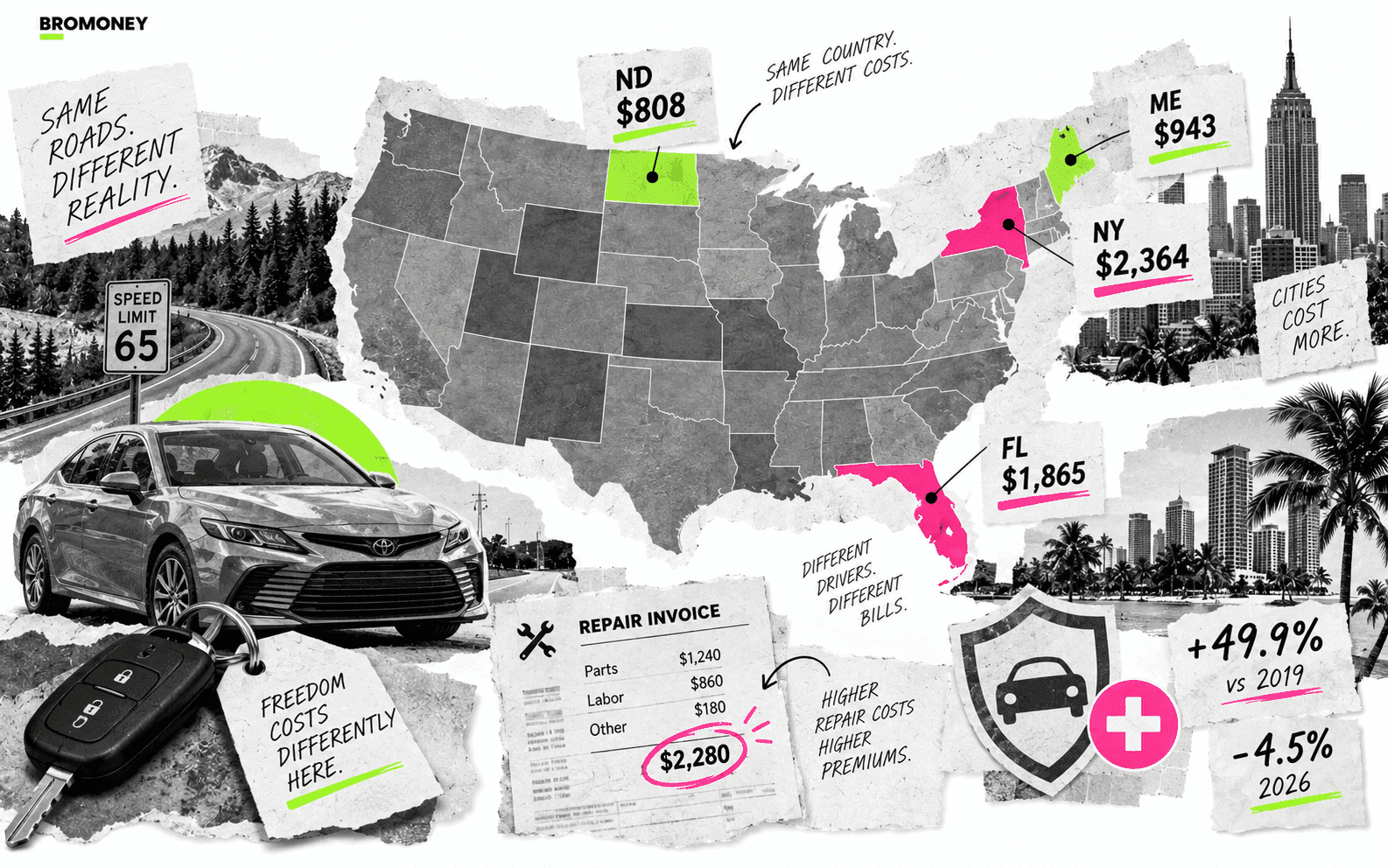
Why Car Insurance Went Up and What Actually Moves the Premium
Car insurance spending rose 12.3 percent in 2024, one of only two costs BLS called statistically significant. NAIC's 2023 state averages, why rates are falling even as the level sits 49.9 percent above 2019, what actually drives claims costs, and which levers on your policy are worth checking.

Stop Blaming the Latte: Impulse Buying Isn't the Whole Budget Story
BLS data shows apparel and entertainment spending barely moved in 2024, while car insurance, housing and groceries rose - some by double digits. Why the numbers behind the top impulse-buying articles don't hold up, and a review method that starts with the bills, not the coffee.