


FICO vs. VantageScore: Why the Same Person Gets a Different Number at Each Bureau
Why Your Credit Score Looks Different Depending on Where You Check It
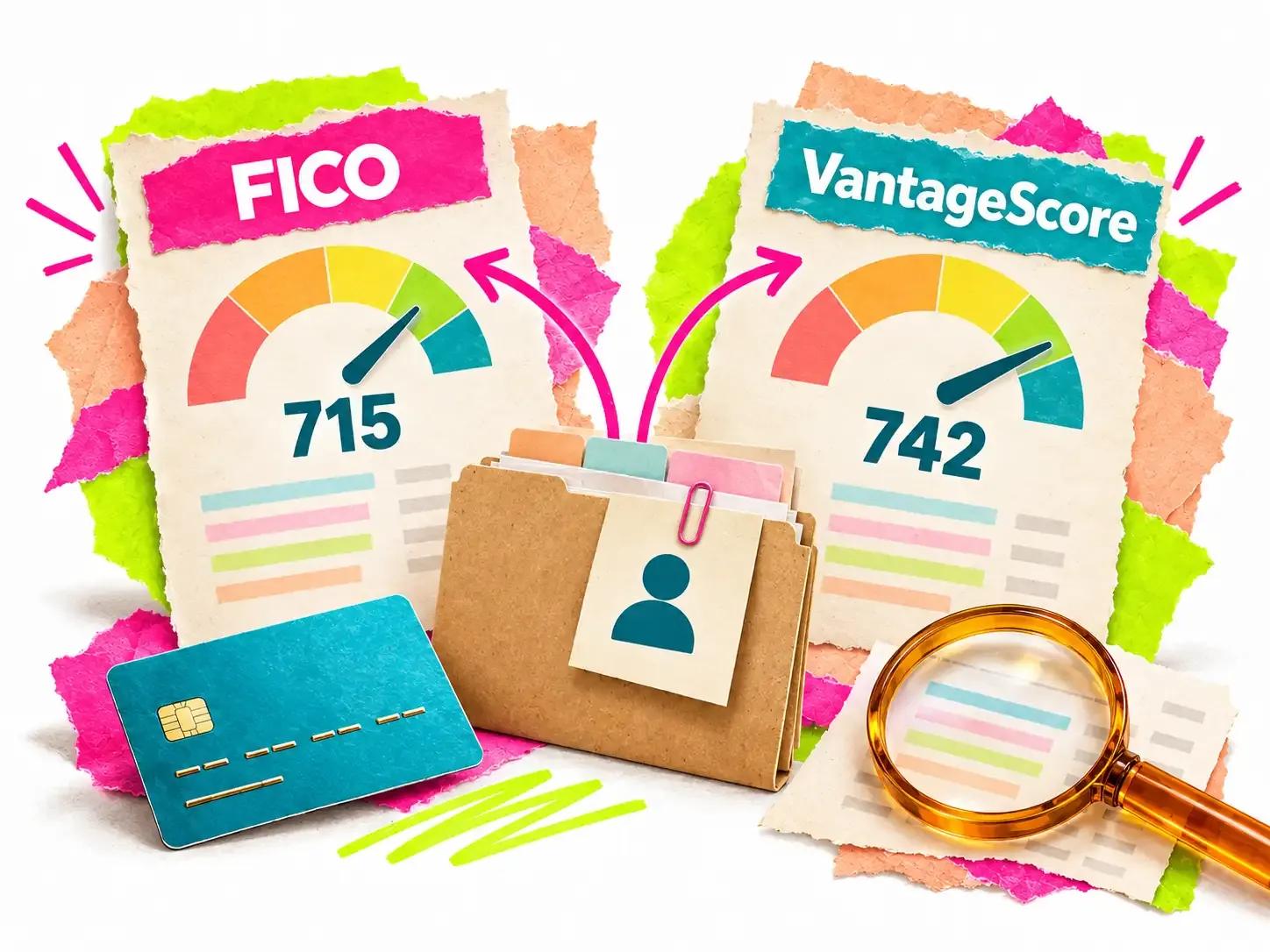
Your credit score is not one fixed number. It changes with the bureau, the scoring model, the model version, the loan type, and the date the data was updated. The CFPB tells consumers that credit scores differ because companies use different formulas and different credit-report data.
The practical question is not “Which score is real?” It is: Which score will this lender use for this application?
Different Scoring Models (FICO vs. VantageScore)
FICO and VantageScore often use the same visible scale, but they do not interpret the file the same way. FICO says payment history makes up 35% of a base FICO Score. VantageScore lists payment history as 41% of VantageScore 4.0.
Version matters as much as brand. FICO 8, FICO 9, FICO 10T, VantageScore 3.0, and VantageScore 4.0 do not treat every collection, inquiry, or balance pattern the same way. That is why the score in a bank app may not match the score a lender pulls.
Different Data at Each Bureau (Equifax, Experian, TransUnion)
Equifax, Experian, and TransUnion maintain separate credit files. A lender is not required to report every account to all three. One bureau may show a new card, while another still misses it.
That difference changes the math. A missing credit card changes total limits, utilization, account age, and sometimes inquiries. In practice, I see this most often before mortgage preapproval or auto financing, when a borrower checks one app and assumes every lender sees the same file.
How FICO Calculates Your Credit Score
FICO uses five factor groups. The percentages describe relative importance for a typical credit profile, not a public formula.
FICO Factor Weighting
| Factor | FICO weight |
|---|---|
| Payment history | 35% |
| Amounts owed, including utilization | 30% |
| Length of credit history | 15% |
| New credit | 10% |
| Credit mix | 10% |
Payment history carries the most weight. Late payments, collections, and bankruptcy hurt more when they are recent, repeated, or severe.
Utilization moves faster. If your credit card limit is $10,000 and the reported balance is $2,000, utilization is 20%. If the reported balance is $8,000, utilization is 80%. The score uses the balance sent to the bureau, not the balance you remember after a later payment. Before a large application, use a credit utilization calculator to model the reported ratio.
FICO Score Versions: FICO 8, FICO 9, FICO 10, FICO 10T
FICO is a family of models, not a single score. FICO 8 remains common in credit cards and auto lending. FICO 9 reduced the impact of some medical debt and paid collections. FICO 10T uses trended data, which looks at balance behavior over time.
Mortgage lending has its own rules. Fannie Mae lists Classic FICO, FICO 10T, and VantageScore 4.0 among approved credit score models. That does not mean every lender uses the same model on the same date. The lender, investor, program, and application timing still matter.
FICO vs. VantageScore: Side-by-Side Comparison
| Parameter | FICO | VantageScore |
|---|---|---|
| Developer | Fair Isaac Corporation | Joint venture created by Equifax, Experian, and TransUnion |
| Consumer score range | 300-850 | 300-850 |
| Largest factor | Payment history | Payment history |
| Minimum history | Traditional models need enough recent credit-file data | Designed to score more thin-file consumers |
| Paid collections | Depends on model version | VantageScore 4.0 ignores paid collections |
| Medical collections | Depends on model version | VantageScore 4.0 excludes medical collections |
| Trended data | Used in FICO 10T | Used in VantageScore 4.0 |
| Mortgage use | Longstanding role in underwriting | Approved for Fannie Mae and Freddie Mac use |
| Published adoption | FICO says its scores are used by 90% of top U.S. lenders | VantageScore reported 42 billion scores used in 2024 |
The table explains why identical-looking numbers mislead borrowers. A 700 score is not a universal credit grade. It is a model output tied to one file, one scoring formula, and one moment.
If your next application depends on the monthly payment, compare the score with DTI. A DTI-based loan calculator helps show whether the score or income ratio is the tighter constraint.
Why the Same Score Looks Different Across Bureaus
A bureau difference is not automatically an error. It often means the files are not identical.
Independent Bureau Databases
Each bureau builds its own file from lenders, collection agencies, public-record vendors, and other furnishers. If a lender reports only to Experian, that account will not help or hurt the Equifax file.
The same problem appears with inquiries. An auto lender may pull TransUnion only. That inquiry affects a TransUnion-based score, but not an Experian-based score. The model did not “change its mind.” It received different input.
Reporting Windows and Data Lag
Credit files also update on different schedules. A card issuer may send balance data after the statement closes. Another lender may report at a different point in its cycle.
That timing gap explains many short-term score swings. You may pay down a card today, but the score will not reflect the payoff until the new balance reaches the bureau and the score is recalculated.
When the gap looks large, pull all three reports. The official site, AnnualCreditReport.com, provides free weekly access to Equifax, Experian, and TransUnion reports. Compare accounts, balances, limits, late payments, collections, and inquiries line by line.
Which Credit Score Matters Most for Different Loans
The important score depends on the product. Mortgage, auto, credit card, and personal-loan underwriting do not always use the same model.
Mortgages and the FICO Requirement
Conforming mortgage lenders historically used older Classic FICO versions tied to each bureau. The market is shifting, but slowly. Fannie Mae now recognizes newer models, including FICO 10T and VantageScore 4.0, yet lender adoption still depends on operational rollout.
For borrowers, the field lesson is simple: ask the lender which model and bureau it uses before you optimize. A score shown by a free monitoring app may be useful for trend tracking, but it may not be the mortgage score used in underwriting.
Personal Finance and VantageScore
VantageScore appears often in free monitoring tools, fintech underwriting, credit-card prescreening, and thin-file evaluation. It is useful because it gives many consumers a directional read before a lender runs a hard inquiry.
For personal loans, the model is only one part of the decision. Lenders also review income, debt-to-income ratio, recent inquiries, banking data, and loan purpose. If you are comparing offers, start with a broad personal loans hub or review structured installment loan options before submitting multiple applications.
Frequently Asked Questions
How Is VantageScore Different from FICO When the Number Looks the Same?
The same number can mean different risk signals. FICO and VantageScore may both show 700, but one may weigh recent balances, paid collections, or thin-file history differently.
Think of the score as a translation, not the original document. The credit report is the source file. FICO and VantageScore translate that file through different rules.
Can I Have a High FICO but a Low VantageScore?
Yes. A high FICO and lower VantageScore can happen when recent balance trends look worse than the current snapshot. VantageScore 4.0 uses trended data, so rising balances may matter even before utilization looks alarming.
The reverse also happens. A consumer with a short file may receive a VantageScore before a traditional FICO model has enough history to produce a stable result.
Why Do My Scores Differ Across Equifax, Experian, and TransUnion?
The usual reasons are selective reporting, different update dates, and bureau-specific errors. One bureau may show a collection, another may miss a new account, and a third may have a different credit limit.
If the difference affects approval, do not argue with the score first. Audit the report. Fix the underlying data, then let the score update.
Sources

Denis Goncharenko
Head of Content
Editorial Policy: no secondary statistics. Every claim is linked to an official source and dated — datasets and methods are open for review.

Was this article helpful?
Same blogs
Inheritance Rights: What Happens After a Borrower's Death
A practical U.S. guide to what happens to loans, mortgages, credit cards, insurance, and estate debts after a borrower dies.
Why Car Insurance Went Up and What Actually Moves the Premium
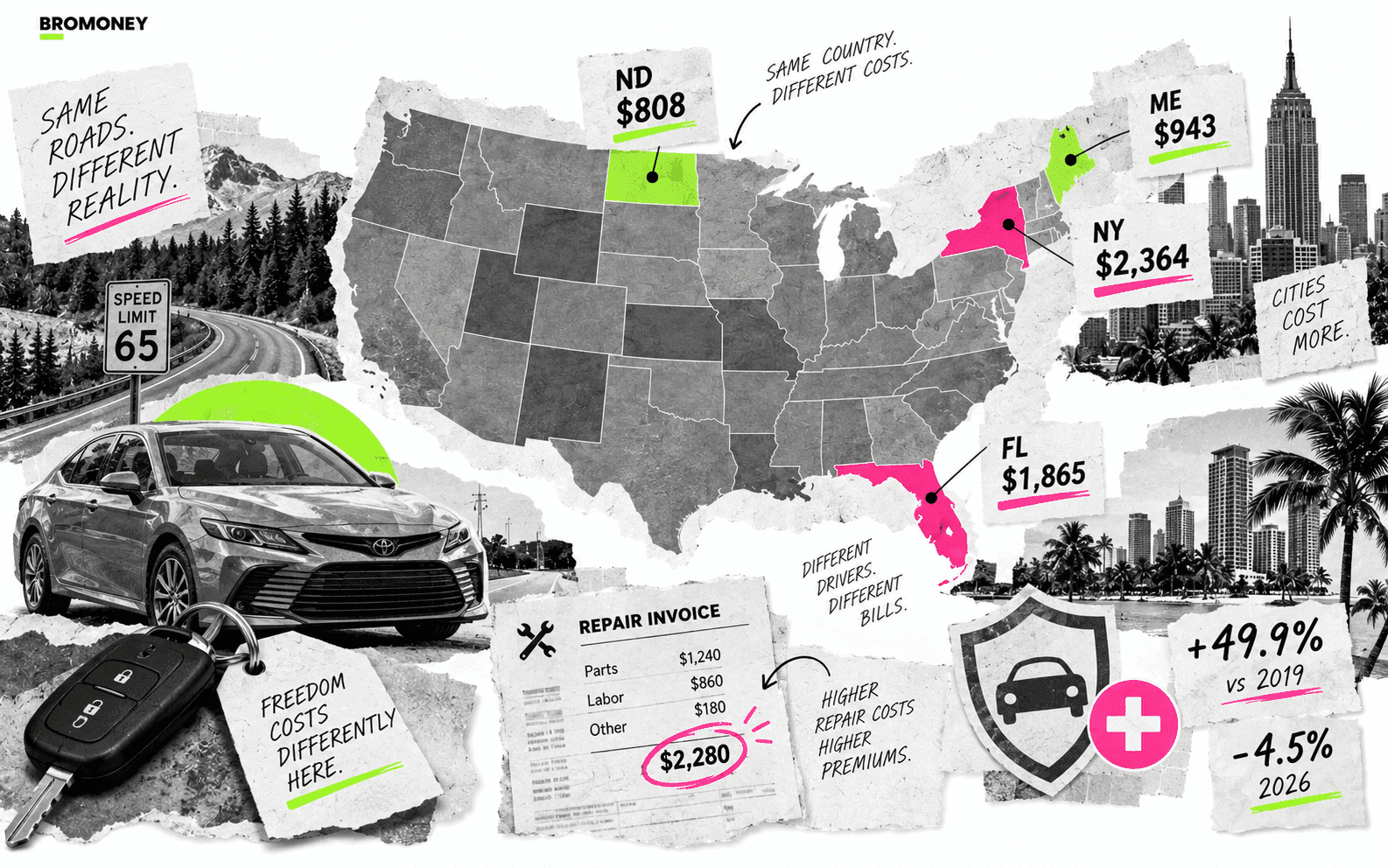
Car insurance spending rose 12.3 percent in 2024, one of only two costs BLS called statistically significant. NAIC's 2023 state averages, why rates are falling even as the level sits 49.9 percent above 2019, what actually drives claims costs, and which levers on your policy are worth checking.

Stop Blaming the Latte: Impulse Buying Isn't the Whole Budget Story
BLS data shows apparel and entertainment spending barely moved in 2024, while car insurance, housing and groceries rose - some by double digits. Why the numbers behind the top impulse-buying articles don't hold up, and a review method that starts with the bills, not the coffee.