


Refinancing Through Private Lenders: How It Works

Private mortgage refinancing replaces your existing home loan with a new one from a non-bank lender. That lender can be an individual investor, a lending syndicate, a hard money lender, or a Mortgage Investment Corporation in Canada.
The use case is narrow: a private lender helps when a bank says no because of self-employment income, damaged credit, high debt-to-income ratio, or an urgent deadline. In the field, I treat it as a bridge, not a permanent mortgage strategy.
What Is a Private Lender in Mortgage Refinancing?
A private lender funds mortgages outside the traditional bank channel. The loan still uses your property as collateral, but the approval logic changes. Banks start with income, credit score, and policy boxes. Private lenders start with equity and exit strategy.
Individual Investors and Mortgage Investment Corporations (MICs)
Individual investors use personal capital to fund one or more mortgages, usually through a licensed mortgage broker. The decision cycle is shorter because there is no bank committee.
Mortgage Investment Corporations (MICs) are a Canadian structure under the Income Tax Act. A MIC pools investor capital into mortgage loans and must distribute 100% of its taxable income to shareholders as dividends to keep its pass-through tax treatment. Provincial regulators such as FSRA in Ontario and BCFSA in British Columbia oversee mortgage brokering and administration.
In the U.S., the closest category is hard money lending: short-term, asset-based mortgage financing for borrowers who do not fit conventional underwriting.
How Private Lenders Differ from Banks and B-Lenders
| Parameter | Bank or A-lender | B-lender | Private lender |
|---|---|---|---|
| Main approval driver | Credit, income, DTI, property | Flexible income and credit review | Property value and exit plan |
| Best fit | Strong credit profile | Self-employed or moderate credit issues | Urgent case, weak file, strong equity |
| Income review | Strict documentation | Flexible documentation | Limited, but still reviewed |
| Cost | Lowest | Middle | Highest |
| Term style | Long-term mortgage | Shorter alternative mortgage | Short bridge loan |
| Regulation | Bank and consumer laws | Provincial or state rules | Provincial or state rules, plus consumer laws where applicable |
The key point: “private” does not mean “unregulated.” In the U.S., the CFPB supervises certain nonbank mortgage originators and servicers. In Canada, licensing rules sit mainly at the provincial level.
How Private Lender Refinancing Works: Step by Step
Private refinancing moves faster than a bank file because it centers on collateral. That speed helps, but it also compresses your time to review costs.
Step One - Assess Home Equity and Financial Situation
Start with three figures: payoff balance, estimated property value, and monthly cash flow. The equity gap tells you whether the deal has room.
If your refinance is also meant to consolidate debts, run the payments through a tool before you apply. Bromoney’s debt payoff calculator helps compare whether refinancing lowers total cost or only lowers the monthly payment.
Step Two - Work With a Licensed Mortgage Broker
Most private investors do not lend directly to borrowers. They rely on brokers to screen files, structure terms, and manage documents.
In the U.S., check licensing through NMLS Consumer Access. In Canada, check the provincial regulator. A broker should explain who pays each fee, when it is due, and whether the fee is refundable if the deal fails.
Step Three - Property Appraisal and LTV Calculation
The appraisal controls the maximum loan amount. A lender orders or accepts a report from an approved appraiser, then calculates loan-to-value, or LTV.
Do not rely on a real estate website estimate. In private lending, a lower appraisal can reduce proceeds, change the rate, or kill the deal. This is where many urgent refinances break.
Step Four - Review and Approval by the Private Lender
The lender issues a commitment letter. Read it line by line. Focus on:
- rate type and payment structure;
- lender fee and broker fee;
- renewal fee;
- default rate;
- prepayment terms;
- maturity date;
- required insurance;
- legal costs;
- exit conditions.
If the payment only works because the loan is interest-only, say that out loud. You are buying time, not solving the balance.
Step Five - Legal Process, Closing, and Funding
In Canada, lawyers register the new mortgage and discharge the old one. In the U.S., a title company or closing agent handles the lien and payoff process.
For U.S. consumer mortgage refinances, federal rules also require key disclosures. The CFPB explains that a Closing Disclosure must generally arrive at least three business days before closing. Use that window. Compare the final terms with the estimate before you sign.
Who Qualifies for Private Lender Refinancing?
Private lenders are not looking for perfect borrowers. They are looking for enough collateral and a credible exit.
Typical Borrower Profiles
I usually see three borrower types:
- Self-employed owners whose tax returns understate cash flow.
- Borrowers with damaged credit after late payments, collections, or a recent financial shock.
- High-debt households that fail bank debt-to-income rules but still have strong home equity.
A private lender may still decline the file. Active fraud flags, unclear title, weak property marketability, and no repayment plan can stop approval.
Equity Requirements and Maximum LTV
The more damaged the file, the more equity the lender wants. A low score, high DTI, or urgent foreclosure risk pushes the lender toward a lower LTV.
Before applying, estimate your debt-to-income position with the DTI calculator. It will not replace underwriting, but it shows whether the bank rejection came from cash flow, credit, or collateral.
Common Reasons to Refinance Through a Private Lender
The cleanest reason is a defined bridge: stop a foreclosure process, consolidate urgent debt, finish a property sale, or create time to qualify for a bank later.
The weakest reason is lifestyle cash-out. If the loan has no exit plan, the private mortgage becomes a more expensive version of the same problem.
Costs and Rates: What to Expect
Private mortgages cost more because the lender takes a file the bank rejected. Expect a higher rate, shorter term, and more front-end fees than a conventional refinance.
Private Mortgage Interest Rates
Private rates depend on collateral, lien position, location, borrower history, and urgency. A first lien on a liquid property prices better than a second lien on a hard-to-sell property.
For conventional mortgage refinancing, Freddie Mac estimates closing costs at 3% to 6% of the principal balance. Private mortgage costs can exceed that when broker, lender, renewal, and legal fees stack together.
Lender, Broker, and Other Fees
Ask for the fee sheet before ordering an appraisal. You want the full cost, not just the rate.
| Cost item | What to check | Why it matters |
|---|---|---|
| Lender fee | Charged for funding the loan | Often paid from proceeds at closing |
| Broker fee | Charged for arranging the lender | Can materially reduce net cash received |
| Legal or title fees | Paid to close and register the lien | Required to discharge the old mortgage |
| Appraisal | Confirms collateral value | Controls loan size and LTV |
| Renewal fee | Charged if you extend the loan | Turns a bridge into an expensive cycle |
| Default charges | Triggered by missed payments | Can accelerate foreclosure risk |
Sample Total Cost
A private refinance should pass a simple test: does the benefit exceed all fees and interest before maturity?
| Question | Good sign | Red flag |
|---|---|---|
| What problem does it solve? | Stops a defined short-term risk | Funds normal spending |
| How do you exit? | Bank refinance, sale, or documented income recovery | “Rates will improve” |
| What happens at maturity? | Payoff source is identified | You need another private renewal |
| Does payment fit cash flow? | Budget works without new debt | Payment depends on more borrowing |
Risks and Drawbacks of Private Lender Refinancing
Private refinancing is useful when you respect the risks. It becomes dangerous when the borrower treats it like a regular mortgage.
Short-Term Nature and Renewal Risk
A private mortgage matures quickly. If your credit, income, or property value does not improve, the next lender may be another private lender at another high cost.
Higher Total Cost of Borrowing
A lower monthly payment does not prove savings. It may only mean the lender switched you to interest-only payments or pushed the balance into the future.
If credit card balances caused the cash-flow squeeze, also review utilization with Bromoney’s credit utilization calculator. Rebuilding credit is harder when cards refill after consolidation.
What Happens If You Can't Repay or Refinance Again?
The lender can enforce its security. In Canada, that may mean power of sale. In the U.S., it may mean foreclosure under state law. Either way, the timeline is not forgiving.
My rule with clients is simple: do not sign a private mortgage until you can name the exit in one sentence.
Exit Strategy: Returning to a Traditional Lender
The best private refinance has a return plan from day one. You use the term to fix the reason the bank declined you.
Rebuilding Credit During the Private Mortgage Term
Pay the private mortgage on time. Reduce revolving balances. Avoid new hard inquiries unless they serve the exit plan. Keep income documentation clean, especially if you are self-employed.
Timeline: When You Can Expect a Bank Mortgage
A bank return usually needs clean payment history, lower credit utilization, stable income records, and a property that still supports the loan amount.
Do not wait until maturity month. Start the bank or B-lender review early enough to solve document gaps, appraisal issues, or title problems.
Private Lender Refinancing vs. Other Alternatives
Private lending is not the only bridge. Compare it against cheaper tools first.
HELOC (Home Equity Line of Credit)
A HELOC works for borrowers with stronger credit who need flexible access to home equity. It is usually cheaper than private refinancing, but the lender will scrutinize credit, income, and combined LTV.
Second Mortgage
A second mortgage adds a new lien without replacing the first mortgage. It can work when the first mortgage has a good rate and the cash need is limited.
B-Lender Refinancing
A B-lender can be the better middle path if your file is bruised but not broken. You still face higher pricing than a bank, but the structure is usually less expensive than a private hard money refinance.
FAQ: Private Lender Refinancing
Can I refinance with bad credit?
Yes, if the property has enough equity and the exit plan is credible. Bad credit raises the cost and lowers the lender’s appetite for risk, but it does not automatically end the file.
How quickly does a private lender approve?
Private lenders move faster than banks because the file centers on collateral. Speed depends on appraisal, title, payoff statements, and legal closing.
What is the maximum LTV for private mortgage refinancing?
There is no universal cap. The lender sets LTV by property type, market liquidity, lien position, credit risk, and exit strategy. A weaker borrower profile usually means a lower approved LTV.
Are private mortgage lenders regulated in Canada and the U.S.?
Yes, but the framework differs. Canada relies heavily on provincial mortgage regulation. The U.S. uses state licensing, the SAFE Act framework, NMLS records, and federal consumer-protection oversight for covered nonbank mortgage activity. Always verify the license before paying a fee or signing a commitment.

Denis Goncharenko
Head of Content
Editorial Policy: no secondary statistics. Every claim is linked to an official source and dated — datasets and methods are open for review.

Was this article helpful?
Same blogs

Direct Consolidation Loan: Pros and Cons Explained
Direct Consolidation Loan can simplify federal student loans, but it may raise lifetime interest, affect PSLF counts, and erase borrower benefits.
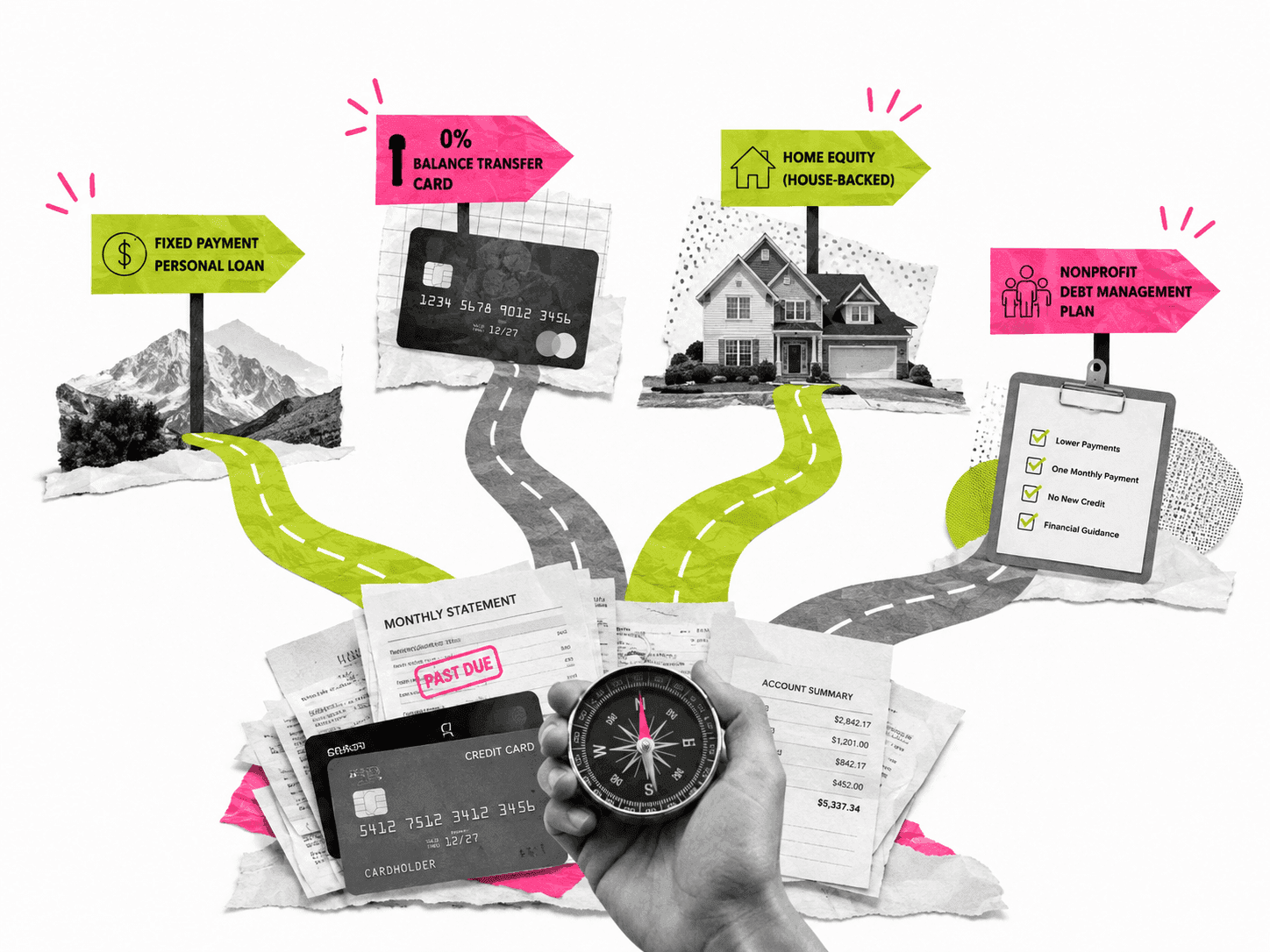
Debt Consolidation Options Compared: Which Path Fits Your Debt?
Compare debt consolidation options including personal loans, balance transfers, home equity, and debt management plans to find your best path.
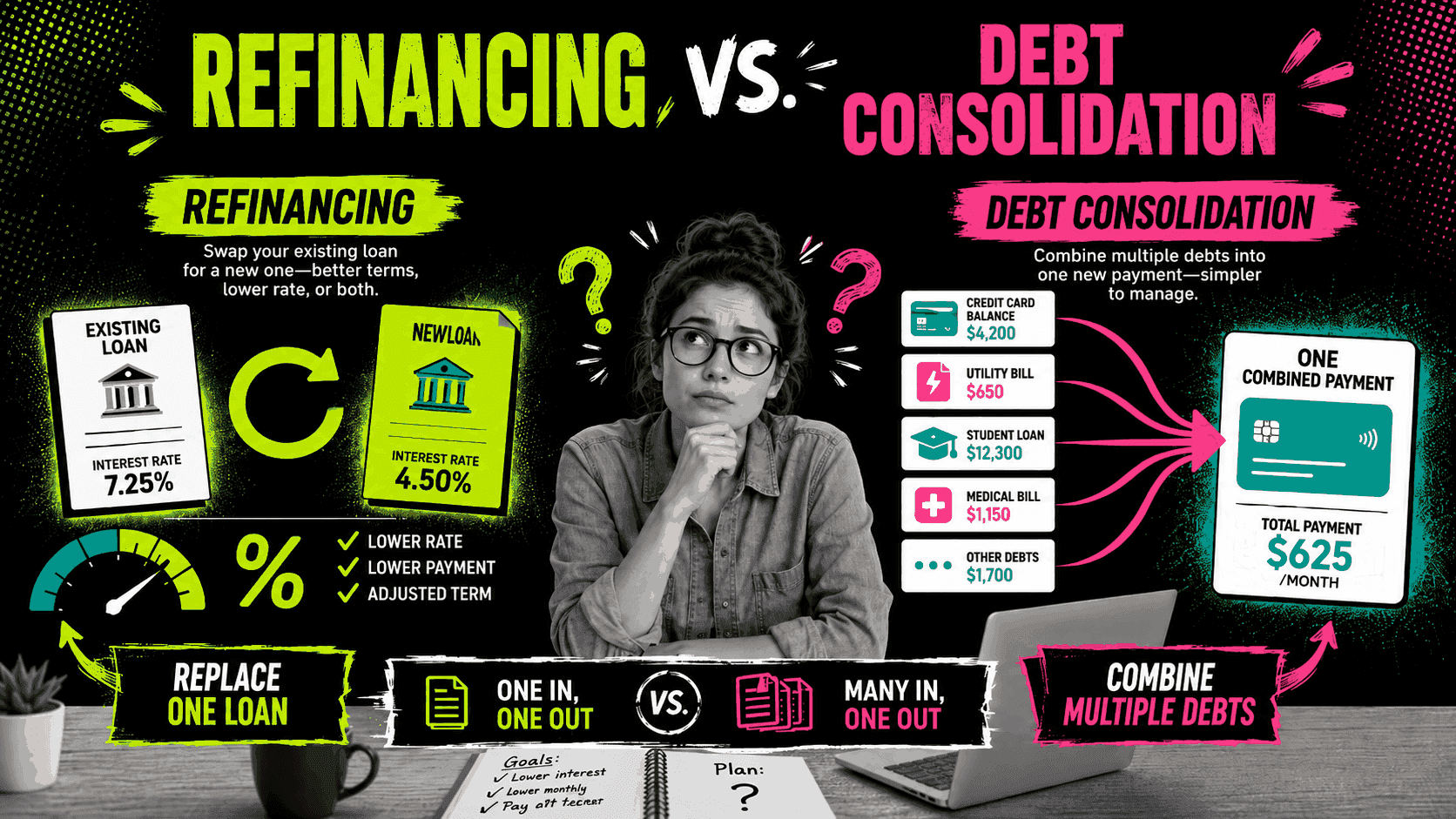
Refinancing vs Debt Consolidation: What These Terms Actually Mean
Learn the real difference between refinancing and debt consolidation to choose the right strategy for your financial situation.