
Debt Consolidation Options Compared: Which Path Fits Your Debt?
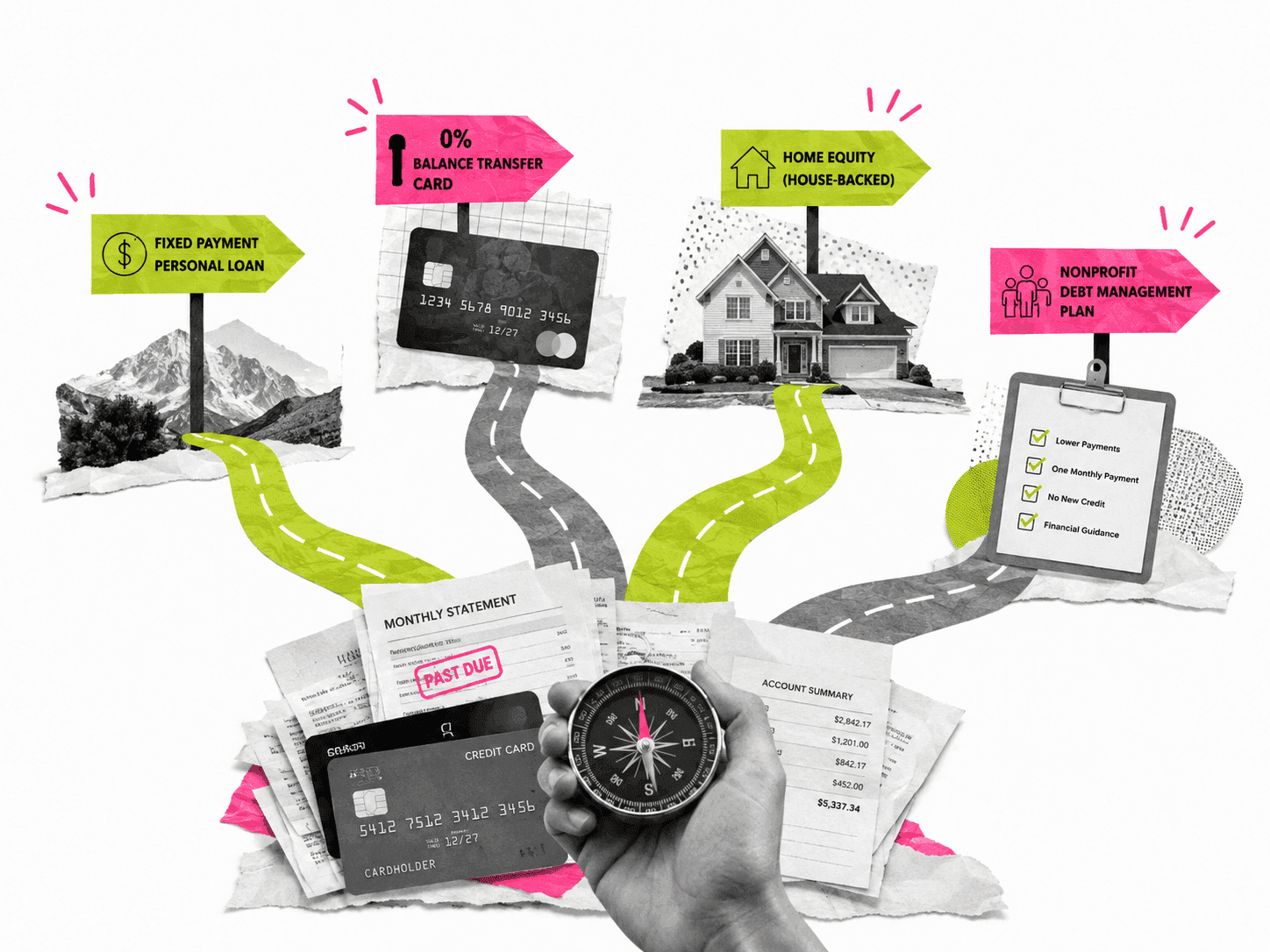
Debt consolidation sounds like one clean move: combine several debts into one payment and pay less interest. The reality has more layers. The right strategy depends on credit score, debt type, income stability, home equity, risk tolerance, and the reason the debt was built up.
That is why debt consolidation options deserve a side-by-side comparison before any application. A personal loan helps one borrower cut credit card interest. A balance transfer card helps another borrower pay off debt during a promotional window. A debt management plan helps individuals who need structure but do not qualify for a low-rate loan. Home equity helps some homeowners, but it also puts the house at risk.
Household debt is not a small problem. The Federal Reserve Bank of New York reported total U.S. household debt at $18.8 trillion in the first quarter of 2026. TransUnion also reported that personal loan balances hit a record $277 billion in the same quarter. Those numbers show why more borrowers compare options for debt consolidation before making a move.
The goal is not to pick the product with the best headline. The goal is to choose the structure that lowers cost, simplifies repayment, and prevents new balances from growing behind the old ones.
What Debt Consolidation Means
Debt consolidation combines multiple debts into one repayment path. The borrower uses a new loan, credit product, or managed repayment plan to pay off selected debts. After that, one monthly payment replaces several due dates.
Most people use consolidation for credit cards because revolving balances often carry high variable rates. Personal loans, balance transfer cards, home equity loans, and debt management plans are common tools. Each one has a different approval process, cost structure, and risk profile.
Debt consolidation does not reduce the principal by itself. A borrower who owes $18,000 still owes $18,000 unless a creditor agrees to settle for less, which is a different and riskier process. Consolidation changes how the debt gets repaid.
That difference matters. The best debt consolidation options help borrowers repay full balances under cleaner terms. They do not create false hope or hide fees behind low monthly payments.
Personal Loans for Debt Consolidation
A personal loan is one of the common debt consolidation loan options. The lender deposits funds into the borrower's bank account or pays creditors directly. The borrower then repays the loan with a fixed monthly payment over a set term.
This option works well for borrowers with fair, good, or excellent credit. A fixed rate gives predictability. A fixed term creates an end date. Credit cards do not provide that structure because minimum payments shrink as the balance drops.
The main value is control over interest and timeline. A borrower with several cards at 24% APR who qualifies for a personal loan at 13% APR cuts the cost of carrying debt. The fixed payment also forces progress because the account amortizes over time.
Personal loans have tradeoffs. Some lenders charge origination fees. A 5% fee on a $20,000 loan removes $1,000 from the funded amount. If the borrower needs the full $20,000 to pay creditors, the loan amount must be higher or the borrower must bring cash to closing.
The other risk is behavior. Paid-off credit cards show available credit again. If spending habits do not change, the borrower ends up with a personal loan plus new card balances.
Personal loans are often the best option for debt consolidation when the borrower qualifies for a lower APR, wants a fixed payoff date, and has a clear rule for card use after payoff.
Balance Transfer Credit Cards
A balance transfer card lets a borrower move existing credit card debt to a new card with a promotional APR. Many offers feature 0% APR for a set period, followed by a regular variable rate.
This can be a strong option for credit card debt consolidation options when the borrower has good credit and a realistic payoff plan. The math is simple: interest pauses during the promo period, so more of each payment attacks principal.
The catch is the clock. If the balance remains after the promotional period, the regular APR begins. Balance transfer fees also matter. A 3% to 5% fee is common in the market. That fee gets added to the balance, so the borrower pays for access to the promo rate.
A balance transfer card works best when the debt amount fits within the credit limit and the borrower can repay before the promotion ends. It works poorly when the borrower only moves balances around and keeps spending.
This option also preserves the revolving-credit problem. The borrower still uses a credit card as the repayment vehicle. For someone who needs firm structure, a personal loan or debt management plan often works better.
Home Equity Loans and HELOCs
Homeowners sometimes use home equity to consolidate debt. A home equity loan gives a lump sum with a fixed payment. A home equity line of credit, or HELOC, gives access to a revolving line secured by the home.
These products often offer lower rates than unsecured loans because the lender has collateral. That lower rate creates value when the borrower replaces high-interest credit card debt with a secured product.
The risk is serious. Credit card debt is unsecured. Home equity debt is secured by the property. If payments fail, the borrower risks the home. That trade should never be minimized.
Home equity also adds closing costs, appraisal requirements, and longer repayment timelines. A longer term can make the monthly payment look easier while increasing total interest paid over time.
This path can fit homeowners with stable income, meaningful equity, and a disciplined payoff plan. It is a poor fit for borrowers whose debt came from ongoing budget shortfalls. Securing old credit card debt with a home does not fix a monthly cash-flow gap.
Debt Management Plans Through Credit Counseling
A debt management plan is not a loan. It is a structured repayment program through a nonprofit credit counseling agency. The agency reviews the budget, works with creditors, and sets one monthly payment. The agency then distributes payments to creditors.
This is one of the overlooked types of debt consolidation because no new loan gets created. The borrower still repays creditors, but the process becomes centralized.
Debt management plans often reduce interest rates or fees on participating credit cards. They also build discipline because accounts usually close or become restricted during the plan. That can feel limiting, but the limit is often the point.
This option helps borrowers who have steady income but cannot qualify for favorable loan terms. It also helps borrowers who want guidance instead of another credit product.
The tradeoff is reduced card access. Some creditors may close accounts. The plan also requires consistent payments for several years. Missed payments can cause creditors to remove concessions.
A debt management plan is not the same as debt settlement. The borrower repays the debt in full under adjusted terms. That distinction matters for credit impact and legal risk.
401(k) Loans
A 401(k) loan lets a borrower borrow from retirement savings and repay the account through payroll deductions. No credit check is usually required. The interest paid goes back into the retirement account.
This option feels attractive because approval can be easier. The rate may also look lower than credit card rates. Still, the risks are easy to underestimate.
Borrowed funds leave the market. That can reduce retirement growth. If the borrower leaves the job, repayment may accelerate. If the loan is not repaid according to plan, it can become a taxable distribution with penalties for many borrowers under age 59½.
A 401(k) loan should not be the first choice for routine credit card consolidation. It can make sense in narrow cases where the borrower has stable employment, no better rate options, and a clear repayment plan. Retirement money should not become a backup checking account.
Cash-Out Refinance
A cash-out refinance replaces the current mortgage with a larger new mortgage. The borrower receives the difference in cash and uses it to pay debts.
This option became less attractive for many homeowners after mortgage rates rose from pandemic-era lows. Replacing an older low-rate mortgage with a higher-rate mortgage can increase total housing cost, even if credit cards disappear.
A cash-out refinance also spreads short-term consumer debt across a long mortgage term. That can turn dinner bills, gas purchases, and old emergencies into debt paid over decades.
The option fits a narrower borrower profile: enough equity, a mortgage rate that still makes sense after refinancing, and debt levels large enough to justify closing costs. For many homeowners, a home equity loan or HELOC preserves the original mortgage and creates less disruption.
Debt Settlement
Debt settlement is often marketed beside consolidation, but it belongs in a different category. It is not consolidation. It is an attempt to negotiate with creditors for less than the full balance.
The Consumer Financial Protection Bureau warns that some companies advertising consolidation services are actually debt settlement companies. These companies may tell borrowers to stop paying creditors and deposit money into a special account. That approach can lead to late fees, penalty interest, collection calls, lawsuits, and credit damage.
The Federal Trade Commission also restricts many debt relief companies from collecting fees before they achieve results under the Telemarketing Sales Rule.
Debt settlement is one of the debt consolidation alternatives people consider when full repayment looks impossible. It may fit some hardship situations, but it carries higher risk than consolidation. A creditor does not have to accept a settlement offer. Tax consequences can also apply when forgiven debt is treated as income.
Borrowers current on accounts should be cautious before choosing settlement. Stopping payments to create negotiation leverage can damage a credit profile that still had recovery options.
Bankruptcy
Bankruptcy is a legal process, not a consolidation tool. Still, it belongs in any honest comparison of alternatives to debt consolidation because some debt loads exceed what budgeting and refinancing can solve.
Chapter 7 can discharge many unsecured debts for eligible filers. Chapter 13 creates a court-supervised repayment plan. Both paths carry long-term credit consequences and require legal advice.
Bankruptcy exists for a reason. For borrowers facing lawsuits, wage garnishment, or debt levels that cannot be repaid within a realistic timeframe, speaking with a bankruptcy attorney can be more productive than taking another loan.
The mistake is waiting until all options are exhausted and fees pile up. A consultation does not force a filing. It gives a legal view of the available paths.
Comparing the Main Types of Debt Consolidation Loans
The phrase types of debt consolidation loans usually refers to unsecured personal loans, secured personal loans, home equity loans, HELOCs, and cash-out refinancing. Each product moves debt into a different structure.
Unsecured personal loans do not require collateral. They depend on credit, income, and debt-to-income ratio. Secured personal loans use collateral, such as a vehicle or savings account, which can lower lender risk but raises borrower risk.
Home equity loans and HELOCs use the home as collateral. Cash-out refinancing also uses home equity, but it changes the primary mortgage. These secured options often carry lower rates than unsecured credit, but missed payments put property at risk.
The right loan is not always the one with the lowest APR. Collateral, fees, term length, payment stability, and consequences of default all matter.
How to Choose the Best Option
The best option for debt consolidation is the one that solves the real problem. If the problem is high interest and the borrower has good credit, a personal loan or balance transfer card can work. If the problem is disorganization, direct-pay personal loans or credit counseling can help. If the problem is income shortfall, consolidation alone will not solve it.
Use five filters before choosing:
- Total interest cost after fees
- Monthly payment that fits verified cash flow
- Time to payoff
- Risk if payments fail
- Protection against new credit card balances
This is where many borrowers make the wrong move. They compare payments, not outcomes. A lower payment attached to a longer term can look better while costing more. A secured loan can look cheaper while shifting risk to a home or car.
The strongest plan makes the debt smaller every month and leaves no easy path to rebuild the same balances.
Common Mistakes When Comparing Options
The first mistake is treating consolidation as approval-based instead of strategy-based. Getting approved does not mean the offer improves the situation.
The second mistake is ignoring fees. Origination fees, balance transfer fees, closing costs, and annual fees change the math. A loan with a lower rate but a large fee may not beat the current debt.
The third mistake is consolidating the wrong debts. Federal student loans, secured loans, and low-interest debts need separate review. Moving every balance into one product can remove protections or increase cost.
The fourth mistake is keeping paid-off cards active without rules. A paid-off credit card should not become open space for new spending. Alerts, autopay, lower limits, or card storage can protect the plan.
Final Recommendation
Debt consolidation is useful when it gives the borrower a lower cost, simpler payment structure, and clear payoff date. It is risky when it creates a new loan without changing the behavior or budget that caused the debt.
For many borrowers, the best debt consolidation options are unsecured personal loans, balance transfer cards, or nonprofit debt management plans. Home equity products fit homeowners with stable income and strong discipline. Debt settlement and bankruptcy are not standard consolidation tools, but they are debt consolidation alternatives when repayment in full no longer looks realistic.
Choose the option that matches the debt, the income, and the risk. The right plan should feel structured, measurable, and boring. Debt repayment works best when the path is clear enough to follow every month until the balance reaches zero.
Frequently Asked Questions
What are the main debt consolidation options?
The main debt consolidation options include personal loans, balance transfer credit cards, home equity loans, HELOCs, cash-out refinancing, and debt management plans through credit counseling agencies.
What are the best debt consolidation options for credit card debt?
The best credit card debt consolidation options are often personal loans, balance transfer cards, or nonprofit debt management plans. The right choice depends on credit score, APR, total debt, and ability to avoid new card balances.
What types of debt consolidation work without good credit?
Debt management plans can work without strong credit because they are not loans. Some secured loans also approve borrowers with weaker credit, but collateral raises risk. Debt settlement is not consolidation and can damage credit.
What are the main alternatives to debt consolidation?
The main alternatives to debt consolidation include budgeting with a payoff method, creditor hardship programs, debt settlement, and bankruptcy. Each path has different costs, risks, and credit effects.

Denis Goncharenko
Head of Content
Editorial Policy: no secondary statistics. Every claim is linked to an official source and dated — datasets and methods are open for review.

Was this article helpful?
Same blogs
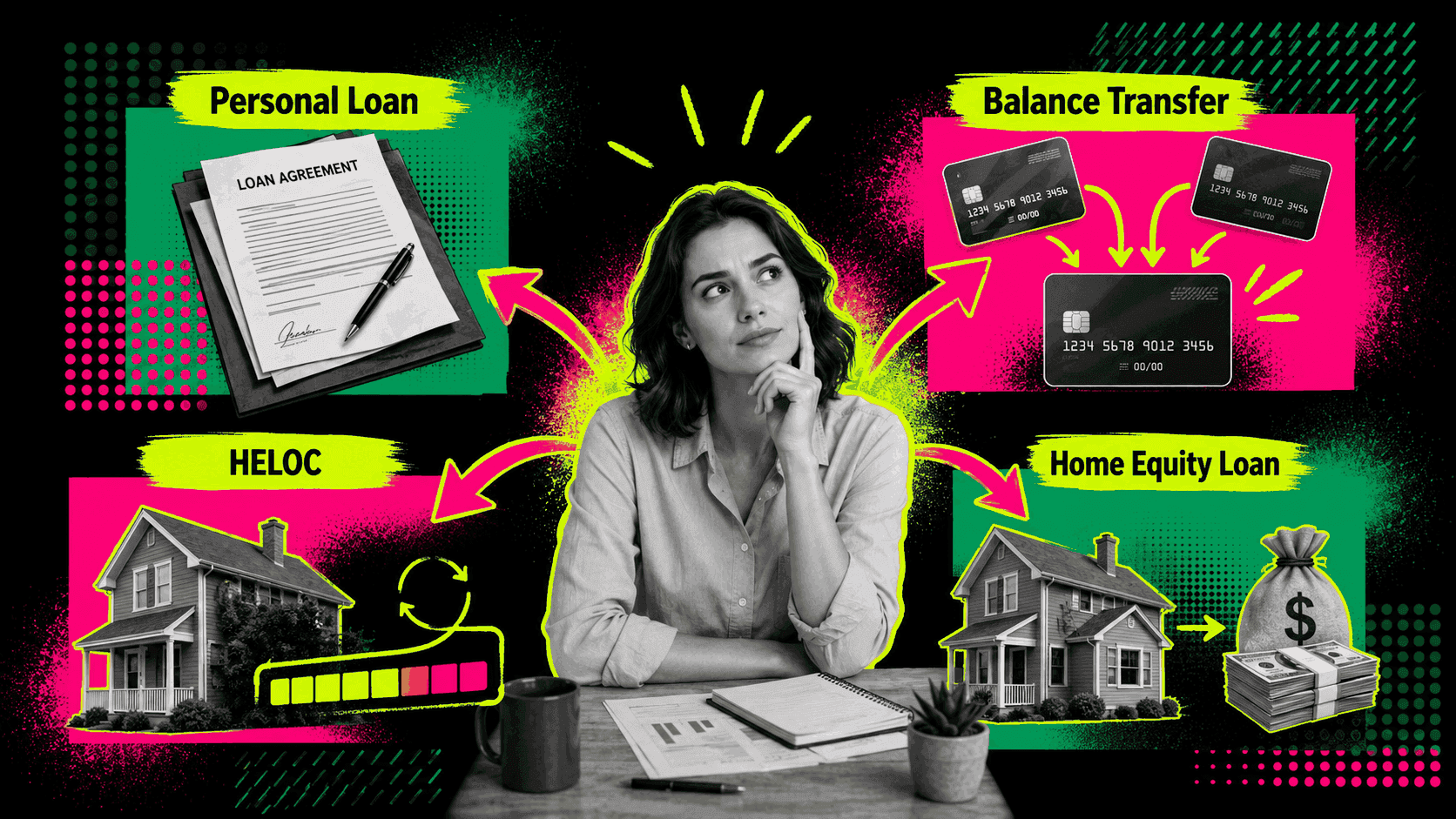
Compare: Personal Loan vs Balance Transfer vs HELOC vs Home Equity Loan
Compare four debt consolidation options to find the right balance between cost, risk, and flexibility for your situation.