
Compare: Personal Loan vs Balance Transfer vs HELOC vs Home Equity Loan

Debt consolidation gets easier to understand when the options sit next to each other. A personal loan, balance transfer card, HELOC, and home equity loan can all replace high-interest debt with a cleaner repayment path. Yet each one changes risk differently.
The wrong choice usually starts with one question: "Which option has the lowest payment?" That question misses the bigger issue. A low payment can hide a long-term, variable rate, closing costs, or collateral risk. A better question is this: "Which option lowers total cost without putting essential assets at risk?"
This comparison breaks down four common paths: personal loan, balance transfer, HELOC, and home equity loan. It also explains when to consider a cash-out refinance, how secured debt changes the stakes, and how to choose between a debt consolidation loan vs HELOC or a debt consolidation loan vs home equity loan.
The Four Main Options at a Glance
A personal loan is an unsecured installment loan. The borrower receives funds, pays off selected debts, and repays the loan with a fixed monthly payment.
A balance transfer card moves credit card balances onto a new card with a promotional rate. Many borrowers use this path to pause interest for a set period.
A HELOC, or home equity line of credit, uses home equity as collateral. It works like a revolving credit line, often with a variable rate.
A home equity loan also uses home equity as collateral, but it gives a lump sum with a fixed payment.
All four can support debt consolidation. The difference is not only cost. The difference is control, risk, flexibility, and consequences if payments fail.
Personal Loan for Debt Consolidation
A personal loan fits borrowers who want structure without pledging a home. The loan usually comes with a fixed rate, fixed payment, and fixed payoff date. That structure matters for credit card debt because cards allow balances to linger.
A personal loan works best when the new APR is lower than the blended APR on existing debts. It also helps when a borrower wants one monthly payment instead of several card due dates.
The main benefit is simplicity. A borrower with four credit cards can replace four minimum payments with one installment payment. Each payment reduces principal according to the loan schedule. There is no revolving credit line attached to the loan.
The main weakness is qualification. Strong credit, stable income, and a manageable debt-to-income ratio help secure better terms. Borrowers with weak credit may receive high APR offers that do not improve the situation.
Fees deserve attention. Some lenders charge origination fees. A fee reduces the cash available for payoff and raises the true cost. A $20,000 loan with a 5% origination fee delivers $19,000 before any creditor gets paid.
Personal loans are often a strong choice when credit is fair to excellent, the goal is full repayment, and the borrower does not want to turn unsecured credit card debt into debt secured by a home.
Balance Transfer Credit Card
A balance transfer card can be the lowest-cost option when used with discipline. The borrower moves existing card balances to a new card with a promotional APR. If the rate is 0% and the balance gets paid before the promotion ends, interest savings can be meaningful.
This option works for borrowers who have a clear payoff timeline. The math needs to happen before applying. Divide the transferred balance plus the transfer fee by the number of promotional months. That number is the required monthly payment.
A balance transfer card is not a cure for overspending. It keeps the debt inside a credit card structure. That means the borrower still has access to revolving credit. If the old cards stay open and new purchases start, the debt problem doubles.
Transfer fees also change the cost. A 3% to 5% fee is common in the market. On a $12,000 transfer, a 5% fee adds $600 immediately. That can still be cheaper than high credit card interest, but only when the payoff plan holds.
A balance transfer is a good fit for borrowers with good credit, a moderate balance, and enough monthly cash flow to finish before the promotional period expires. It is a poor fit for borrowers who need several years and firm guardrails.
HELOC for Debt Consolidation
A HELOC for debt consolidation gives access to home equity through a line of credit. The borrower draws what is needed, pays off selected debts, and then repays the HELOC according to the lender's terms.
HELOC debt consolidation feels flexible. That flexibility can help when balances change or when the borrower wants to consolidate in phases. The borrower does not have to take the full approved amount on day one.
The risk is also tied to flexibility. A HELOC is a revolving credit secured by the home. If the borrower keeps drawing from the line after paying off credit cards, the balance can grow again. A variable rate can also raise the payment when market rates change.
Many HELOCs have a draw period followed by a repayment period. During the draw period, payment requirements may be lower. In some cases, payments cover interest only. When repayment begins, the payment can rise because principal repayment starts.
The biggest issue is collateral. Credit card debt is unsecured. A HELOC is secured by the home. Missed payments can lead to foreclosure. That risk changes the decision, even when the rate looks attractive.
A HELOC works best for homeowners with stable income, strong equity, and a plan to freeze further draws after debt payoff. It works poorly when the household already struggles with variable expenses or unstable income.
Home Equity Loan for Debt Consolidation
A home equity loan for debt consolidation gives a lump sum backed by home equity. Unlike a HELOC, it usually comes with a fixed rate and fixed payment. That makes it easier to budget.
A debt consolidation home equity loan can lower interest rates compared with credit cards or unsecured loans. The lender has collateral, so the rate is often lower than unsecured credit. That can help borrowers with larger balances.
The advantage is certainty. The borrower receives one lump sum, pays off targeted debts, and repays under a fixed schedule. There is no draw period. There is no open line inviting more borrowing.
The risk is the same core risk attached to any home equity debt consolidation strategy. The home secures the loan. If payments fail, the borrower risks losing the property.
Closing costs and appraisal requirements also matter. Some lenders waive or reduce costs, but the borrower should confirm every fee. A low advertised rate loses value when costs are high, or the term stretches too long.
A home equity loan fits borrowers who need a fixed payment, have substantial equity, and want to consolidate a larger lump-sum balance. It does not fit borrowers who need flexibility or who lack confidence in long-term income.
Cash-Out Refinance vs Home Equity Line of Credit
The question cash out refinance or home equity line of credit comes up often because both tap home equity. They work in different ways.
A cash-out refinance replaces the existing mortgage with a new, larger mortgage. The borrower receives the difference in cash and uses it for debt payoff or another purpose.
A HELOC leaves the first mortgage in place and adds a separate credit line. The borrower draws only what is needed.
The home equity line of credit vs cash-out refinance decision depends heavily on the current mortgage rate. If the borrower has a low first-mortgage rate, refinancing into a higher rate can raise the cost of the entire mortgage balance. That is often a costly way to access cash.
A cash-out refinance can make sense when the current mortgage rate is high, the new rate improves the overall mortgage, and the borrower needs a large lump sum. It also consolidates everything into one mortgage payment.
A HELOC can make more sense when the existing mortgage is worth keeping. It adds a separate line without disturbing the original loan. The tradeoff is variable-rate risk and the temptation to draw again.
Refinance vs home equity line of credit is not a narrow rate comparison. It is a full-cost comparison. The borrower should compare closing costs, new mortgage rate, total interest, payment shock, and how long the debt remains.
Debt Consolidation Loan vs HELOC
A debt consolidation loan vs HELOC comparison starts with collateral. A personal debt consolidation loan is usually unsecured. A HELOC is secured by the home.
The personal loan wins on simplicity and asset protection. It has a fixed payment and no home collateral. If the borrower defaults, credit damage and collection activity can follow, but the home is not the direct collateral.
The HELOC wins on flexibility and potential rate advantage. It can be useful when the borrower has strong home equity and wants access to funds over time. The line can also help when debt payoff amounts change.
The personal loan usually works better for borrowers who want a clean endpoint. The HELOC usually works better for borrowers with variable payoff needs and high discipline.
The deciding factor should not be the rate alone. A lower HELOC rate does not automatically beat an unsecured loan if the borrower values fixed payments and wants to avoid home risk.
Debt Consolidation Loan vs Home Equity Loan
A debt consolidation loan vs home equity loan comparison also turns on collateral, loan size, and predictability.
Both can offer fixed payments. Both can fund a one-time payoff. The personal loan is unsecured and often faster. The home equity loan is secured and may offer a lower rate for qualified homeowners.
A personal loan can close faster and avoid property paperwork. It also avoids appraisal delays and title-related costs. That speed helps when credit card interest is accumulating daily.
A home equity loan can work for larger balances. It often allows longer terms, which lowers the payment. That benefit can become a drawback when the borrower pays interest for many years.
The home equity loan may be better for a homeowner with large high-interest balances, stable income, and a clear repayment schedule. The personal loan may be better when the borrower wants to protect the home and pay off the debt faster.
Which Option Costs Less?
The lowest rate does not always mean the lowest cost. Total cost depends on APR, fees, term, payment behavior, and whether the borrower adds new debt after consolidation.
A balance transfer card can cost less than every other option if the borrower pays the balance during the promotional period. Miss that deadline, and the regular APR can erase much of the benefit.
A personal loan can cost less than credit cards when the APR is lower and the term is not stretched too far. It also gives a fixed payoff date.
A HELOC can cost less at first, but variable rates and interest-only periods can hide future payment increases.
A home equity loan can offer a lower fixed rate than unsecured debt, but closing costs and long terms can raise total interest.
The cleanest comparison is total dollars paid until the debt reaches zero. Any lender offer should be tested against that number.
Which Option Is Safest?
The safest option is usually the one that does not secure unsecured debt with a home. That points to balance transfer cards and personal loans. Between those two, the personal loan often gives a better structure because it removes the revolving credit feature.
Home equity options can make sense, but they demand caution. A lower rate is valuable only when income supports the payment, and the borrower avoids new card balances.
Safety also depends on behavior. A balance transfer card is unsafe for someone who keeps charging. A personal loan is unsafe for someone who treats paid-off cards as spending room. A HELOC is unsafe for someone who sees the available line as emergency savings.
Quick Decision Guide
Use a balance transfer card when the debt is limited, credit is strong, and the payoff will finish before the promo ends.
Use a personal loan when the borrower wants a fixed payment, fixed term, and no home collateral.
Use a HELOC when flexibility matters, equity is strong, income is stable, and variable-rate risk is acceptable.
Use a home equity loan when the borrower needs a larger lump sum, wants a fixed payment, and accepts the home-collateral risk.
Consider cash-out refinancing only when the new mortgage improves or reasonably preserves the overall mortgage cost. It should not replace a low-rate mortgage only to pay credit cards.
Common Mistakes
The first mistake is comparing only monthly payments. A lower payment can come from a longer term, not a better deal.
The second mistake is ignoring collateral. Turning credit card debt into home-secured debt raises the consequence of default.
The third mistake is overlooking fees. Origination fees, balance transfer fees, closing costs, appraisal fees, and annual fees all affect the real cost.
The fourth mistake is keeping old credit cards active without rules. Paid-off cards need guardrails. Autopay, spending alerts, and lower limits can protect the plan.
The fifth mistake is using consolidation before fixing cash flow. If expenses still exceed income, a new loan delays the problem.
Final Verdict
A personal loan is often the balanced choice. It gives structure, speed, and no home collateral. A balance transfer card can be cheaper when the payoff window is short, and discipline is strong. A HELOC offers flexibility but adds variable-rate and home-collateral risk. A home equity loan offers fixed payments and lower-rate potential, but it turns unsecured debt into secured debt.
The best choice depends on the borrower's real constraint. If the constraint is interest, compare APR and fees. If the constraint is behavior, choose structure. If the constraint is payment size, review the total cost before extending the term. If the constraint is qualification, avoid risky products that require approval but create bigger consequences.
Debt consolidation should move debt toward zero. Any option that lowers stress this month but increases risk for years deserves a second look.
Frequently Asked Questions
Is a home equity loan good for debt consolidation?
A home equity loan can help when the borrower has strong equity, stable income, and high-interest debt. The risk is serious because the house secures the loan.
Is a HELOC good for debt consolidation?
A HELOC can work for disciplined homeowners who want flexible access to equity. It carries variable-rate risk and can become dangerous if the borrower keeps drawing from the line.
Which is better: a debt consolidation loan vs HELOC?
A debt consolidation loan is often better for borrowers who want a fixed payment and no home collateral. A HELOC can fit borrowers who need flexibility and accept home-secured debt risk.
Which is better: a debt consolidation loan vs home equity loan?
A debt consolidation loan usually offers speed and no collateral. A home equity loan may offer a lower rate and larger loan size, but the borrower risks losing the home if payments fail.
Which is better: refinance vs home equity line of credit?
A refinance can work when the new mortgage rate and costs make sense. A home equity line of credit often works better when the borrower wants to keep an existing mortgage and borrow only what is needed.

Denis Goncharenko
Head of Content
Editorial Policy: no secondary statistics. Every claim is linked to an official source and dated — datasets and methods are open for review.

Was this article helpful?
Same blogs
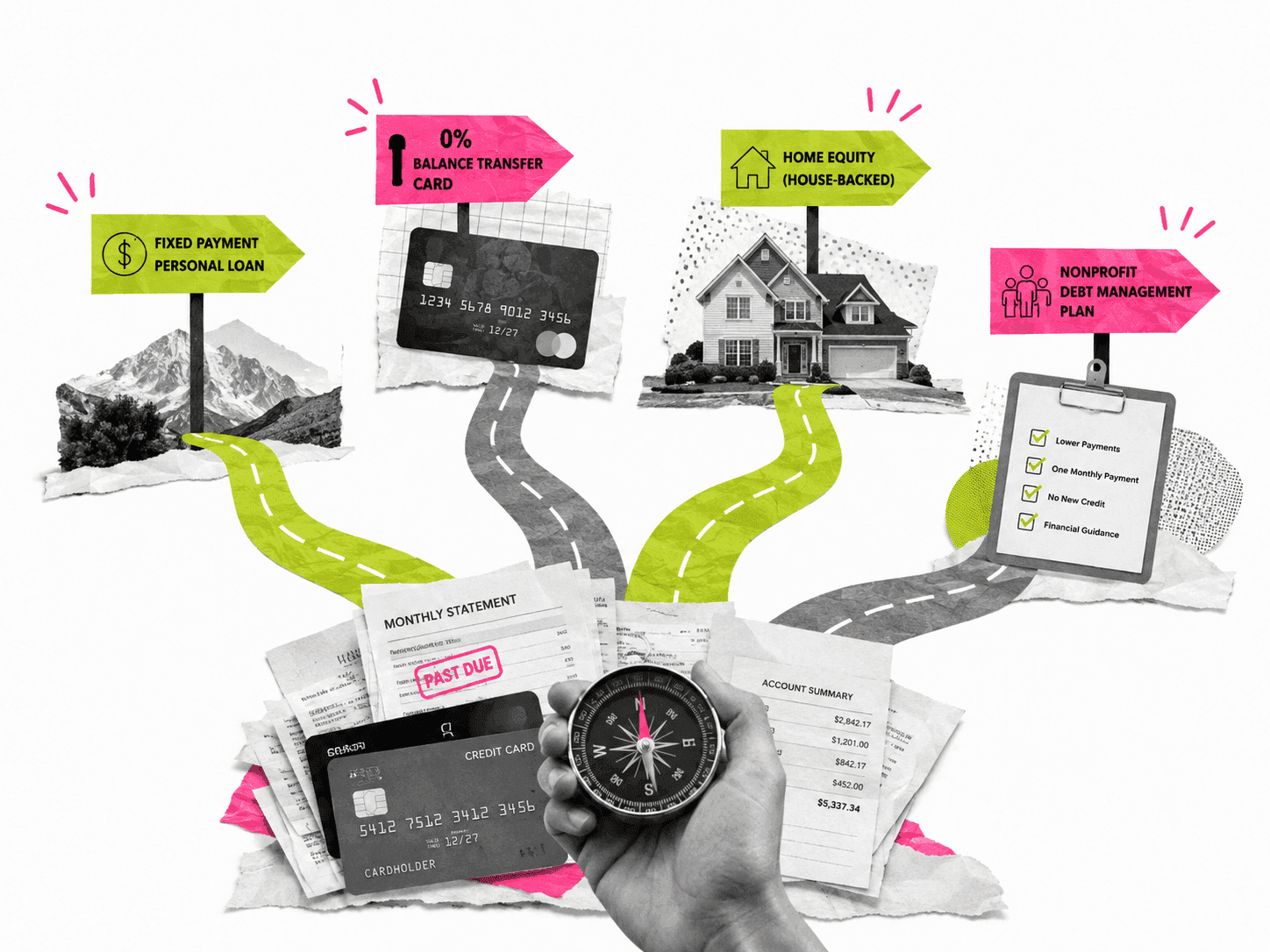
Debt Consolidation Options Compared: Which Path Fits Your Debt?
Compare debt consolidation options including personal loans, balance transfers, home equity, and debt management plans to find your best path.
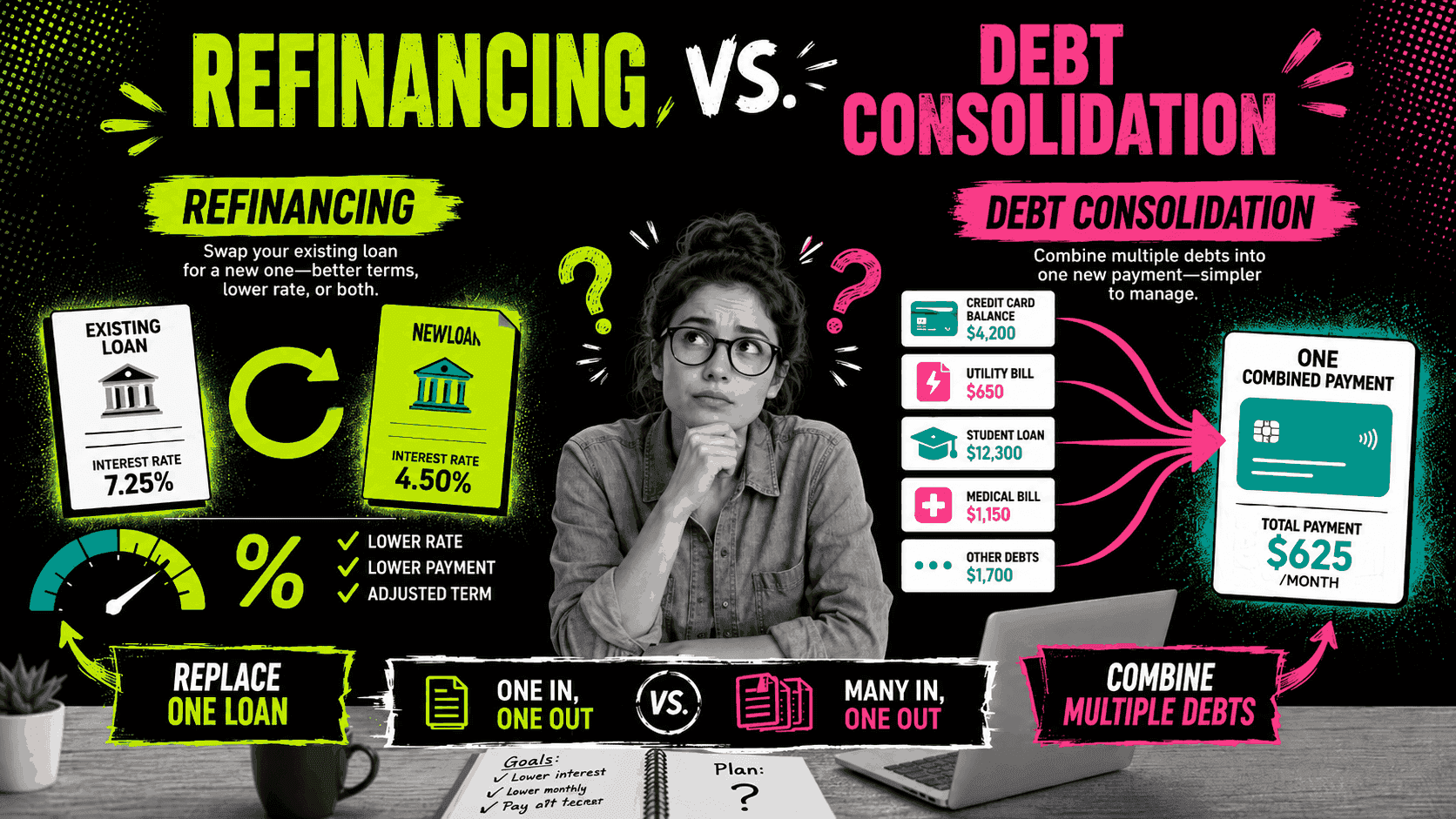
Refinancing vs Debt Consolidation: What These Terms Actually Mean
Learn the real difference between refinancing and debt consolidation to choose the right strategy for your financial situation.

Debt Consolidation Quick Self-Check: Affordability, Timeline, Lower APR
Test three critical factors before consolidating debt: affordability, timeline, and lower APR to ensure real financial improvement.