Age & Residency
You generally need to be at least 18 and a U.S. resident to be considered as a borrower. Basic eligibility comes first, before the lender reviews the rest of your request.

A medical bill, a repair, or a pile of separate payments can make the month feel tight. A Texas personal loan gives you one fixed amount, paid back through equal scheduled payments over a set term, usually without collateral. With Bromoney, you fill out one form, review the options available to you, and decide what fits. The lender makes the decision, and no outcome is promised. A lower score isn't a verdict on you.
Compare lenders and decide,
Get startedSecure 256-bit Connection
A personal loan is a lump-sum installment loan, often $1,000 to $40,000, repaid in fixed monthly payments over a set term, usually two to seven years. The borrower gets the funds at once, then repays the amount borrowed plus interest until the balance is paid off. It's usually unsecured, meaning no collateral is required, and it's also called an unsecured installment loan. In plain terms, it can help you consolidate higher-interest debt or cover one larger planned cost.
A personal loan in Texas uses this repayment structure: Fixed scheduled payments over a set term. After one form, you see each option with the amount, APR, and repayment schedule in your account, so you can compare the dollars and the dates before you choose who moves forward.
Minimum credit score: None set by state law. That matters when your file has rough spots, because a lower score doesn't close the door by itself. The lender still reviews your information and makes the call, but you don't have to decide the answer for them before you've looked.
Cost disclosure (TILA): Required before you become obligated. A monthly payment can look fine on its own, then add up over the term. Use the APR and total of payments in the disclosure to compare what each option would actually cost you.
License required: Yes. Covered nonbank lenders operating in Texas generally need a state license, while banks and credit unions follow different frameworks. If a loan option feels off, you can check the lender's standing with the state regulator before you move forward.
The request may take a few minutes. Here's what most Texas lenders require before they can review your information and decide whether to offer credit.
You generally need to be at least 18 and a U.S. resident to be considered as a borrower. Basic eligibility comes first, before the lender reviews the rest of your request.
A lender will want to see income you can verify, which may include wages, benefits, or another steady source. They'll also look at your credit profile and current debt load to judge whether the payment is realistic, so bad credit may be considered, but it can come with tougher terms.
You usually need an active bank account so funds can be sent and monthly payments can be handled under the loan terms. Before you choose, make sure that account can support the payment date without squeezing essentials.
A home repair that can't wait or a medical bill that lands at the wrong time can throw off a budget. In Houston, a fixed payment schedule may feel easier to weigh than pulling down savings all at once. In San Antonio, one predictable payment can be part of sorting out several monthly obligations. In Dallas, the same idea can come up when a car repair stands between you and work. The useful part is seeing the cost and repayment dates side by side before you decide.
Experian puts the average credit score in Texas at about 692 (September 2025). If your score is lower, that number isn't a character report. Medical bills, reduced income, or a rough stretch can all leave marks on a file, and plenty of Texans start from there. Texas law sets no minimum score for a personal loan, so the options available to you come from the lender's review rather than a statewide cutoff.
Experian reports that consumers in Texas carry an average total debt balance, including mortgages, of about $98,401 (September 2025). A new personal loan payment doesn't live by itself; it lands next to the bills you already have. Before you agree, look at the full cost and the full term, not only the monthly amount. That's where the real trade-off shows up.
The Federal Reserve SHED report (2024) found that 63% of U.S. adults would cover a surprise $400 expense with cash, savings, or a card paid off at the next statement. That figure is national, not Texas-specific. It also measures how people would pay, not how much they earn. Still, it points to something familiar: an unplanned cost can squeeze a household even when people are doing their best to stay on track.
If a loan option feels wrong, the Texas regulator is a practical first stop. You can check a lender's standing before you proceed, and a complaint is a separate step through the same agency. Texas generally does not allow wage garnishment to collect an ordinary consumer debt like a personal loan, even after a court judgment, so your paycheck has a meaningful layer of protection. Service members across Texas also have the federal 36% MAPR limit under the Military Lending Act.
A payment plan is easier to judge when the cost and dates sit in front of you. With Bromoney, you fill out one form and review the options available to you in your account. We're not a lender, and we don't make credit decisions. You compare what each option would cost over the full term, choose who to move forward with, or stop with no obligation. It's free to start. We take a responsible approach to your data and do our best to prevent unwanted calls. Bromoney is operated by Money Broker LLC (DE File No. 10406065).

Estimate exactly how much you'll owe before you commit. Enter your loan amount and repayment term to see total costs, including fees and interest, laid out clearly.
Calculate my loanTexas consumer lending is overseen by the Texas Office of Consumer Credit Commissioner. For covered nonbank lenders, state licensing is generally part of the legal framework; banks and credit unions follow separate rules. Texas does not create a statewide minimum credit score for personal loans, so the credit call remains with the lender. For covered products, the federal Truth in Lending Act requires the APR and finance charge to be disclosed before you become obligated. Active-duty military borrowers also have the federal Military Lending Act's 36% MAPR protection. Your account disclosure is where the amount, term, and repayment details for a specific option should be reviewed.
Legal status
Legal
Consumer lending in Texas operates under state oversight, with personal loan activity subject to rules administered by the state regulator.
Regulator
Texas Office of Consumer Credit Commissioner
This agency supervises covered consumer lenders, handles borrower complaints, and provides public records you can use to check a lender before moving forward.
License required
Yes
Covered nonbank lenders operating in TX generally need a state license. Banks and credit unions follow separate federal or state frameworks. This is a legal rule, not a claim about any specific lender.
Repayment structure
Fixed scheduled payments over a set term
A personal loan is paid on a fixed schedule rather than in one single-payment payoff. The payment amount and due dates are set when you sign.
Collateral
Usually not required
Most personal loans are unsecured, so you usually don't pledge property. If a secured option appears, its collateral terms should be listed in the disclosure.
Minimum credit score
None set by state law
Texas does not set a credit score floor for personal loans. The lender reviews your profile and makes the decision.
Cost disclosure (TILA)
Required before you become obligated
For a covered product, federal Truth in Lending Act rules require the APR, finance charge, and total of payments before you sign. Compare those figures, not only the monthly amount.
The information on this page is educational and does not constitute legal or financial advice. Which rules apply to a specific loan depends on the type of license the lender holds and the loan amount under Texas law, so your contract may fall under a different provision than the general values shown above. This is a fact of law and is not a claim about the licensing status of any lender in our marketplace. Regulations change; consult the Texas Office of Consumer Credit Commissioner at occc.texas.gov and the current Texas Finance Code for authoritative guidance. Reviewed as of August 6, 2026.
Moving card debt to a balance-transfer card can give you breathing room during a lower-APR intro period. The catch is structure. You're still using revolving credit, the APR can change after the promo ends, and there usually isn't a fixed payoff date unless you make one and stick with it.
A home equity loan or another secured option may come with a lower cost because collateral backs the debt. That can help when you're borrowing for a major project, but your asset is on the line if payments aren't made, and the process can take more paperwork than an unsecured personal loan.
A credit union personal loan or local nonprofit option can be worth a look, especially if you're already a member or want a lower-cost place to borrow close to home. Loan amounts, APR caps, and local rules change by state, so check your state page before you choose.
Personal loans online don't work the same way in every state. Loan amounts, terms, APR, rate caps, and legal rules can change depending on where you live, whether you borrow to consolidate debt, cover a large expense, or compare options with bad credit. Choose your state below before you repay under local rules.
















A personal loan in Texas is a fixed amount you borrow and repay through equal scheduled payments over a set term, usually without pledging property as collateral. That payment schedule is the main thing that separates it from a short-term loan due in one payment. The Texas Office of Consumer Credit Commissioner regulates personal lending in the state. Covered nonbank lenders generally need a state license, while banks and credit unions sit under different regulatory systems. For a covered product, federal Truth in Lending Act rules require key disclosures before you become obligated, including the APR, finance charge, and total of payments.
Personal loans in Texas can come from banks, credit unions, and nonbank consumer lenders. With Bromoney, you can use a free loan marketplace to review the options available to you in one place, but Bromoney isn't a lender and doesn't make credit decisions. Here's the plain version: you fill out one form, your options show in your account, and you compare the cost and repayment dates before choosing who to move forward with. You can also walk away with no obligation. Some lenders handle the process online, so you may not need a branch visit. If someone promises a decision before reviewing your information, slow down and check that lender with the state regulator.
Texas law sets no minimum credit score for a personal loan. A bad credit score generally means a FICO score below 580, which is a market convention rather than a Texas legal category. The average credit score in Texas is around 692 (September 2025). If you're below that, it doesn't automatically end the conversation. The lender still makes the credit decision, and no outcome is promised.
Personal loan amounts and terms in Texas depend on the rules tied to the lender's license and on that lender's own review. Once you agree, the payment schedule is fixed: equal payments, set due dates, and a term established at signing. In your account, compare the amount, APR, payment size, and full term together. A lower APR can still cost more dollars if the term runs longer.
A personal loan cost in Texas is shown through the required disclosure for a covered product before you become obligated. Under the federal Truth in Lending Act, that disclosure lays out the loan amount, APR, finance charge, and total of payments. The monthly payment matters, of course, but it can hide how much you're on the hook for across the full term. Borrowers with lower scores may see higher-cost options in the broader market. Your real number is the one in the disclosure for the option you're reviewing.
No, a Texas personal loan usually doesn't require collateral. Most personal loans are unsecured, meaning you don't pledge property or another asset. Secured options can exist as a separate structure, and if one appears in your account, the collateral terms should be shown before you agree. Without collateral, borrowing costs can be higher in the market. A co-borrower or collateral requirement belongs to the specific option, not to a Texas rule that applies to every personal loan.
Yes, a personal loan request in Texas can affect your credit, and an open account may also show up in your credit history. A hard inquiry is possible, and more than one lender may run one, and it can affect your credit score. After the account is open, on-time payments and account activity may be reported to the major credit bureaus, but lenders don't all report the same way, so ask before you count on it. Missed payments, collections, or a court judgment can hurt your score. Under federal law, a negative entry typically stays on a credit report for around seven years. A personal loan isn't credit repair; it's debt you manage month by month.
A missed personal loan payment in Texas can lead to a late fee under your contract. If the debt stays unpaid, it may go to collections and may be reported to the credit bureaus. A creditor that wins a court judgment can use legal collection tools, but Texas generally does not allow wage garnishment for ordinary consumer debt like a personal loan, even after judgment. That's real paycheck protection. It doesn't erase the balance. If you're worried before the due date lands, contact the lender and ask what options apply to your account.
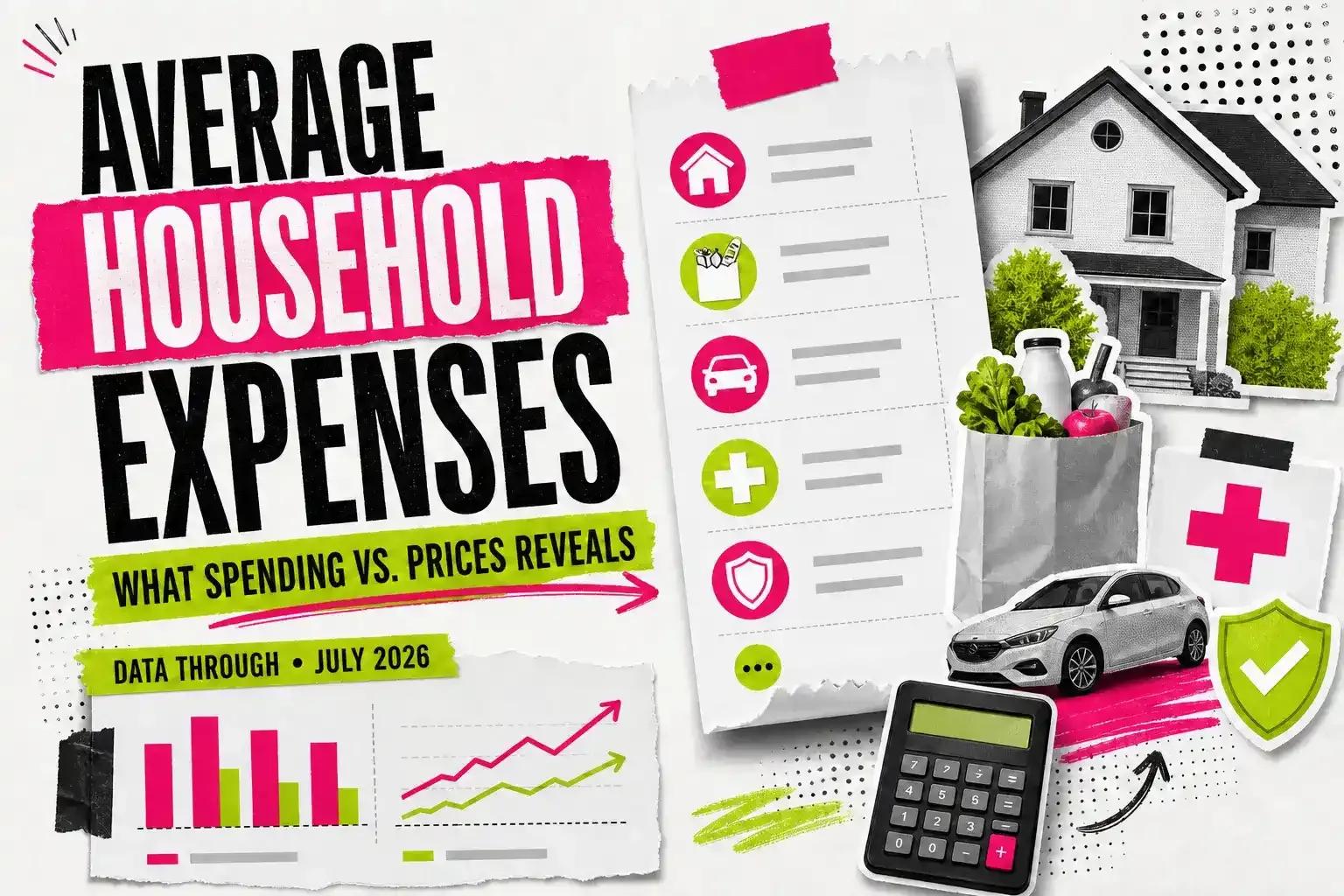
The average US consumer unit spent $78,535 in 2024 - about $6,545 a month. This page sets that spending record against the price indexes for the same two years, category by category, using our own CE-CPI crosswalk, and states plainly what the figures cannot show.
We bridge the gap between your financial goals and premier lending services nationwide.
Bromoney is a free loan marketplace operated by Money Broker LLC (DE File No. 10406065). Bromoney is not a lender and does not make credit decisions. Checking your options can involve a hard inquiry, more than one lender may run one, and your credit score can be affected. A lower credit score does not disqualify you by law. The decision belongs to the lender, and no outcome is promised. Submitting a request shares your details with lenders and partners in our marketplace, who may contact you by phone, text or email. Before you become obligated, the disclosure for a covered product sets out the loan amount, APR, finance charge, scheduled payment, and term. Options available to borrowers with lower credit can carry higher costs; review the full cost and repayment schedule before you agree. Personal lending in Texas is regulated by the Texas Office of Consumer Credit Commissioner. Covered military borrowers are protected by the Military Lending Act's 36% MAPR limit. Bromoney is not available in all states. We do our best to prevent unwanted calls, and you may be contacted about your request.
You know the drill: one loan request, then waiting for the calls to start. Here you stay in control — we treat your information with care, you compare the options available to you, and you choose which lender or partner to move forward with. We can't speak for every partner, but we do our best to keep unwanted calls down.

Submitted over a secure connection