

Age & Residency
You generally need to be at least 18 and a U.S. resident to be considered as a borrower. Basic eligibility comes first, before the lender reviews the rest of your request.

A furnace, a dental balance, or four small bills that all chose the same fortnight: the amount is manageable, the timing is not. Personal loans in Kentucky are usually unsecured and returned on a fixed schedule. Fill one form, then weigh what comes back in a single account. Kentucky law sets no minimum credit score. The decision belongs to the lender, and no outcome is promised.
Compare lenders and decide,
Get startedSecure 256-bit Connection
A personal loan is a lump-sum installment loan, often $1,000 to $40,000, repaid in fixed monthly payments over a set term, usually two to seven years. The borrower gets the funds at once, then repays the amount borrowed plus interest until the balance is paid off. It's usually unsecured, meaning no collateral is required, and it's also called an unsecured installment loan. In plain terms, it can help you consolidate higher-interest debt or cover one larger planned cost.
The questions are much the same wherever you send them, so answering once covers the ground. What returns collects in a single account, each entry carrying its sum, its rate and its run of due dates. Reading obliges you to nothing. Take one of them forward, or take none.
Read the lending statutes end to end and no required number appears in them. That silence is not permission and not refusal: the lender still decides what it is willing to offer. A score reports on a record, and a record is a narrower thing than a person.
Two loans can ask the same amount each month and still differ by hundreds by the final one, because the terms are not the same length. Before you agree, the required disclosure for a covered transaction sets out the APR and the total of payments. Compare at the end, not at the month.
Covered nonbank lenders generally need a state license, while banks and credit unions follow separate frameworks. A result promised before you share any information is worth checking with the state regulator. Covered servicemembers and their covered dependents keep the 36% MAPR limit on covered credit.
The request may take a few minutes. Here's what most Kentucky lenders require before they can review your information and decide whether to offer credit.
You generally need to be at least 18 and a U.S. resident to be considered as a borrower. Basic eligibility comes first, before the lender reviews the rest of your request.
A lender will want to see income you can verify, which may include wages, benefits, or another steady source. They'll also look at your credit profile and current debt load to judge whether the payment is realistic, so bad credit may be considered, but it can come with tougher terms.
You usually need an active bank account so funds can be sent and monthly payments can be handled under the loan terms. Before you choose, make sure that account can support the payment date without squeezing essentials.
A water heater in Louisville can go in the week the property tax notice arrives. A course fee in Lexington can be due before the semester's first paycheck clears. A trailer repair outside Bowling Green can idle the work that would pay for it. None of these are large sums; they are simply badly timed. An installment loan moves one of them onto a calendar, and you can see the cost and the repayment dates side by side, then decide if it fits.
The average credit score in Kentucky is around 704 (September 2025), as Experian reports it for the state. That figure is a summary of millions of files and a description of none of them. If yours is below it, you're not an outlier and it says nothing about your character. Lexington holds records of every kind, and poor credit names a record rather than the person behind it.
Consumers in Kentucky carry an average total debt balance, including mortgages, of about $72,884 (September 2025), as reported by Experian. A balance and a budget are different questions: what one household can carry says nothing about the next. What settles it is the term and the total read together, against the payments already on your own calendar. In Bowling Green as anywhere, that check comes before the signature.
Some costs arrive without asking the calendar. The Federal Reserve SHED report (2024) put 63% of U.S. adults in the group that would meet a surprise $400 expense with cash, savings or a card cleared at the next statement. It is a national reading rather than a Kentucky one. Note what was measured: a method of payment, not anyone's income or financial health.
The state regulator keeps a register, and a company can be looked up on it before anything is shared. A complaint about a licensed business goes to that same agency. On wages, nothing is withheld until a court has ruled, and the ceiling that applies then is measured against earnings rather than against the balance owed. Fort Knox is in Kentucky. Covered servicemembers and their covered dependents keep the federal 36% MAPR limit on covered credit.
The hard part was never finding somewhere to ask. It is lining up what each one would actually cost, on the same page, in the same units. Bromoney does that at no charge: the options available to you land in one account with the cost and the due dates already beside each other. We're not a lender, and we don't make credit decisions. Reading what comes back commits you to nothing at all. It is free to start, and we do our best to prevent unwanted calls. Bromoney is operated by Money Broker LLC (DE File No. 10406065).

Estimate exactly how much you'll owe before you commit. Enter your loan amount and repayment term to see total costs, including fees and interest, laid out clearly.
Calculate my loanPersonal lending in Kentucky is regulated through the Kentucky Department of Financial Institutions. Covered nonbank lenders generally need a state license, while banks and credit unions follow separate frameworks. State law names no minimum credit score, and the decision still belongs to the lender. Which limits are in force follows the license type and the size of the loan. Under the federal Truth in Lending Act, the APR and the finance charge are disclosed before you become obligated. Covered servicemembers and their covered dependents keep the 36% MAPR limit on covered credit.
Legal status
Legal
Consumer lending runs under state supervision in Kentucky, and a company offering this product to residents falls inside that oversight.
Regulator
Kentucky Department of Financial Institutions
Licensing, examination and the public register of consumer lenders belong to this state agency, which also receives borrower complaints.
License required
Yes
Covered nonbank lenders operating in KY generally need a state license. That describes what the statute asks, not which companies currently hold one.
Repayment structure
Fixed scheduled payments over a set term
The balance comes back through equal payments on a calendar fixed at signing, rather than in one payment after a short period.
Collateral
Usually not required
The common form of this product names no asset as security. Where a secured version is offered instead, the pledge belongs in that offer's terms.
Minimum credit score
None set by state law
No score threshold appears in the lending statutes. Who lends is settled by the provider, and sending a request promises nothing about the answer.
Cost disclosure (TILA)
Required before you become obligated
The federal Truth in Lending Act puts the APR, the finance charge and the total of payments in front of you, which is what lets two offers be compared.
Wage garnishment cap
Up to 25% of disposable earnings
Withholding follows a court judgment and nothing earlier in the sequence. The figure is measured against the earnings named in the order itself.
This information is educational and is not legal or financial advice. Which rules govern a particular loan depends on the lender's license type and the size of the loan under state law, so an agreement can fall under a different rule than the general values above. Rules change, so confirm current requirements with the Kentucky Department of Financial Institutions and the state code. Reviewed as of August 11, 2026.
Moving card debt to a balance-transfer card can give you breathing room during a lower-APR intro period. The catch is structure. You're still using revolving credit, the APR can change after the promo ends, and there usually isn't a fixed payoff date unless you make one and stick with it.
A home equity loan or another secured option may come with a lower cost because collateral backs the debt. That can help when you're borrowing for a major project, but your asset is on the line if payments aren't made, and the process can take more paperwork than an unsecured personal loan.
A credit union personal loan or local nonprofit option can be worth a look, especially if you're already a member or want a lower-cost place to borrow close to home. Loan amounts, APR caps, and local rules change by state, so check your state page before you choose.
Personal loans online don't work the same way in every state. Loan amounts, terms, APR, rate caps, and legal rules can change depending on where you live, whether you borrow to consolidate debt, cover a large expense, or compare options with bad credit. Choose your state below before you repay under local rules.

















A personal loan in Kentucky is a fixed sum borrowed once and returned in equal payments across a term agreed at the start, and collateral is ordinarily not part of the arrangement. A loan repaid in a single payment on one date is built differently and counts as a separate product. Personal lending in Kentucky is regulated through the Kentucky Department of Financial Institutions. Covered nonbank lenders operating in Kentucky generally need a state license, while banks and credit unions follow different regulatory frameworks. Under the federal Truth in Lending Act, the required disclosure for a covered transaction arrives before you become obligated.
In Kentucky, you can start with Bromoney, a free loan marketplace, and see the options available to you in one place. Bromoney isn't a lender and doesn't make credit decisions. Banks, credit unions and nonbank lenders all offer this product. Covered nonbank lenders generally need a state license, while banks and credit unions follow separate frameworks. The form is filled once; after that it is reading, and stopping is allowed. A request can be sent without visiting a branch. A result promised before you share any information is a reason to check the company with the state regulator. A hard inquiry is possible, and more than one lender may run one, and it can affect your credit score.
Kentucky law sets no minimum credit score for a personal loan. A bad credit score generally means a FICO score below 580, a threshold set by scoring companies and not written into the statutes. The average credit score in Kentucky is around 704 (September 2025), which measures a population and sets no target for anyone inside it. Silence in the statute is neither permission nor refusal. The decision belongs to the lender, and no outcome is promised.
Start from the schedule rather than the sum. The agreement sets the scheduled payments and due dates at signing, and the term chosen there governs how long the arrangement runs. The rules attached to the lender's license mark the outer bounds, and inside them the lender makes its own call. Every option in your account carries its sum, its APR, its payment and its term. A lower APR does not by itself mean fewer dollars, so compare the APR and the total of payments together.
The payment is the number you feel and the total is the number you pay. Under the federal Truth in Lending Act, the required disclosure for a covered transaction includes the loan amount, the APR, the finance charge, the scheduled payment and the total of payments before you become obligated. Two offers can carry the same monthly figure and part by hundreds by the last one, because the term differs. What a loan costs follows the product and the offer. Which state limits are in force follows the license type and the size of the loan.
Usually not. A personal loan is usually unsecured, which means it is not backed by collateral. No asset is named in the agreement as security for the balance. A secured loan works the other way: property stands behind the debt, and losing it becomes possible if payments stop. Whether collateral or a co-signer is asked for is written into the particular offer, not into Kentucky statute, and it is visible in the terms before signature. That call sits with the lender.
Yes to the first, and only sometimes to the second. A request may bring a credit check. A hard inquiry is possible, and more than one lender may run one, and it can affect your credit score. Building happens later, if at all, and only out of payments made on time. Reporting practices differ, so ask whether payment activity will be reported before relying on a loan to build credit. Missed payments, collections or a court judgment can hurt a score, and a negative entry usually stays on a credit report for around seven years under federal law. A loan is a cost, and it repairs nothing on its own.
A missed payment may trigger a late fee under the agreement. Continued nonpayment can lead to credit reporting, collection activity, or a lawsuit, but those steps do not follow one mandatory sequence. If a lender in Kentucky wins a court judgment, it may be able to garnish your wages, but federal law limits this to no more than 25% of your disposable earnings, and lower earners are protected entirely. Failure to repay a personal loan by itself is generally a civil matter, not a crime. Calling the lender before the due date and asking what options are open stays available throughout. For advice about your own situation, qualified legal help is the right place to go.
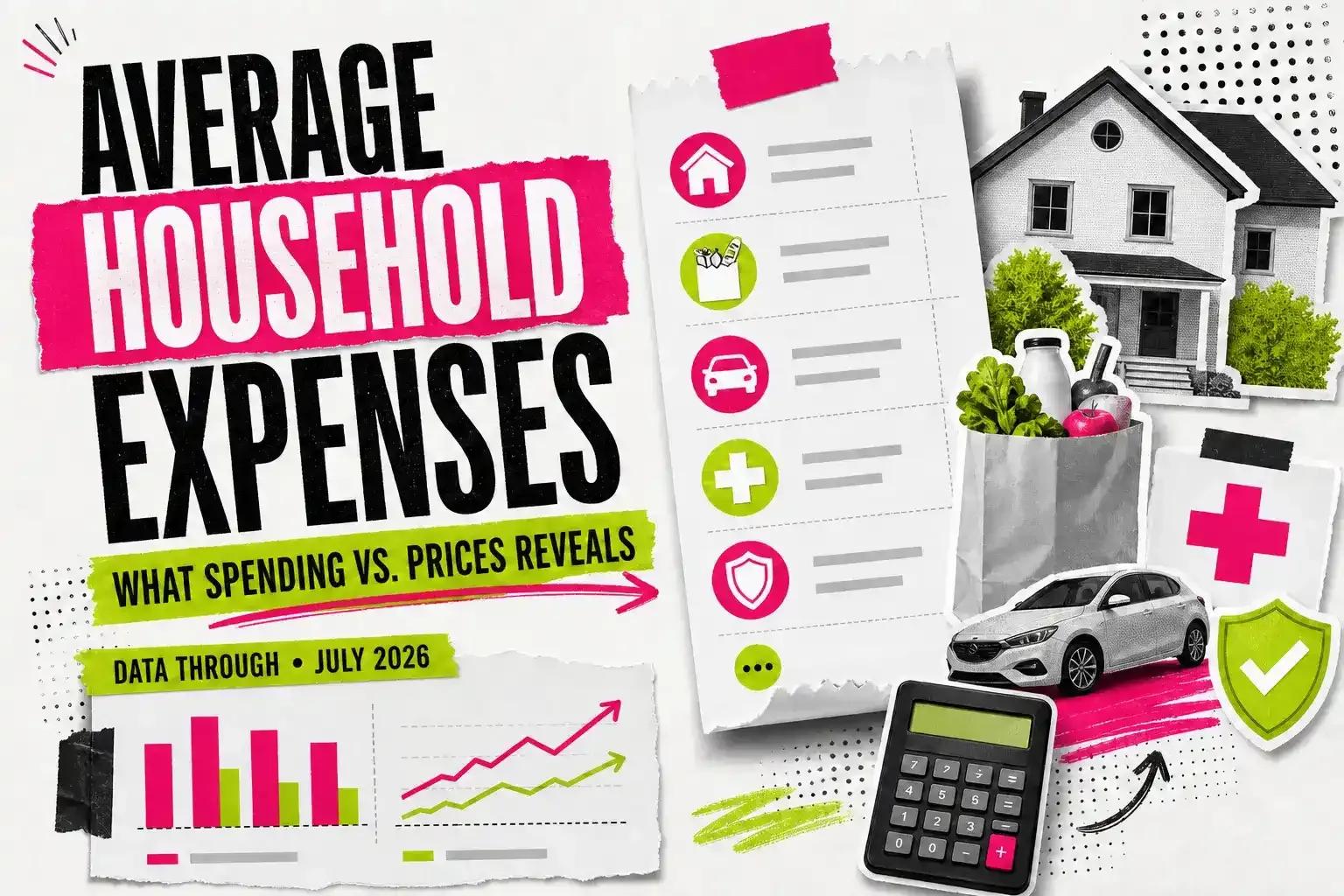
The average US consumer unit spent $78,535 in 2024 - about $6,545 a month. This page sets that spending record against the price indexes for the same two years, category by category, using our own CE-CPI crosswalk, and states plainly what the figures cannot show.
We bridge the gap between your financial goals and premier lending services nationwide.
Bromoney is a free loan marketplace operated by Money Broker LLC (DE File No. 10406065). Bromoney is not a lender and does not make credit decisions. A hard inquiry is possible, and more than one lender may run one, and it can affect your credit score. A lower credit score does not disqualify you by law. The decision belongs to the lender, and no outcome is promised. Submitting a request shares your details with participating providers, who may contact you by phone, text or email. Before you agree, the required disclosure includes the loan amount, the APR, the finance charge, the scheduled payment and the total of payments before you become obligated. Loans available to borrowers with lower credit can carry higher costs; review the full cost and repayment dates before you agree. Personal lending in Kentucky is regulated by the Kentucky Department of Financial Institutions. Under the Military Lending Act, covered servicemembers and their covered dependents keep the federal 36% MAPR limit on covered credit. Bromoney is not available in all states. We do our best to prevent unwanted calls, and you may be contacted about your request.
You know the drill: one loan request, then waiting for the calls to start. Here you stay in control — we treat your information with care, you compare the options available to you, and you choose which lender or partner to move forward with. We can't speak for every partner, but we do our best to keep unwanted calls down.

Submitted over a secure connection