Age & Residency
You'll generally need to be at least 18 and a U.S. resident. Those basics help lenders review borrower eligibility before they look at the rest of your request.

Trying to cover a planned cost or fold a few balances into one payment you can track? In New York, an installment loan is paid back in equal scheduled payments over a set term. You fill out one form, review the options that appear in your account, choose what fits, or walk away. Less-than-perfect credit can still be part of the picture.
Compare lenders and decide,
Get startedSecure 256-bit Connection
An installment loan is a loan repaid in a set number of scheduled payments, called installments, often for $300 to $5,000 and repaid over a fixed term in equal payments. The borrower gets the funds up front, then repays the amount borrowed plus interest until the balance reaches zero. It's also called a structured or scheduled-payment loan. Unlike a payday loan due in one lump sum, it spreads the cost across multiple payments, so you can plan around it.
When a bill is already taking up space in your head, the process shouldn't add to the mess. One form can reach lenders and partners in our marketplace, then the options available to you appear in your account. New York's repayment structure is scheduled installments over a set term, so you can look at the payment and term side by side. Choose what fits your cash flow, or don't move forward. No obligation.
A rough credit file can feel like a locked door. It isn't the whole room. Installment lending in New York is legal and regulated, while the lender still makes the credit decision on the option you review. A fair-range or lower score doesn't erase your ability to compare what's available to you. You decide whether any payment belongs in your budget.
The monthly payment can look calm while the total cost tells a different story. For New York installment loans, cost disclosure under TILA is required before you agree, including APR, finance charge, scheduled payment, and total of payments. That gives you the whole tab before you decide, not just the number that lands each month.
New York regulates consumer installment lending, but licensing depends on the lender and loan. Under Banking Law § 340, a non-exempt lender generally needs an NYDFS license to make personal loans of $25,000 or less at more than 16% annual interest. NYDFS oversees covered lenders. If you're an active-duty service member or covered dependent, the federal Military Lending Act adds a separate 36% MAPR protection. Those rules don't choose for you, but they give you something real to check.
The request may take a few minutes. Here's what most New York lenders require before they can review your information and decide whether to offer credit.
You'll generally need to be at least 18 and a U.S. resident. Those basics help lenders review borrower eligibility before they look at the rest of your request.
A steady, verifiable income source, including benefits, helps lenders decide whether the payment fits your budget. They also review your credit profile, so keep the amount you can repay in mind before you move forward.
An active bank account is usually needed to receive funds and make scheduled payments. Check the payment setup before you choose, so the due dates don't catch you off guard.
In New York City, Buffalo, or Albany, money can get pulled in three directions at once: a medical bill, a repair, or a few balances you'd rather not chase separately. An installment loan puts repayment on equal monthly payments over a set term. That doesn't make the cost disappear. It does make the schedule easier to read before you choose a payment and term that fit your cash flow.
Experian reports an average FICO® Score of 719 for New York as of March 2026. A statewide average is only context and does not determine whether any individual borrower will qualify for a loan. A hard inquiry may affect your credit score, so review the lender's credit-check process before moving forward.
New York consumers carried an average credit card balance of about $6,901 as of March 2026, according to Experian. For someone in Buffalo juggling several balances, one scheduled installment payment can feel easier to track. It does not automatically reduce the total amount owed or guarantee savings, so compare the APR, fees, repayment term, and total of payments before deciding whether consolidation makes sense.
The Federal Reserve's 2025 SHED found that 37% of U.S. adults would not cover a hypothetical $400 emergency expense completely using cash or its equivalent. That's a national figure, not a New York-only statistic. An installment loan is only one possible option, so compare borrowing costs with any lower-cost alternatives available to you.
The New York State Department of Financial Services (NYDFS) licenses and supervises covered nonbank lenders, maintains license information, and accepts borrower complaints. Not every installment lender must hold the same NYDFS license; requirements depend on the loan and lender. If an offer feels off, check the lender's status with NYDFS. Covered service members and dependents also have the federal Military Lending Act's 36% MAPR cap as a separate federal protection.
You fill out one form, then review the options that appear in your account with the APR, scheduled payment, and term shown side by side. You're the one comparing, choosing, or walking away. Bromoney isn't a lender, doesn't make credit decisions, and lets you compare any available options yourself. If nothing fits, that's an answer too. Free to start. No obligation. We take a responsible approach to your data and do our best to prevent unwanted calls. Bromoney is operated by Money Broker LLC (DE File No. 10406065).

Estimate exactly how much you'll owe before you commit. Enter your loan amount and repayment term to see total costs, including fees and interest, laid out clearly.
Calculate my loanNew York regulates consumer installment lending through the New York State Department of Financial Services (NYDFS) and other applicable laws. Under Banking Law § 340, non-exempt businesses generally need an NYDFS licensed lender license to make consumer loans of $25,000 or less at more than 16% annual interest. The general civil usury limit for many loans is 16%; licensed lenders may charge up to 25% annual interest on covered personal loans of $25,000 or less. Different rules may apply to certain banks and other exempt lenders. Payday lending is illegal in New York. Before you become contractually obligated, the lender must provide federal Truth in Lending Act disclosures. The Military Lending Act sets a separate 36% MAPR cap for covered borrowers and covered consumer credit.
Legal status
Legal and regulated
Consumer installment lending is allowed in New York, subject to the lender's applicable licensing requirements and state interest-rate limits.
Regulator
New York State Department of Financial Services (NYDFS)
NYDFS licenses and supervises covered nonbank lenders, handles consumer complaints, and maintains license information.
License required
For covered lenders
Under Banking Law § 340, a non-exempt business generally needs an NYDFS licensed lender license to make personal loans of $25,000 or less at more than 16% annual interest. Some lenders and loans are subject to different rules or exemptions.
Payday lending status
Illegal
Payday lending is illegal in New York whether offered in person, by telephone, or over the internet.
Repayment structure
Scheduled installments over a set term
Installment loans amortize through equal scheduled payments rather than one lump-sum payoff.
Rollovers
Not applicable to installment loans
Installment loans pay down principal on a fixed schedule instead of restarting the balance.
Cost disclosure (TILA)
Required before you agree
TILA requires the lender to disclose the APR, finance charge, scheduled payment, and total of payments before you commit.
Military protection
36% MAPR (federal MLA)
The Military Lending Act caps most covered consumer-credit costs at 36% MAPR for covered service members and dependents.
This page is educational and is not legal or financial advice. The rules that apply to a loan depend on the lender's status, loan amount, interest rate, and applicable New York law. NYDFS licensed lender requirements do not apply to every installment lender. State rules can change; for current requirements, contact NYDFS or review the official New York statutes.
If your next paycheck is the only repayment date, that window can feel tight. A payday or single-payment loan is usually repaid in one lump sum, while an installment loan spreads what you borrow across scheduled payments over a term.
A credit card or line of credit works more like a running tab. You can borrow again as you repay, but there's usually no fixed payoff date. An installment loan is different: one amount, one scheduled payment, and a term with an ending point.
Credit unions, local lenders, and nonprofit programs may be worth a look, especially if you're already a member somewhere. Costs and rules can change by state, so compare those local options against any installment loan terms you see online.
Installment loans online don't work the same way in every state. Loan amounts, terms, APR caps, and legal rules can change where you live. Whether you borrow for a repair, scheduled payments, structured repayment, bad credit, or to consolidate bills, choose your state below and compare the options available to you.


Yes, installment lending is legal in New York. The New York State Department of Financial Services (NYDFS) regulates covered lenders. Under New York Banking Law § 340, a non-exempt business generally needs an NYDFS licensed lender license to make consumer loans of $25,000 or less at an interest rate above 16% per year. Not every installment lender is subject to this particular license requirement. Under the federal Truth in Lending Act, a lender must disclose the APR and finance charge before you become contractually obligated. Bromoney is not a lender, and the credit decision sits with the lender.
Installment loan amounts and terms in New York are set by the lender within the rules that apply to that loan. In your account, you can compare the options available to you, including the scheduled payment and term, before you decide what your monthly budget can actually carry.
An installment loan in New York costs the interest and applicable fees disclosed by the lender. For many consumer loans, New York's general civil usury ceiling is 16% annual interest; qualifying NYDFS-licensed lenders may charge up to 25% annual interest on covered personal loans of $25,000 or less. Other lender types, including certain banks, may be subject to different rules. The federal Truth in Lending Act requires the lender to disclose the amount financed, APR, finance charge, payment schedule, and total of payments before you become contractually obligated. A smaller monthly payment can still cost more overall if the term runs longer. Compare the total of payments, not just the monthly payment.
No. An installment loan is repaid through scheduled payments, while a payday loan is generally a short-term, high-cost loan due around the borrower's next payday. Payday lending is illegal in New York, whether offered in person, by telephone, or online, according to NYDFS. If you're comparing borrowing options, check the repayment structure and confirm that the lender is authorized to offer that product in New York.
A missed installment loan payment in New York can lead to a late fee if the loan agreement and applicable law allow one. For loans made by a New York licensed lender under Article 9 of the Banking Law, a default charge may generally be imposed only after a scheduled installment is more than 10 days late and may not exceed 5% of the overdue installment; the same default charge may not be collected more than once for the same default. Other loan types may be subject to different rules. If an account remains unpaid, the lender may also have contractual collection rights, and negative payment information may be reported to the major credit bureaus. If you expect to miss a payment, contact the lender before the due date if possible and ask what options are available under your agreement.
Yes, installment lenders in New York can check your credit. A hard inquiry is possible, and more than one lender may run one, and it can affect your credit score. New York law does not set one minimum credit score for borrowers. A thin file or a score that's lower than you'd like isn't a verdict on you. The lender still makes the decision, and no outcome is promised.
Installment loans in New York can affect your credit if the lender reports payment activity to the major credit bureaus. On-time payments may support your payment history, but that isn't promised and not every lender reports. Late payments, defaults, and collections can hurt your score. Under federal FCRA rules, a collection account can remain on a credit report for around seven years. What you control is the payment due each month.
Yes, an installment lender in New York can sue over an unpaid debt and may pursue wage garnishment after winning a court judgment. New York generally limits wage garnishment to about 10% of your gross pay, which is stricter than the federal cap, and lower earners are protected entirely. Owing a civil debt by itself does not lead to arrest. Because many installment loans are unsecured, bankruptcy may be part of a broader legal discussion, but that's a serious step to review with a qualified professional.
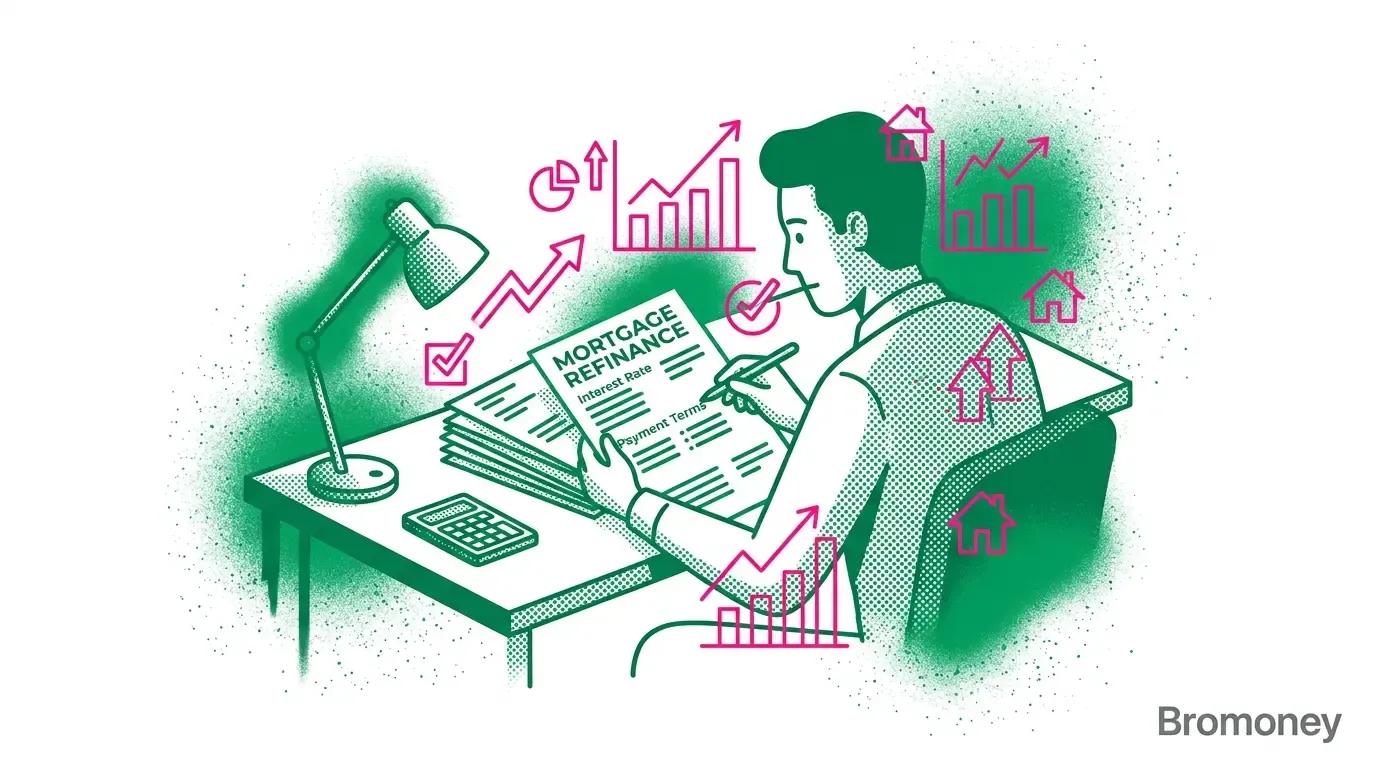
A practical guide to private mortgage refinancing, including lender types, approval steps, costs, risks, and exit strategy.
Learn when federal student loan consolidation helps you access IDR, when it creates risk, and how Parent PLUS rules changed after 2026.

Direct Consolidation Loan can simplify federal student loans, but it may raise lifetime interest, affect PSLF counts, and erase borrower benefits.
We bridge the gap between your financial goals and premier lending services nationwide.
Bromoney is a free loan marketplace operated by Money Broker LLC (DE File No. 10406065). Bromoney is not a lender and does not make credit decisions. A hard inquiry is possible, and more than one lender may run one, and it can affect your credit score. Before you agree to any loan, the lender will show you the loan amount, APR, finance charge, scheduled payment, and total of payments. Review each item carefully. Installment lending in New York is overseen by the New York State Department of Financial Services (NYDFS). Covered military borrowers have the Military Lending Act's 36% MAPR protection. Bromoney is not available in all states. We take a responsible approach to your data and do our best to prevent unwanted calls; you may be contacted about your request.
You know the drill: one loan request, then waiting for the calls to start. Here you stay in control — we treat your information with care, you compare the options available to you, and you choose which lender or partner to move forward with. We can't speak for every partner, but we do our best to keep unwanted calls down.

Submitted over a secure connection