Age & Residency
You'll generally need to be at least 18 and a U.S. resident. Those basics help lenders review borrower eligibility before they look at the rest of your request.

A bill shows up, the balance hangs around, or a few debts would be easier to handle as one planned payment. That's where a North Carolina installment loan can fit. Fill out one form and review the options available to you in your account, with payments and terms laid out side by side. You compare. You choose. You can also walk away. No obligation.
No impact to your credit score to check.
Get startedSecure 256-bit Connection
An installment loan is a loan repaid in a set number of scheduled payments, called installments, often for $300 to $5,000 and repaid over a fixed term in equal payments. The borrower gets the funds up front, then repays the amount borrowed plus interest until the balance reaches zero. It's also called a structured or scheduled-payment loan. Unlike a payday loan due in one lump sum, it spreads the cost across multiple payments, so you can plan around it.
When a bill is already crowding your head, you don't need twelve tabs open. Fill out one form, then review the options available to you in your account. North Carolina treats this product as scheduled installments over a set term, so the payment and term matter as much as the amount. You compare the pieces side by side and pick what fits your cash flow, or you walk away.
A thin or bruised credit file can feel personal. It isn't. Installment lending is legal and regulated in North Carolina, and the lender still makes the credit decision. No outcome is promised. What Bromoney gives you is a calmer way to review the options available to you instead of guessing in the dark.
The payment that looks manageable this month is only part of the deal. Federal cost disclosure is required before you agree, which means the lender has to show the APR, finance charge, scheduled payment, and total of payments. Read both the monthly number and the full cost. That's where the real comparison lives.
North Carolina law requires non-bank installment lenders to hold a state license from the North Carolina Commissioner of Banks. That's a legal rule for this product, not a claim about any specific lender you may review. Covered military borrowers also have the Military Lending Act's 36% MAPR protection, so that federal cap belongs in the conversation before you choose.
The request may take a few minutes. Here's what most North Carolina lenders require before they can review your information and decide whether to offer credit.
You'll generally need to be at least 18 and a U.S. resident. Those basics help lenders review borrower eligibility before they look at the rest of your request.
A steady, verifiable income source, including benefits, helps lenders decide whether the payment fits your budget. They also review your credit profile, so keep the amount you can repay in mind before you move forward.
An active bank account is usually needed to receive funds and make scheduled payments. Check the payment setup before you choose, so the due dates don't catch you off guard.
North Carolina installment lending is overseen by the North Carolina Commissioner of Banks, which regulates consumer finance activity and handles borrower complaints. Non-bank installment lenders must hold a state license under North Carolina law. The cited benchmark provision is N.C. Gen. Stat. § 53-176(a), (b), and NCLC APR benchmarks list 35% for $2,000 over 2 years and 29% for $10,000 over 5 years. Before you sign, the federal Truth in Lending Act requires the lender to disclose the APR and finance charge. Covered military borrowers also have the Military Lending Act's 36% MAPR cap.
Legal status
Legal and regulated
Installment lending is allowed in North Carolina under state consumer finance law, with licensing handled by the North Carolina Commissioner of Banks.
Regulator
NC Commissioner of Banks
The North Carolina Commissioner of Banks licenses installment lenders, examines regulated companies, and accepts borrower complaints.
License required
Yes
North Carolina law requires non-bank installment lenders to hold a license from the NC Commissioner of Banks. This is a state-law requirement, not a claim about any lender shown to you.
Payday lending status
Prohibited
Payday lending is a separate product from installment loans and is prohibited in North Carolina. This row is only about payday status.
Repayment structure
Scheduled installments over a set term
An installment loan pays down over time through scheduled payments that cover principal and interest.
Rollovers
Not applicable to installment loans
This item is listed only to separate installment loans from single-payment products: installment loans follow a set repayment schedule.
Cost disclosure (TILA)
Required before you agree
The Truth in Lending Act requires the lender to show the APR, finance charge, scheduled payment, and total of payments before you agree.
Military protection
36% MAPR (federal MLA)
The Military Lending Act caps the cost of most consumer loans to covered active-duty service members and dependents at 36% MAPR.
This information is educational and is not legal or financial advice. The specific rules that apply to a loan depend on the lender's license type and the loan amount under North Carolina law, so the terms in your agreement may differ from the general information above. State regulations can change. For current rules, visit the North Carolina Commissioner of Banks at https://www.nccob.gov/ and review the applicable North Carolina consumer finance law.
A home repair in Charlotte, a medical bill in Raleigh, or uneven income in Greensboro can turn an ordinary month sideways. That's not a character flaw; it's cash flow. An installment loan is meant for a set amount repaid in equal monthly payments over a set term, so the cost lands on a schedule instead of all at once. You compare the options available to you and choose the payment and term you can actually plan around.
North Carolina's average credit score is around 706 as of 2023, according to Experian, putting the state near the middle of the pack nationally. If your score is lower than you want, you have company in Charlotte and across the state. A hard inquiry is possible when you check your options, and more than one lender may run one, and it can affect your credit score.
ExperianExperian puts the average North Carolina credit card balance at about $6,400 as of 2023. For some borrowers in Raleigh and elsewhere, replacing several due dates with one scheduled payment is the reason they look at an installment loan. The trade-off is in the terms: compare the APR, the payment, and the total cost before you choose.
ExperianRoughly 37% of U.S. adults in 2023 would have trouble covering an unexpected $400 expense without borrowing or selling something. That's national data, not a North Carolina-only figure, but the pressure is easy to recognize in Charlotte or Raleigh. An installment loan isn't the only path. Knowing what it costs before you're boxed in is the better move.
Federal Reserve SHEDThe North Carolina Commissioner of Banks licenses installment lenders in North Carolina, accepts borrower complaints, and provides a place to check whether a lender is operating legally. If an offer feels off, start there. Service members at Fort Liberty and other covered military borrowers also have the Military Lending Act's 36% MAPR cap, no matter what a contract says.
NC Commissioner of BanksYou fill out one form, then review the options available to you in your account with APR, scheduled payment, and term side by side. Nothing has to be accepted. Bromoney isn't a lender, doesn't make credit decisions, and doesn't push you toward one offer. You pick what fits, or you leave it there. Free to start, no obligation, and we take a responsible approach to your data. We do our best to prevent unwanted calls. Bromoney is operated by Money Broker LLC (DE File No. 10406065).

Estimate exactly how much you'll owe before you commit. Enter your loan amount and repayment term to see total costs, including fees and interest, laid out clearly.
Calculate my loanIf your next paycheck is the only repayment date, that window can feel tight. A payday or single-payment loan is usually repaid in one lump sum, while an installment loan spreads what you borrow across scheduled payments over a term.
A credit card or line of credit works more like a running tab. You can borrow again as you repay, but there's usually no fixed payoff date. An installment loan is different: one amount, one scheduled payment, and a term with an ending point.
Credit unions, local lenders, and nonprofit programs may be worth a look, especially if you're already a member somewhere. Costs and rules can change by state, so compare those local options against any installment loan terms you see online.
Installment loans online don't work the same way in every state. Loan amounts, terms, APR caps, and legal rules can change where you live. Whether you borrow for a repair, scheduled payments, structured repayment, bad credit, or to consolidate bills, choose your state below and compare the options available to you.






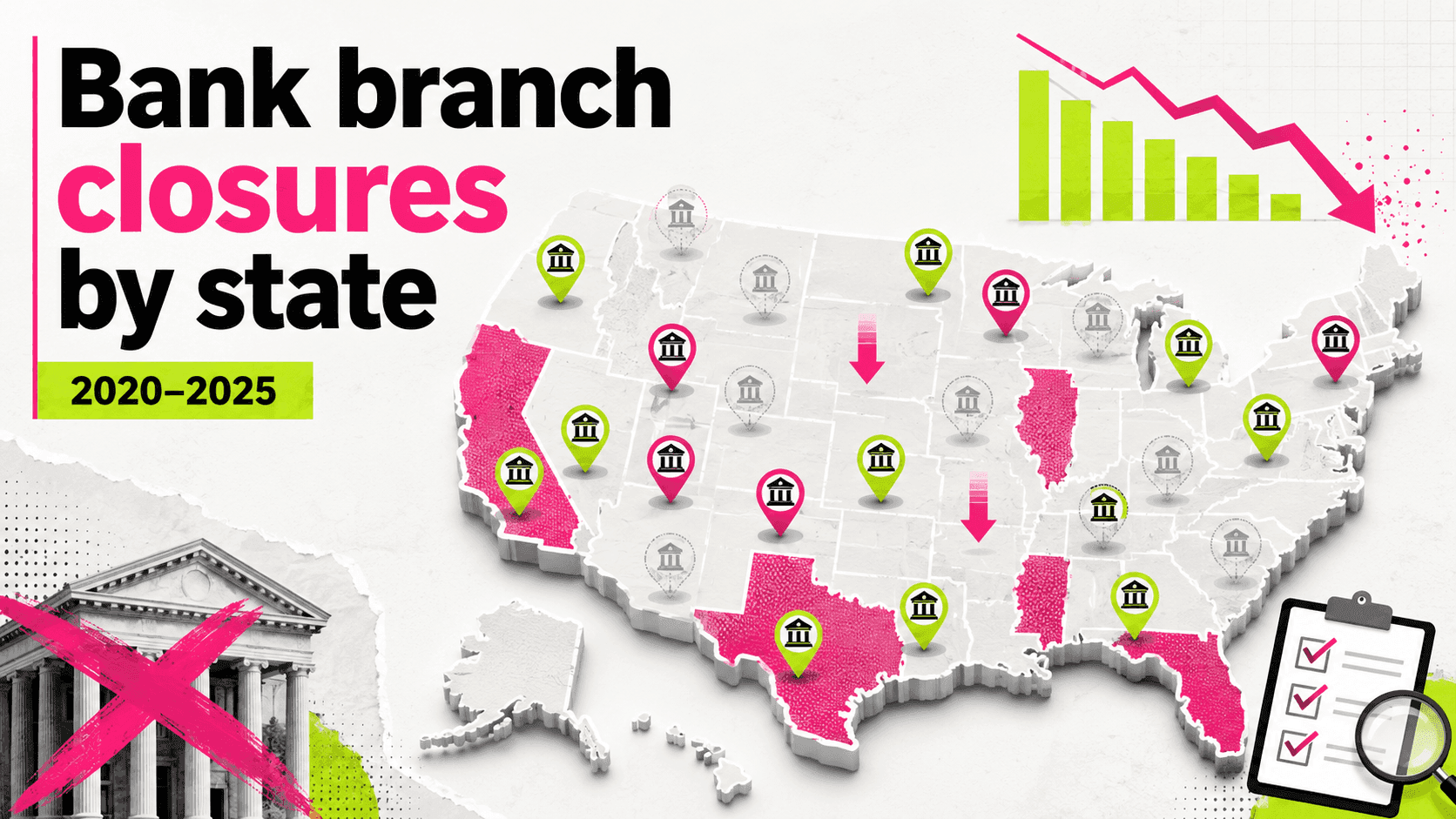
FDIC office records fell 10.4% between June 2020 and June 2025, and every state and Washington, DC, ended lower. See the state ranking, what a statewide count cannot show, the federal notice rules, and a six-step checklist for customers whose branch is closing.
We bridge the gap between your financial goals and premier lending services nationwide.
Bromoney is a free loan marketplace operated by Money Broker LLC (DE File No. 10406065). Bromoney is not a lender and does not make credit decisions. A hard inquiry is possible, and more than one lender may run one, and it can affect your credit score. Before you agree to any loan, the lender must show the loan amount, APR, finance charge, scheduled payment, and term. Installment lending in North Carolina is overseen by the North Carolina Commissioner of Banks. Covered military borrowers receive the Military Lending Act's 36% MAPR protection. Bromoney is not available in all states. We take a responsible approach to your data and do our best to prevent unwanted calls; you may be contacted about your request.
Join millions of Americans who trust our platform to compare rates, find the best loans, and rebuild their credit — all in one place

Submitted over a secure connection