


How to Get an Income-Driven Repayment (IDR) Plan Through Loan Consolidation

If you have FFEL, Perkins, or Parent PLUS loans, consolidation is often the gate into income-driven repayment. The key is not “consolidate everything.” The key is choosing the loans, timing, and repayment plan that preserve federal protections instead of closing them.
As of October 8, 2026, the post-2026 rules matter. A new Direct Consolidation Loan first disbursed on or after July 1, 2026 generally changes access to older IDR plans. For Parent PLUS borrowers, that date is the line between a workable ICR path and a much narrower repayment menu.
What Is IDR and Why Does Consolidation Matter?
IDR ties your federal student loan payment to income and family size, not only to balance and interest rate. Federal Student Aid notes that a payment under an income-driven plan may be as low as $0 when income is low enough.
The trade-off is term length. A lower monthly payment helps cash flow, but it often extends repayment and increases total interest.
Income-Driven Repayment Plans Explained (SAVE, PAYE, IBR, ICR)
Federal IDR changed sharply after the SAVE litigation and 2026 repayment reforms:
- SAVE - no longer available for active enrollment under current Federal Student Aid guidance.
- PAYE - uses 10% of discretionary income and has a 20-year forgiveness track for eligible borrowers.
- IBR - uses 10% or 15% of discretionary income, depending on borrower status.
- ICR - uses the lesser of 20% of discretionary income or an income-adjusted fixed-payment formula.
- RAP - the newer post-2026 plan, with payments based on AGI and household details under the new repayment framework.
What Is Direct Loan Consolidation?
Direct Consolidation combines selected federal loans into one new Direct Consolidation Loan. Federal Student Aid states that the application has no fee, and the new fixed rate is based on the weighted average of the loans included.
Consolidation is not private refinancing. You keep the debt inside the federal system. If you refinance with a private lender, federal IDR and PSLF protections are lost. That distinction matters before comparing any private refinancing path for Parent PLUS loans.
Why Some Loans Require Consolidation to Access IDR
Some older federal loans do not enter modern IDR directly. Consolidation turns eligible FFEL or Perkins debt into a Direct Consolidation Loan, which may open access to income-based repayment options.
Parent PLUS is different. A Parent PLUS loan does not become broadly IDR-friendly just because it was consolidated. Timing and loan history decide the result.
Do You Need to Consolidate? - Eligibility Check
Loan Types That Require Consolidation Before IDR
| Loan type | Why consolidation may be needed |
|---|---|
| FFEL Stafford Loans | Often need Direct Consolidation for broader IDR and PSLF access |
| Perkins Loans | Usually need Direct Consolidation for Direct Loan repayment plans |
| Parent PLUS | Historically required consolidation for ICR access, with tighter rules after 2026 |
For a broader comparison of trade-offs, review the mechanics of a Direct Consolidation Loan before submitting an application.
Loans Already Eligible for IDR Without Consolidation
Direct Subsidized Loans, Direct Unsubsidized Loans, graduate PLUS loans, and some existing Direct Consolidation Loans may already qualify for IDR. If they already fit IBR, a new consolidation may add risk without adding value.
Quick Eligibility Checklist
Before you consolidate, verify:
- loan type: Direct, FFEL, Perkins, or Parent PLUS;
- current servicer and repayment plan;
- IDR and PSLF payment count;
- Perkins cancellation eligibility;
- first disbursement date and consolidation disbursement date.
In my review of repayment files, the most expensive mistake is simple: borrowers consolidate first and check eligibility later. Reverse that order.
Step-by-Step: How to Get IDR via Consolidation
Step One - Log In to StudentAid.gov and Check Your Loan Types
Start at StudentAid.gov and open your loan dashboard. Confirm each loan’s program, balance, servicer, status, and repayment plan. If you are pursuing PSLF, check your qualifying payment count before making changes.
This is also the moment to separate goals. Consolidating for IDR, consolidating for PSLF, and consolidating for billing simplicity are not the same decision.
Step Two - Apply for Direct Loan Consolidation
Go to the consolidation section on StudentAid.gov and select only the loans you want to include. You do not have to consolidate every federal loan.
If one Direct Loan already has a valuable payment count, leaving it out may protect progress. If one Perkins Loan is close to cancellation, including it may destroy a benefit you cannot recover.
Choosing Your Loan Servicer During Consolidation
The application may let you indicate a servicer preference, but federal servicing assignments and transfers are controlled by the Department of Education and its servicing system. Choose based on execution, not branding: online access, document handling, PSLF administration, and clarity of payment notices.
Selecting IDR as Your Repayment Plan During the Application
During the repayment-plan step, choose the income-driven option available for your loan mix. For Parent PLUS consolidations, do not assume IBR or PAYE will appear. The system may limit the new loan to fewer options.
If your broader budget is tight, use the Bromoney debt payoff calculator to compare the cash-flow effect before locking in a new term.
Step Three - Submit Your IDR Application with Income Verification
IDR requires income data and household information. StudentAid.gov supports direct tax-data consent from the IRS. If tax data does not reflect your current income, your servicer may request alternative documentation, such as pay stubs or an employer letter.
How to Link Your IRS Tax Data
The current process uses IRS data consent through the federal aid system rather than the older manual retrieval workflow. You grant permission, and the system uses tax data for IDR processing and future recertification when available.
If your income dropped after your last tax return, submit current documentation instead of waiting for next year.
Estimating Your Discretionary Income and Monthly Payment
Discretionary income depends on plan rules. PAYE and IBR use a poverty-guideline offset. ICR uses a different formula. RAP uses AGI-based tiers under the newer framework.
| Plan | Payment base | Practical note |
|---|---|---|
| PAYE | Discretionary income | Payment cap protects against exceeding the standard-plan amount |
| IBR | Discretionary income | Broadest older IDR option for many borrowers |
| ICR | Discretionary income or adjusted fixed payment | Key historical path for eligible consolidated Parent PLUS loans |
| RAP | AGI-based formula | Newer framework; Parent PLUS restrictions remain important |
For borrowing decisions outside student loans, check your monthly obligations with the DTI max loan calculator. IDR lowers a student-loan bill, but lenders still review total debt load.
Step Four - Confirm Consolidation and IDR Enrollment
Keep paying existing loans until your servicer confirms the consolidation is complete. After disbursement, read the first billing statement carefully. Confirm the plan name, payment amount, due date, and whether the account shows administrative forbearance.
Processing Timeline: What to Expect (30-90 Days)
Online consolidation is usually faster than paper processing, but IDR review adds document checks. Federal Student Aid materials describe consolidation processing in weeks, and servicers may use processing forbearance while an IDR application is reviewed.
“Consolidation should solve a specific access problem. If the loan already qualifies for the right plan, consolidation may only add a new disbursement date, capitalization, and payment-count risk.” - Denis Goncharenko, Financial Advisor at Bromoney
Choosing the Right IDR Plan After Consolidation
SAVE Plan - Lowest Payments, Newest Rules
SAVE should not be treated as an active fallback plan in 2026. Borrowers who were previously in SAVE need to review the current options shown by StudentAid.gov and their servicer.
PAYE Plan - Good for Smaller Balances
PAYE fits borrowers who meet the date tests and want a payment cap tied to the standard plan. It is not a universal option after consolidation, especially when a new Direct Loan after the 2026 cutoff changes eligibility.
IBR Plan - Widely Available Option
IBR remains the most important older IDR plan for many borrowers. It is often the first plan to check when Direct Loans already qualify without consolidation.
ICR Plan - The Only IDR Option for Consolidated Parent PLUS Loans
ICR has historically been the key federal IDR route for consolidated Parent PLUS loans. It can be less generous than PAYE or IBR because it lacks the same payment cap. Still, for some parents, it preserves a federal income-based structure that private refinancing would erase.
For household cash-flow order, see Bromoney’s guide to cash flow management and payment priorities.
IDR Plan Comparison Table (Payment %, Forgiveness, Eligibility)
| Plan | Payment structure | Forgiveness track | Parent PLUS access | 2026 status |
|---|---|---|---|---|
| RAP | AGI-based | Long-term forgiveness | No direct Parent PLUS access | Active under newer rules |
| PAYE | Income-based with cap | Long-term forgiveness | No | Limited legacy access |
| IBR | Income-based with cap | Long-term forgiveness | No direct Parent PLUS access | Active for eligible borrowers |
| ICR | Income-contingent formula | Long-term forgiveness | Possible only through qualifying consolidation | Limited legacy role |
How Consolidation Affects Your Monthly Payment (Income Control)
How Discretionary Income Is Calculated
IDR starts with adjusted gross income, then applies the plan’s formula and household-size rules. The payment is recalculated when you recertify income.
Payment Calculation Examples by Annual Income Level
Do not rely on generic examples for a final decision. Use StudentAid.gov’s loan simulator and your servicer’s calculation because plan availability now depends on loan type, dates, and consolidation history.
| Income change | Likely IDR effect |
|---|---|
| Income falls | Payment may decrease after recalculation |
| Income rises | Payment may increase at recertification |
| Family size increases | Payment may decrease under plans that account for household size |
| Tax filing status changes | Spousal income treatment may change |
Annual Recertification: How to Keep Your IDR Plan Active
IDR is not “set it and forget it.” Federal Student Aid requires borrowers to update income and family size on a recurring schedule. If you consent to tax-data access, future recertification becomes easier, but you still need to watch notices.
Critical Risks and Warnings Before You Consolidate
Risk One - Resetting Your PSLF Payment Count
The IDR Account Adjustment was a one-time federal correction, and the Department of Education reported that more than 3.6 million borrowers received payment-count credit. That special treatment should not be assumed for a new consolidation.
If PSLF matters, read your count first. A consolidation that fixes one problem may create another.
Risk Two - Losing Perkins Loan Cancellation Benefits
Perkins cancellation benefits can disappear after consolidation. Teachers, nurses, and public-service workers should compare Perkins cancellation against IDR before moving the loan.
Risk Three - Interest Capitalization at Consolidation
Accrued unpaid interest may be added to principal at consolidation. That larger principal can increase future interest cost.
Risk Four - Parent PLUS Loan Double Consolidation Trap
The old double-consolidation strategy for Parent PLUS is no longer a reliable planning tool under the post-2026 rules. Treat it as closed unless your servicer and current federal guidance confirm a valid legacy position.
When NOT to Consolidate
Do not consolidate when the loan already qualifies for the plan you need, when Perkins cancellation is close, when PSLF progress is valuable, or when Parent PLUS timing would move you into a worse post-deadline repayment path.
Managing Your IDR Plan After Consolidation (Long-Term)
Annual Income Recertification Process
Submit income and family-size updates through StudentAid.gov or your servicer. Keep copies of every confirmation page and message. In disputes, documentation wins.
What Happens If You Miss Recertification
A missed recertification usually moves the payment away from the income-based amount. For IBR, unpaid interest may capitalize. The fix is to recertify quickly, not to ignore the bill.
Switching Between IDR Plans
Switching plans is possible, but eligibility is not static. Before switching, confirm that the target plan still accepts your loan type and disbursement history.
Tracking Progress Toward Loan Forgiveness
Track IDR and PSLF progress on StudentAid.gov and through servicer notices. If the numbers do not match your records, escalate early. Servicing corrections take time.
Primary sources: Federal Student Aid on income-driven repayment, Federal Student Aid on loan consolidation, Federal Student Aid on the IDR Account Adjustment, and Federal Student Aid on PSLF.
Frequently Asked Questions
Can I apply for IDR and consolidation at the same time?
Yes. The Direct Consolidation application includes a repayment-plan step. Select the income-driven option shown for your loans and submit income information in the same process.
How long does consolidation take before I can enroll in IDR?
Expect document review and servicer processing before the new payment becomes final. Continue paying existing loans until you receive written confirmation.
Will consolidation hurt my credit score?
Federal consolidation usually changes account reporting because old loans close and a new loan opens. On-time payments after consolidation matter more than the administrative change.
Can I consolidate just some of my loans?
Yes. You choose which eligible federal loans to include. Selective consolidation often protects loans that already have better terms or useful payment history.
What happens to my IDR payments if my income increases?
Your payment is recalculated at recertification. If income rises, the IDR payment may rise too, subject to the rules of your plan.

Denis Goncharenko
Head of Content
Editorial Policy: no secondary statistics. Every claim is linked to an official source and dated — datasets and methods are open for review.

Was this article helpful?
Same blogs

Inheritance Rights: What Happens After a Borrower's Death
A practical U.S. guide to what happens to loans, mortgages, credit cards, insurance, and estate debts after a borrower dies.
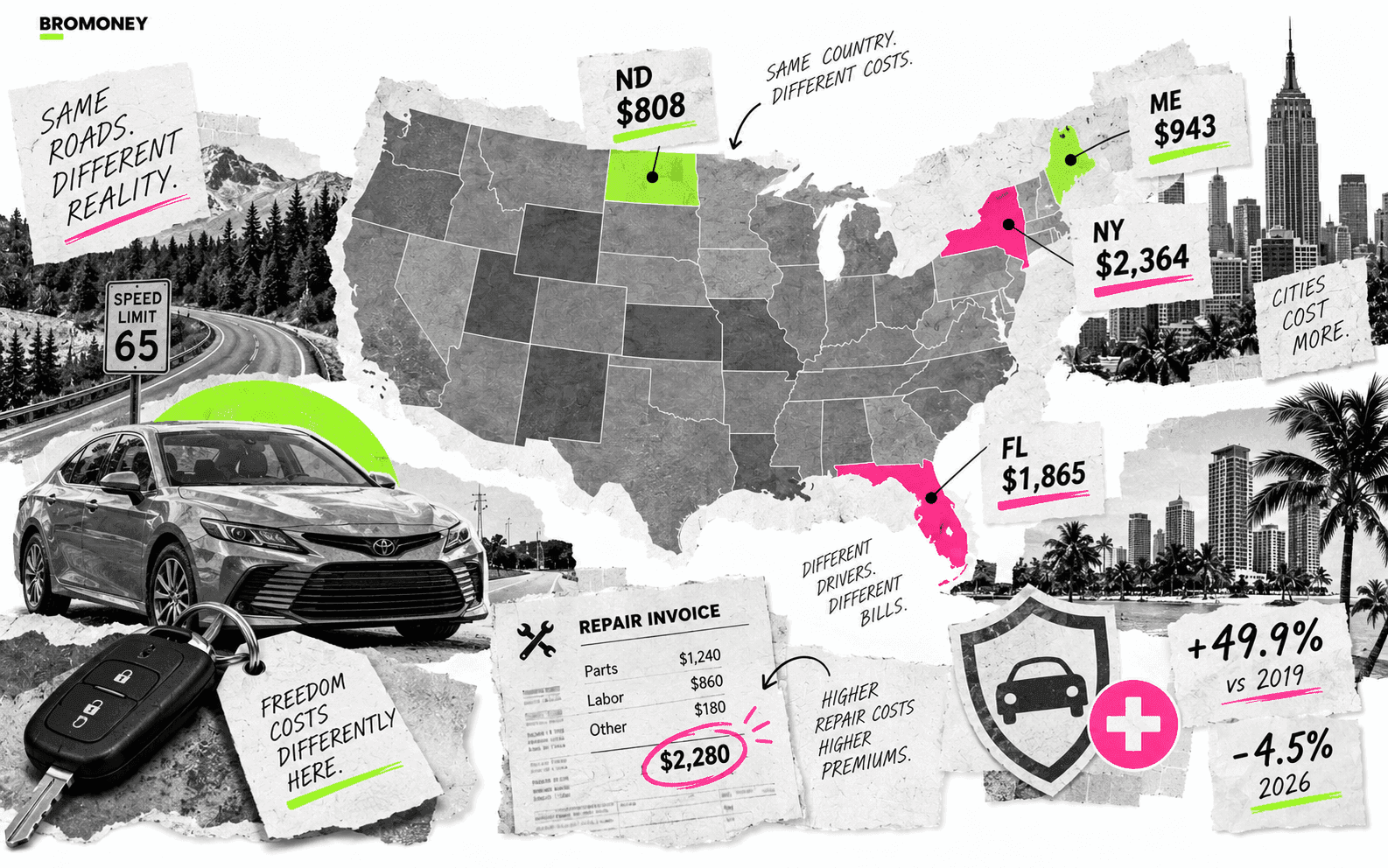
Why Car Insurance Went Up and What Actually Moves the Premium
Car insurance spending rose 12.3 percent in 2024, one of only two costs BLS called statistically significant. NAIC's 2023 state averages, why rates are falling even as the level sits 49.9 percent above 2019, what actually drives claims costs, and which levers on your policy are worth checking.

Stop Blaming the Latte: Impulse Buying Isn't the Whole Budget Story
BLS data shows apparel and entertainment spending barely moved in 2024, while car insurance, housing and groceries rose - some by double digits. Why the numbers behind the top impulse-buying articles don't hold up, and a review method that starts with the bills, not the coffee.