
Steady Income
Pay stubs, benefit letters or regular deposits show you can carry a payment. With a low score, a long and steady income record can carry real weight in a lender's decision.

Is your credit score lower than you'd like in Washington? You can still compare bad credit loans in Washington and choose the one that fits your budget.
Credit score tiers from CFPB research describe groups of borrowers studied together, not the exact line a Washington lender draws. Each lender sets its own cutoff for an acceptable risk. Within the same tier, two lenders can read the same score very differently. Beyond the score, lenders weigh other parts of your file: payment history, income and existing debt. Payment history makes up about 35% of a FICO Score, and what you owe makes up about 30%. The weight varies by person. That's why two borrowers with the same score can see different outcomes.
In Washington, an offer's interest rate and its dollar cost can point in different directions. A high rate on a small, short loan may cost fewer dollars than a lower rate over a longer term. At a lower score, compare both the rate and the total dollar cost before you choose.
Washington applies different pricing rules depending on the lender and loan type. A lender licensed under the Consumer Loan Act may charge up to 25% per year using the simple-interest method. The law also permits a loan-origination fee of up to 4% of the first $20,000 of principal and 2% of the amount above $20,000. Payday loans follow a separate set of limits.
The request may take a few minutes. Here's what most Washington lenders require before they can review your information and decide whether to offer credit.
Pay stubs, benefit letters or regular deposits show you can carry a payment. With a low score, a long and steady income record can carry real weight in a lender's decision.
Some lenders review your checking account: regular deposits, a positive balance and few overdrafts tell them how you handle money from month to month, which your score alone doesn't show.
Lenders add up your monthly debt payments and compare them with your income. A lower debt-to-income ratio leaves room for a new payment, even when your score is low.
In Washington, an installment loan gives you the full amount upfront. You then repay it in equal monthly payments by a set payoff date. At a lower score, that steady schedule makes your budget easier to plan. Compare installment loans in Washington before you choose.
In Washington, a personal loan can suit you if you need a larger sum or more time to repay. It can also help you combine several debts into one monthly payment. In August 2026, the average rate on 24-month personal loans at commercial banks was 11.90%, according to Federal Reserve data. That is a broad market average, not a rate for any specific credit-score tier. You can also compare personal loans for a bigger amount.
Payday lending is legal in Washington and regulated by the Washington State Department of Financial Institutions. The maximum loan amount is $700 or 30% of the borrower's gross monthly income, whichever is less. The maximum fee is 15% on the first $500 and 10% on the amount above $500. The normal maximum term is 45 days, and a borrower may not receive more than eight payday loans in any 12-month period. See payday loans for more information.
Washington's general usury law limits interest to the higher of 12% per year or four percentage points above the applicable 26-week Treasury-bill yield. Important exceptions and separate statutory regimes apply. Consumer Loan Act licensees may charge up to 25% per year using the simple-interest method, while payday loans are regulated separately under Chapter 31.45 RCW.
Bromoney is a financial marketplace, not a lender. If partners send offers to your account, you can see the monthly payment, term and total cost side by side. Then pick what fits your budget. Whether to continue, and with whom, is your call. Using Bromoney costs you nothing.

Estimate exactly how much you'll owe before you commit. Enter your loan amount and repayment term to see total costs, including fees and interest, laid out clearly.
Calculate my loanScore tiers from CFPB research come first, followed by the rules that apply to lenders in Washington.
Deep subprime
Credit scores below 580
Subprime
580-619
Near-prime
620-659
Prime
660-719
Super-prime
720 and above
Licensed consumer-loan interest rate
Up to 25% per year
Consumer Loan Act licensees may charge up to 25% per year calculated using the simple-interest method. Permitted origination and third-party fees may apply separately.
Regulator
Washington DFI
Consumer-loan license
Generally required unless exempt
A person lending money or extending consumer credit to Washington residents generally must hold a Consumer Loan Act license unless a statutory exemption applies.
State rules reviewed November 2026.
Below 580, the range the CFPB calls deep subprime, many traditional banks won't lend, and the options that remain tend to be small loans for bad credit with higher costs and shorter terms. If an urgent bill is the reason you're looking, emergency and online loans for bad credit from lenders who weigh income and banking, not just FICO, are where most borrowers in this range start.
Between 580 and 619, more lenders will review your request, and unsecured installment options with longer terms start to appear. Rates are still well above what better scores get, so the amount and the total cost deserve a close look before you agree.
From 620 to 659, you're close to the line many lenders draw for their better pricing. A debt consolidation loan for bad credit becomes more realistic here, and even a modest improvement in your score can noticeably change the APR you're shown.
At 660 and above, the CFPB's prime and super-prime ranges, mainstream lenders compete for your business, which usually means lower APRs, larger amounts and longer terms. If you're just under this line, it can pay to work on your score for a few months before you borrow a larger sum.
A thin or empty credit file isn't the same as bad credit, but many lenders treat it with similar caution because there's little to score. Steady income, a checking account with regular deposits and a small first loan repaid on time are the usual ways to build a record lenders can read.
Secured loans for bad credit put an asset, such as a savings account or a vehicle, behind the debt, and some lenders let a cosigner with stronger credit share the loan. Both can improve the terms you see, but the asset or the cosigner's credit is on the line if payments stop. Most options don't require either, so a loan for bad credit with no cosigner is still the usual route.
Bad credit options also depend on your state, which sets the rules for small loans and for the lenders that make them. Choose your state to see what's available at a lower score there.
FICO Score ranges: Poor below 580, Fair 580-669, Good 670-739, Very Good 740-799, Exceptional 800-850. VantageScore tiers on the 300-850 scale: subprime 300-600, near prime 601-660, prime 661-780, superprime 781-850. FICO and VantageScore come from different companies that use different models and data. Each designs its scale for its own purpose, so they draw the line for a poor score in different places. The same credit history can land in a different tier depending on which score a lender uses. The bad credit loans guide goes deeper on each range.
A low credit score alone doesn't stop you from comparing loan options in Washington. You can still start with the form and see what's available to you.
Checking available options with Bromoney does not require a credit-bureau inquiry and does not affect your credit score. If you select a partner and continue, that partner may perform a hard credit inquiry that can affect your score.
Not necessarily in a fixed or predictable way. Credit score can be one factor in a lender's pricing and underwriting, but lenders may also consider income, existing debt, loan amount, repayment term and other information. Compare the APR, finance charge, payment schedule and total cost in the actual option available to you rather than relying on a general credit-score tier.
No, Bromoney doesn't guarantee approval. Any promise of approval before a lender has seen your information is a warning sign, whoever makes it. Availability depends on the lender, the applicant's information, and where the applicant lives.
For most people, one additional hard inquiry takes fewer than five points off their FICO Score, although the impact varies by credit history. A denial itself does not lower your FICO Score; a hard inquiry associated with the application may affect it. To see how balances weigh on your score, try the credit utilization calculator.
Collections reported as paid in full are disregarded by FICO Score 9 and the FICO Score 10 suite. A credit reporting company can generally report most negative information for seven years; bankruptcies can stay on a report for up to ten years. Older FICO models may still consider some paid nonmedical collections. Paying a nonmedical collection generally does not by itself require the account to be removed from the credit report.
The three nationwide credit bureaus do not report paid medical collections or medical collections with an initial balance under $500. Unpaid medical debt generally must be more than 365 days delinquent and over $500 before it can appear on a credit report. In July 2025, a federal court vacated the CFPB rule that would have removed medical bills from credit reports. An unpaid medical collection above the threshold may appear after the waiting period and can affect some credit-scoring models. If the information is inaccurate, you can dispute it with the credit reporting company. If the debt is valid, review payment or payment-plan options with the provider or collector.
If a lender denies credit based in whole or in part on a consumer report, the adverse-action notice must identify the consumer reporting company and explain your right to obtain a free copy of the report if you request it within 60 days, as well as your right to dispute inaccurate or incomplete information. If a credit score was used in the adverse action, the notice must also provide that score and the key factors that adversely affected it. People can get free credit reports from each of the three nationwide bureaus every week at AnnualCreditReport.com. Once you have the notice, review the factors it lists and get your free report to check for errors. You can also consider whether a different loan amount, term or type of lender may better fit your situation. See what to do if you're denied a loan.
Washington DFI provides license-verification tools for financial companies. Consumer Loan Companies and payday lenders can generally be checked through NMLS Consumer Access. Search the exact legal name shown in the loan agreement. Banks, credit unions and other institutions may appear in different regulatory databases, so contact DFI if you are unsure which license or regulator applies.
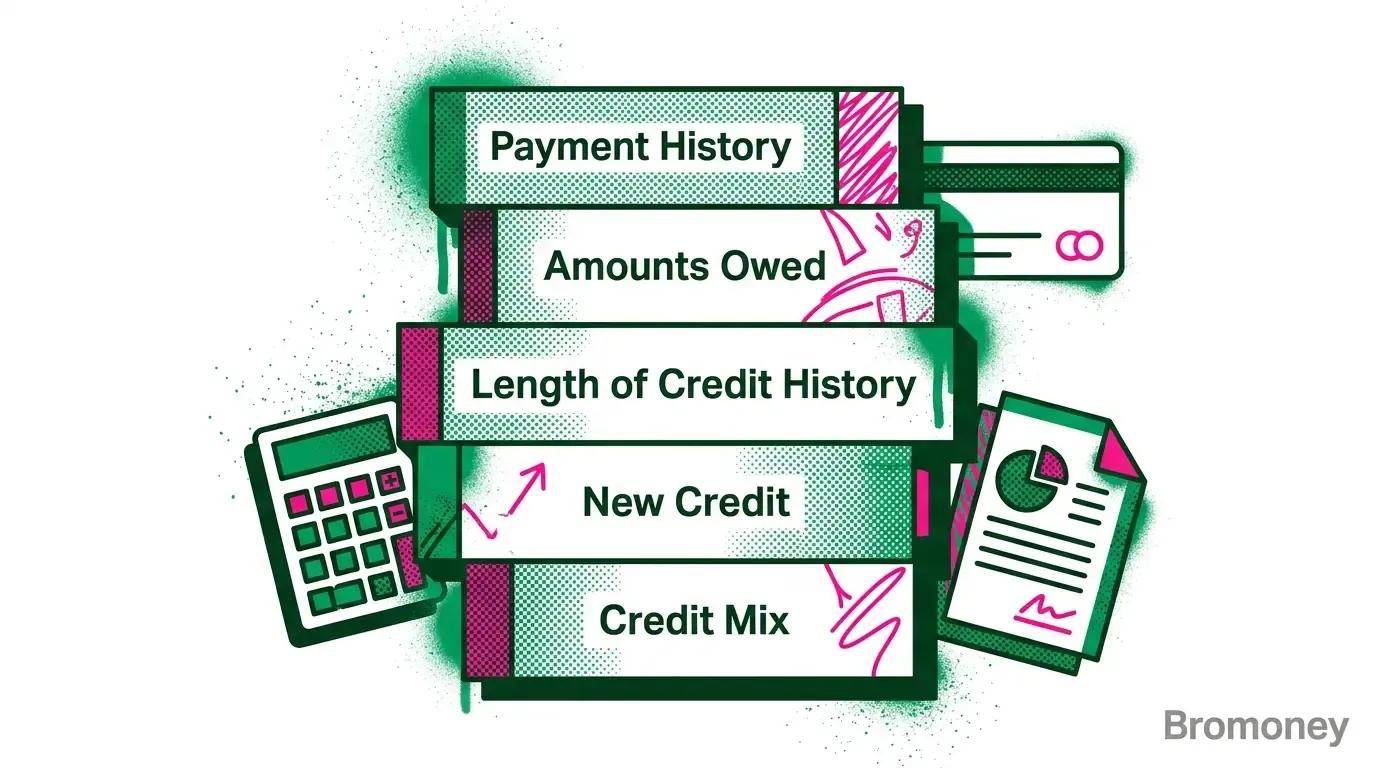
A practical breakdown of the five FICO Score factors, how each one works, and which actions improve your credit profile first.
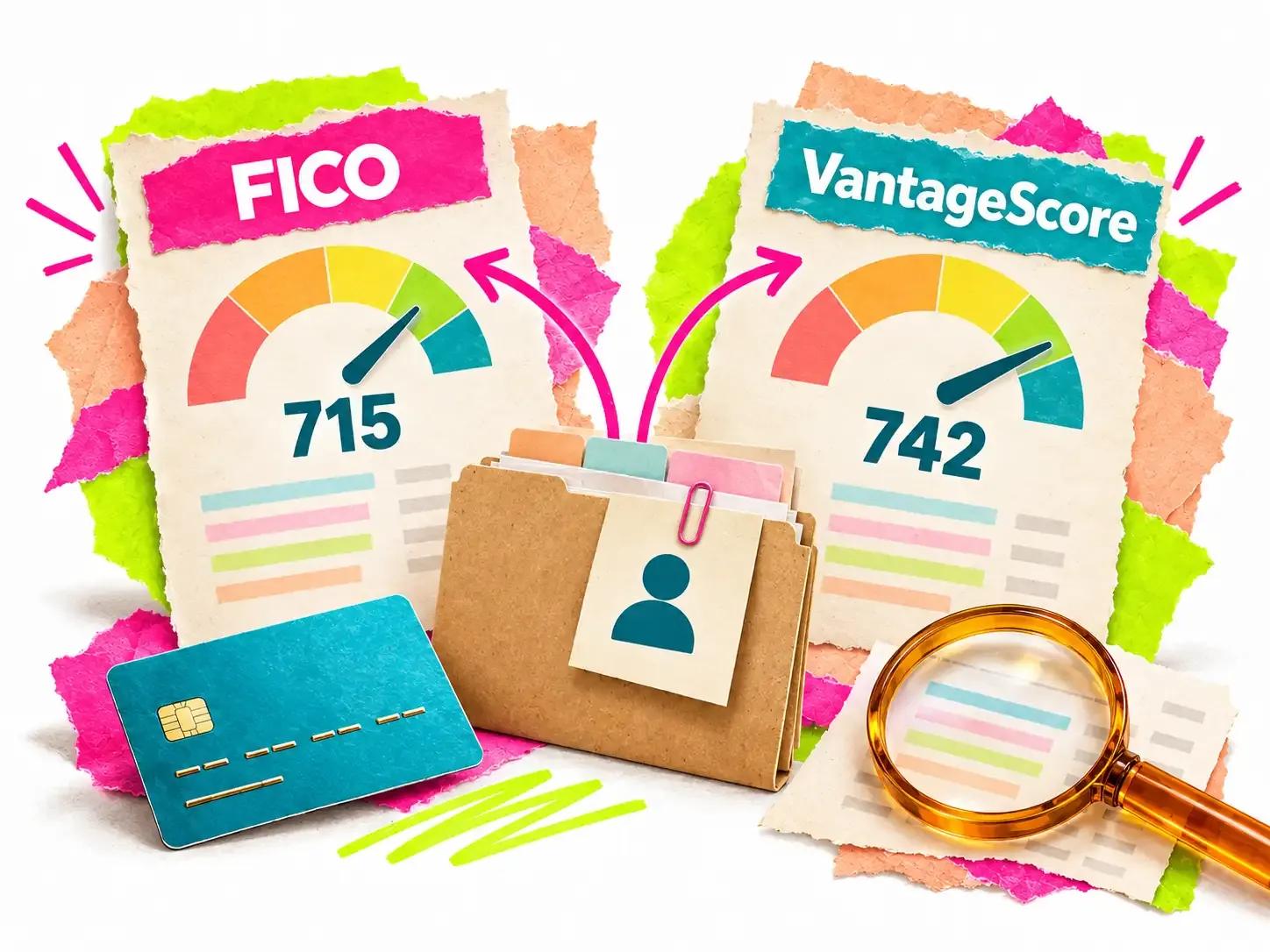
FICO and VantageScore can show different numbers for the same person because they use different models, bureau files, and update timing.
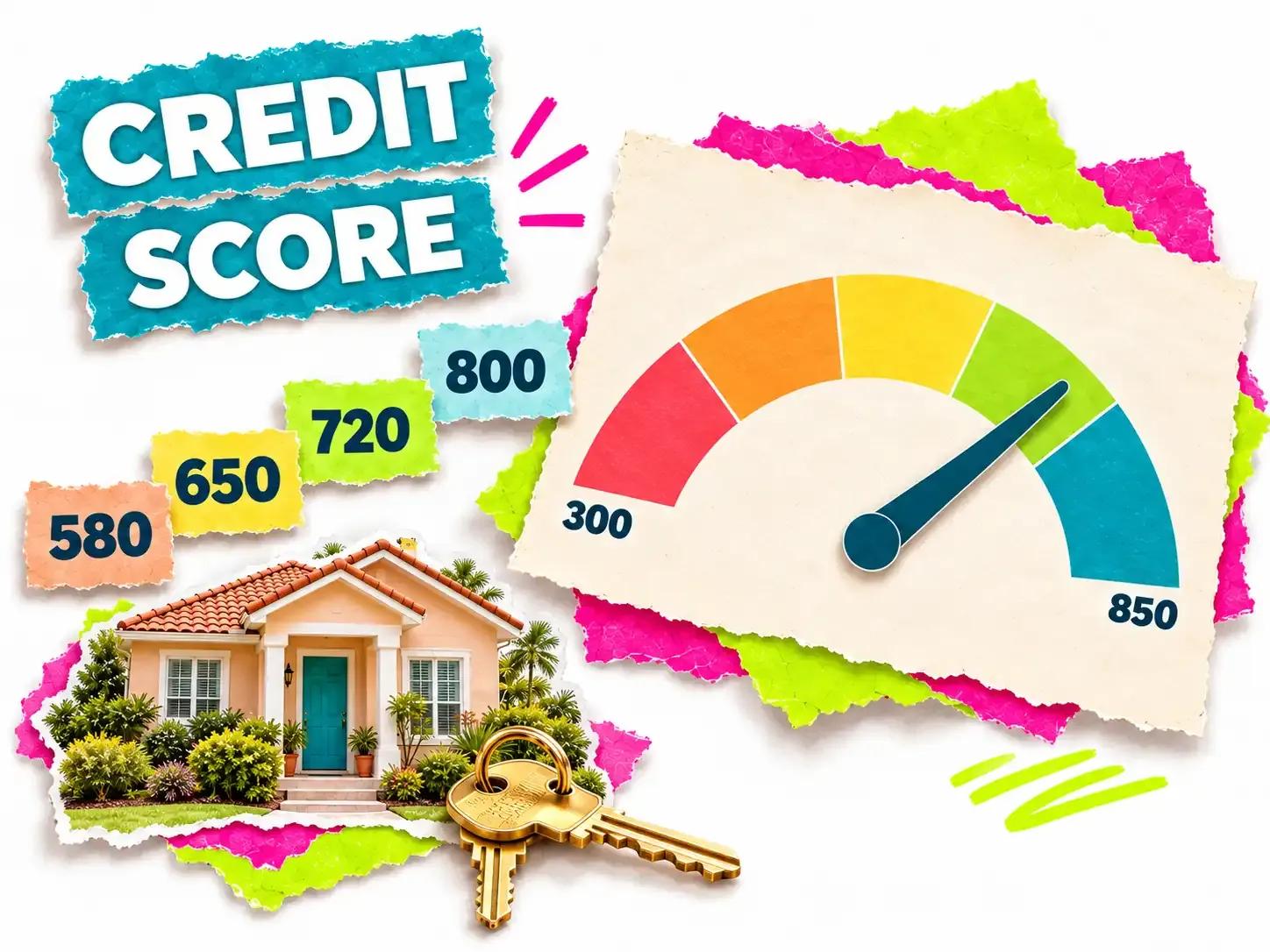
A practical guide to U.S. credit score ranges, including what 580, 650, 720, and 800 mean for mortgages, auto loans, credit cards, and rates.
We bridge the gap between your financial goals and premier lending services nationwide.
Bromoney is a financial marketplace, not a lender. Availability depends on the lender, the applicant's information, and where the applicant lives. When you submit a request form, your information is shared with lenders and partners in our marketplace so they can evaluate your request. Bromoney is operated by MONEY BROKER LLC (Delaware, DE File No. 10406065). The estimated view of your credit profile shown in your account is calculated by Bromoney from the information you provide; it is not a FICO Score, a VantageScore, a credit report or a lender's decision. This page is for general information and is not financial or legal advice.
You know the drill: one loan request, then waiting for the calls to start. Here you stay in control — we treat your information with care, you compare the options available to you, and you choose which lender or partner to move forward with. We can't speak for every partner, but we do our best to keep unwanted calls down.

Submitted over a secure connection


