
Affordability Framework: Budget Stress Test and What to Do Before Borrowing

Search queries like loan with bad credit and low income or i need a loan asap but i have bad credit reveal a pattern. Urgency drives the decision. Cash flow gaps feel immediate, while long-term repayment risk fades into the background.
An affordability framework fixes that imbalance. It forces a clear look at numbers before any application. It answers one question with precision: Can this loan fit into real life without triggering financial instability? This guide breaks down a working stress test used in underwriting logic and adapts it for practical use before borrowing.
Why affordability matters more than approval
Approval is not validation. It is a risk calculation from the lender's side. Many borrowers interpret approval as confirmation that the loan is safe. That assumption creates problems. Lenders price risk, not long-term comfort. A loan approved under high-risk conditions often carries repayment pressure that surfaces after the first or second billing cycle.
A borrower searching for a loan with bad credit asap focuses on access. The framework shifts attention toward sustainability.
The core of the affordability framework
At its center sits a simple principle. A loan must survive stress, not just baseline conditions.
Income stability changes. Expenses rise. Unexpected costs appear without warning. A loan that works only under perfect conditions fails in real life. The framework evaluates three layers:
- baseline affordability
- stress scenario affordability
- recovery capacity
Each layer filters out risky borrowing decisions before they turn into debt traps.
Step 1: Build a real monthly cash flow map
Most budgeting errors start with incomplete data.
A proper cash flow map includes net income and fixed obligations. Rent, utilities, subscriptions, insurance, transport, food, and existing debt payments must be listed with exact amounts.
Irregular expenses require attention. Annual payments such as insurance or taxes should be divided into monthly equivalents. Ignoring them creates a false sense of surplus. After mapping expenses, subtract them from income. The result is free cash flow. This number determines borrowing capacity. Not estimated income. Not optimistic projections. Only verified cash flow counts.
Step 2: Apply the baseline affordability rule
A loan fits baseline conditions when the monthly repayment does not exceed a defined share of free cash flow. A conservative threshold sits at 30 to 40 percent of available surplus. This buffer absorbs minor fluctuations without immediate stress.
A borrower with $600 in free cash flow should keep loan payments below $240. Crossing that line reduces flexibility and increases default probability. Many lenders allow higher ratios. That reflects risk tolerance, not borrower safety.
Step 3: Run a stress test scenario
A realistic stress test removes income and increases expenses at the same time.
Income reduction scenario: subtract 20 percent from monthly earnings. Expense increase scenario: add 10 percent to essential costs. Recalculate free cash flow under these conditions.
If the loan payment still fits within adjusted surplus, the structure passes stress conditions. If it breaks, the loan becomes fragile. This step exposes hidden risk. It mirrors real-life disruptions such as reduced working hours or unexpected bills.
Step 4: Evaluate debt stacking risk
Debt stacking occurs when new loans cover gaps created by existing obligations.
Borrowers searching "need a loan with bad credit asap" often fall into this cycle. One loan solves an immediate problem. The next loan covers repayment pressure from the previous one.
To detect this pattern, track how much of your current income already goes toward debt. A threshold above 40 percent signals elevated risk. Adding another obligation in this range often leads to cascading payments and late fees.
Breaking this cycle requires reducing total debt load before adding new credit.
Step 5: Check repayment timeline realism
Short-term loans reduce total interest but increase monthly pressure. Long-term loans lower monthly payments but increase total cost. Affordability depends on the balance between these forces.
A borrower with unstable income benefits from longer repayment terms, even with higher total interest. Stability matters more than nominal savings. A borrower with stable income and surplus cash flow benefits from shorter terms. The framework matches loan duration with income predictability, not marketing offers.
Step 6: Identify trigger points before borrowing
Trigger points are conditions that break repayment ability. Common triggers include job loss, reduced hours, medical expenses, and rent increases. Define a clear threshold. If income drops below a specific level or expenses exceed a fixed amount, repayment becomes impossible.
Knowing these limits changes borrowing behavior. It prevents acceptance of loans that operate too close to failure conditions.
What to do before applying for a loan
A borrower typing i need a loan with bad credit asap often skips preparation. That step determines loan quality more than lender choice.
Start with income stabilization. Even short-term consistency improves underwriting results.
Reduce revolving debt balances. Lower utilization ratios improve credit signals.
Check credit reports for errors. Incorrect entries distort risk assessment and lead to worse loan terms.
Prepare documentation in advance. Verified income, bank statements, and expense records speed up approval and reduce uncertainty.
These actions shift a borrower from reactive to prepared, even under time pressure.
When bad credit and low income intersect
A loan with bad credit and low income sits in the highest risk category for lenders. That combination limits available options and increases pricing.
The affordability framework becomes critical in this scenario. Even small miscalculations create repayment stress. Focus shifts from finding approval to minimizing damage. Loan size should match only essential needs. Non-critical borrowing increases risk without improving financial position.
In many cases, alternative solutions outperform borrowing.
Building a decision filter before applying
A clear filter simplifies decision-making under pressure. A loan passes the filter only if:
- The monthly payment fits baseline affordability;
- Loan survives stress scenario;
- Total debt remains below the safe threshold;
- The repayment timeline matches income stability.
If one condition fails, the loan is rejected regardless of approval status. This approach removes emotional bias and enforces financial discipline.
Conclusion: borrowing with control, not urgency
A borrower entering the market with queries like i need a loan with bad credit asap faces structural disadvantages. Pricing, approval conditions, and repayment pressure all work against stability. An affordability framework restores control. It transforms borrowing from reactive action into calculated decisions.
The goal is not just access to funds. The goal is to maintain financial balance after funds arrive. A loan that passes stress testing supports recovery. A loan that fails creates a deeper problem than the one it tries to solve.
Frequently Asked Questions
Can a loan be affordable with bad credit and low income?
Yes, but only when loan size and repayment terms align with verified cash flow and pass stress testing conditions.
What is the biggest mistake before borrowing?
Skipping a stress test and relying only on current income without accounting for potential disruptions.
How fast should a loan decision be made?
Speed reduces decision quality. Even short delays improve comparison and preparation, leading to better outcomes.
What if no loan passes the affordability test?
In that case, borrowing should be postponed. Alternative solutions, such as expense reduction or income adjustment, provide safer outcomes.

Denis Goncharenko
Head of Content
Editorial Policy: no secondary statistics. Every claim is linked to an official source and dated — datasets and methods are open for review.

Was this article helpful?
Same blogs
What Average Household Expenses Show About Price Pressure - and What They Can't
The average US consumer unit spent $78,535 in 2024 - about $6,545 a month. This page sets that spending record against the price indexes for the same two years, category by category, using our own CE-CPI crosswalk, and states plainly what the figures cannot show.
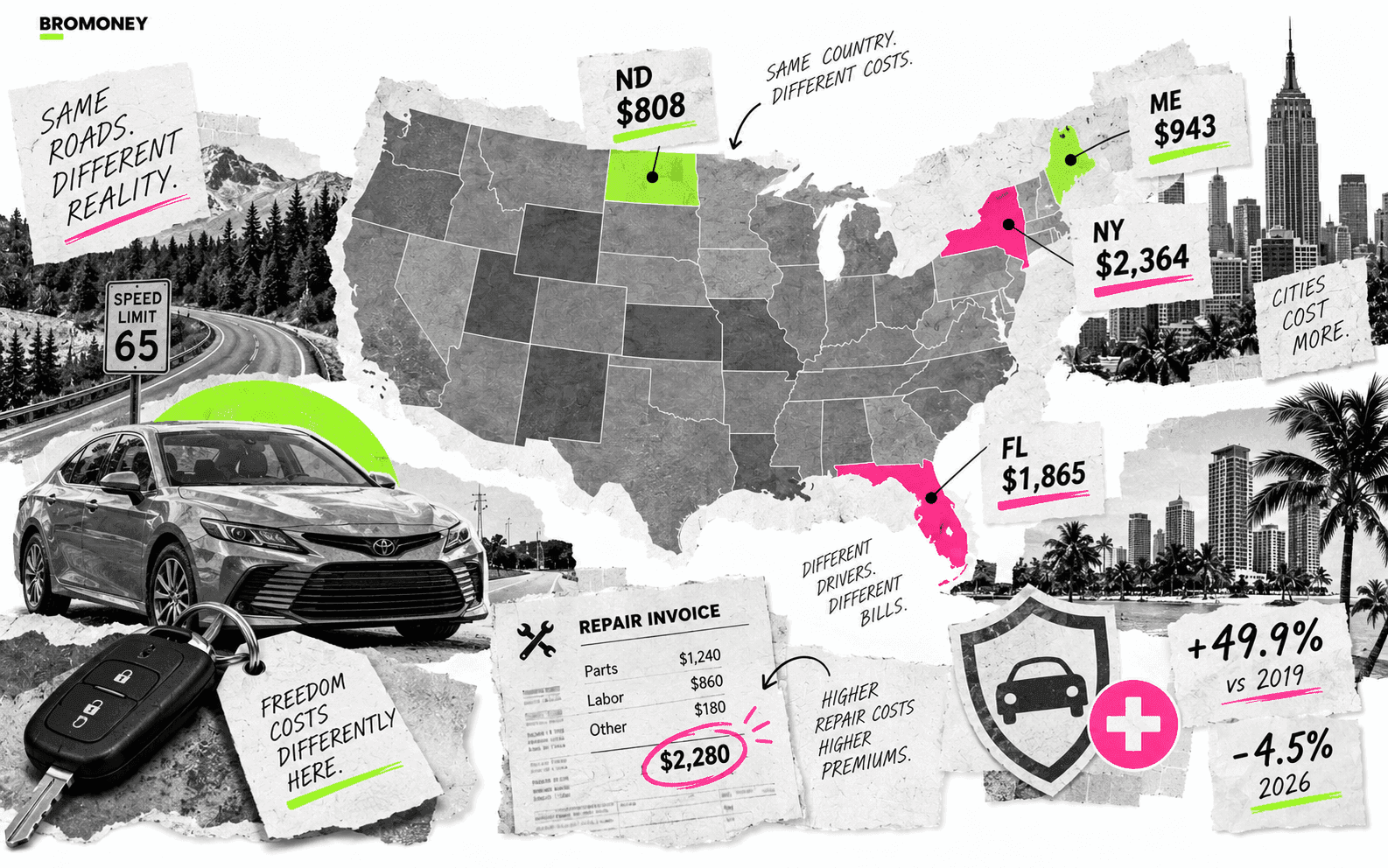
Why Car Insurance Went Up and What Actually Moves the Premium
Car insurance spending rose 12.3 percent in 2024, one of only two costs BLS called statistically significant. NAIC's 2023 state averages, why rates are falling even as the level sits 49.9 percent above 2019, what actually drives claims costs, and which levers on your policy are worth checking.
Stop Blaming the Latte: Impulse Buying Isn't the Whole Budget Story
BLS data shows apparel and entertainment spending barely moved in 2024, while car insurance, housing and groceries rose - some by double digits. Why the numbers behind the top impulse-buying articles don't hold up, and a review method that starts with the bills, not the coffee.