


The Envelope Method's Hidden Traps: When Your Budget Creates a False Sense of Financial Security
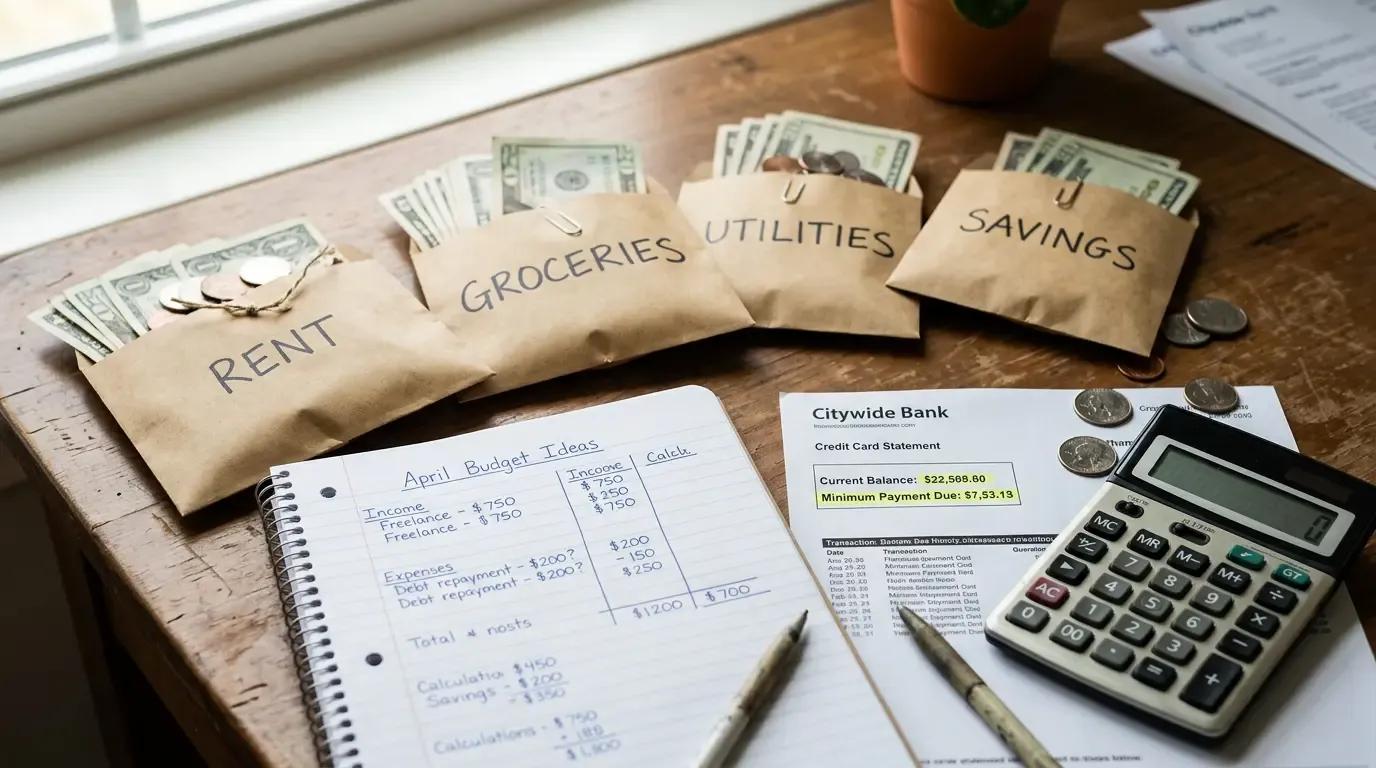
The envelope method feels satisfying. You divide your paycheck, fill your categories, and watch the cash disappear into labeled slots. Everything looks organized. Everything looks under control. But in reviewing household budgets, the same pattern keeps appearing: people who follow their envelopes religiously and still end up in financial crisis – surprised, confused, and asking where it all went wrong.
The answer is almost always the same. The envelopes were full. The financial picture was not.
If you want to understand how to stay consistent with budgeting, the envelope method is a reasonable starting point. But consistency alone does not equal security. This article is about the gap between the two.
What "False Sense of Security" Actually Means in Personal Finance
The Mental Accounting Principle: Why Your Brain Lies to You
Mental accounting is the cognitive mechanism behind why the envelope system feels so powerful – and why it can mislead you.
Richard Thaler, who won the Nobel Prize in Economics for this work, demonstrated that people do not treat money as a fungible resource. Instead, they sort it into separate psychological "accounts" – vacation, groceries, entertainment – and make spending decisions within those accounts rather than against their total financial picture.
The classic experiment: people who lost a $20 theater ticket were far less likely to buy a replacement than people who lost a $20 bill on the way to the box office. The financial loss is identical. The mental account is not.
In household budgeting, this plays out in two predictable traps:
- The "easy money" effect. Unexpected income – a bonus, a tax refund – gets spent more freely because it lands in a separate mental slot from regular income.
- The savings-debt paradox. A person keeps $3,000 in a savings account earning 2% APY while carrying $4,500 in credit card debt at 24% APR. They don't use the savings to pay the debt because, mentally, those are different accounts.
Research published in the Journal of Economic Psychology (Chen & Antonov, 2024) confirms that earmarking funds under specific labels significantly increases savings rates – but only when those labels are tied to goals. Envelopes labeled for spending categories protect current consumption. They do not automatically build long-term financial health.
A 2022 study in the Journal of Behavioral Finance found that overconfidence – the belief that you have things under control – directly erodes long-term financial well-being by leading people to take on more risk and ignore warning signals. Detailed budgets, including envelope systems, amplify this overconfidence when they mistake category compliance for financial stability.
"Money in the Envelope" ≠ "Financial Position Is Stable"
This is the core confusion the envelope method creates. Having cash in a labeled slot tells you one thing: you haven't overspent that category this month. It tells you nothing about seven other factors that determine whether your finances are actually stable.
| Parameter | Money in the Envelope | Financial Stability |
|---|---|---|
| Emergency reserve | Leftover cash at month-end | 3–6 months of fixed expenses in a liquid account |
| Debt management | One envelope for minimum payment | Active strategy to reduce principal and total interest |
| Inflation protection | Fixed cash amounts losing value | Savings in interest-bearing accounts or invested assets |
| Irregular expense planning | Covered by "borrowing" from other envelopes | Dedicated sinking funds built monthly |
| Long-term goals | No dedicated envelope | Retirement contributions, down payment funds, investment accounts |
| Income diversification | Single paycheck funds all envelopes | Multiple income streams, including passive |
| Budget methodology | Intuitive allocation by feel | Systematic zero-based or pay-yourself-first approach |
A 2025 survey found that roughly 45% of active budgeting app users overestimate the size of their emergency fund – believing it covers several months of expenses when it actually covers less than four weeks. Those same users were 20% more likely to underestimate the long-term impact of inflation, precisely because their short-term category compliance felt like evidence of control.
6 Situations Where Envelopes Create the Illusion of Financial Control
1. Debt Lives Outside the Envelope System
The envelope method is designed around distributing cash you have. It has no built-in architecture for managing money you owe.
In practice, debt gets reduced to a single envelope: the minimum payment. The user puts $180 in the "Credit Card" envelope, pays it on time, and feels responsible. The envelope is managed. The debt is not.
A real scenario: someone earning $5,000 a month with $18,000 in credit card debt at 22% APR makes minimum payments of $360 and runs a clean envelope budget for the rest. At that rate, full repayment takes over 8 years and costs roughly $14,000 in interest alone. The budget looks balanced every month. The financial trajectory is quietly catastrophic.
According to data from 2025–2026, more than 57% of economically active adults carry some form of consumer debt. Given that simple budgeting methods – including envelopes – are used by roughly 20% of people who track their finances at all, the overlap is substantial.
"A budget that doesn't include aggressive debt repayment isn't a budget – it's just a wish list. Real financial freedom starts when your debt elimination plan is treated with the same priority as rent or a mortgage payment."
– Michelle Singletary, personal finance columnist, The Washington Post, 2024
"A comprehensive budget must include a dedicated debt management strategy. Ignoring obligations creates a dangerously incomplete financial picture and undermines long-term goals such as retirement savings and wealth building."
– CFP Board Consumer Guide, 2025
If you're carrying high-interest debt while managing envelopes, the debt payoff calculator at Bromoney shows exactly what your current payment schedule costs over time – and what happens if you accelerate it.
2. Irregular and Seasonal Expenses Don't Fit Neatly Into Envelopes
Monthly envelopes work for monthly expenses. The problem is that a significant share of actual spending isn't monthly.
Research from 2024–2025 shows that irregular and seasonal expenses account for 15–25% of a household's annual budget. The categories most commonly left out of envelope planning:
- Annual software and streaming subscriptions
- Planned medical expenses – dental work, new glasses, specialist visits
- Vehicle maintenance and registration
- Gifts and holiday spending
- Home repairs and appliance replacement
None of these appear on a regular monthly schedule. All of them appear eventually. When they do, and there's no dedicated envelope waiting, the money comes from wherever it can – usually the envelopes that were supposed to cover something else. This is not a discipline problem. It's a structural gap in how the method handles time.
Practical guides from Fidelity on zero-based budgeting and Intuit's zero-based budgeting overview both emphasize identifying irregular expenses upfront, breaking annual costs into monthly contributions, and treating those contributions as fixed line items – not optional. The envelope method, in its classic form, skips this step entirely.
3. The "Reserve Envelope" Is Not an Emergency Fund
These two things sound similar. They are not the same financial instrument.
A reserve envelope is a small buffer – typically one or two weeks of expenses – kept on hand for minor surprises: a broken appliance, an unexpected co-pay, a car repair under $500. It should be immediately liquid: cash in hand or money on a debit card with instant access.
A true emergency fund is a strategic reserve sized to replace income entirely for 3–6 months. Its purpose is to keep a household solvent through job loss, a medical crisis, or a major financial disruption. It lives in a high-yield savings account or short-term deposit – accessible within 1–3 business days, not instant, but protected from impulse spending.
The CFP Board standard for emergency fund sizing is 3–6 months of all fixed obligations: rent or mortgage, utilities, loan payments, insurance, and groceries. For a household with $3,500 in monthly fixed expenses, that means $10,500 to $21,000 sitting in a dedicated account – not an envelope.
Many envelope users have a "rainy day" envelope. Almost none have a true emergency fund. The first creates comfort. The second creates actual resilience. The Nebraska Department of Banking and Finance's guide on budgeting with irregular income specifically recommends a 3–6 month emergency fund as a baseline before any other savings goal – a standard the reserve envelope cannot meet.
4. Moving Money Between Envelopes Is a Warning Signal, Not a Solution
Envelope raiding – taking money from one category to cover a shortfall in another – is far more common than most budgeters admit. A 2024 study found that more than 60% of envelope system users do this regularly.
The three psychological drivers:
- Unrealistic initial allocations. The budgeted amounts don't reflect actual spending patterns.
- No emergency buffer. When something unexpected hits, the envelopes are the only available source.
- Impulse spending. Physical cash in hand creates a low-friction path to unplanned purchases.
Financial planners treat frequent envelope raiding as a diagnostic signal, not a minor inconvenience. It indicates at least one of three underlying problems: category allocations are wrong, there's no adequate emergency fund, or spending discipline has broken down. Any of these requires a full budget review – not a temporary reallocation.
The deeper issue: once raiding becomes routine, the envelope stops functioning as a psychological barrier. The mental account collapses. The category label becomes meaningless. Documentation from Actual Budget's envelope budgeting guide describes this scenario directly – when "reallocate funds" becomes a default move rather than an exception, the structural logic of the system breaks down.
5. Inflation Erodes Fixed Envelope Amounts Silently
The envelope method has no built-in mechanism for adjusting to rising prices. You set an amount, fill the envelope, spend it. If prices go up and the envelope doesn't, you're running a hidden deficit.
From 2022 to 2026, cumulative inflation in the U.S. ran roughly 20–22%, driven by the 2022–2023 surge and a gradual cooldown through 2025–2026. Globally, the figure reached approximately 33% over the same period.
The practical consequence: a $600 grocery envelope set in early 2022 has the purchasing power of roughly $490 by 2026. If the envelope hasn't been adjusted, the household is either raiding other categories or quietly cutting back on actual needs – without understanding why the money keeps running short.
An investigation into budgeting methods and financial wellness (An Investigation into the Effects of Budgeting on Financial Wellness at the Household Level, JBE4IR, 2023) found that rigid budgeting frameworks – including fixed-amount envelope systems – showed a statistically significant negative relationship with financial wellness (negative coefficient, p < 0.05). The rigidity is the problem. Envelopes that aren't reviewed and adjusted regularly don't reflect the cost of living. They reflect the cost of living from whenever they were last set up.
6. Cash Stuffing and the Psychology of Visible Money
Cash stuffing – the social media-driven version of envelope budgeting – peaked in 2023–2024 and has stabilized at high search and engagement volumes through 2026. The #cashstuffing hashtag on TikTok has accumulated billions of views. It's not a fringe trend.
The psychological mechanism is real and documented. Physical cash activates what researchers call the "pain of paying" – a measurable increase in loss aversion compared to card or digital transactions. Transaction data from the Federal Reserve Bank of Boston and studies cited by Debt.org's breakdown of Dave Ramsey's envelope system confirm the effect quantitatively:
- Average cash transaction: $22
- Average non-cash transaction: $112
- Estimated reduction in discretionary spending in the first month of cash stuffing: ~15%
- People spend an estimated 12–18% more when paying by card versus cash
A field experiment tracked across 412 households over 6 months found that a strict cash-envelope group reduced impulse spending by 44% compared to an app-and-spreadsheet group with equivalent financial education. The same research flagged "compliance fatigue" – a gradual erosion of strict adherence over time.
A review of 45 top-rated budgeting apps (Evaluating Budgeting Apps: Limited Support for Budgeting Compared to Tracking, Lancaster University) found that one-third of apps don't actually support envelope-style mental accounting – they track transactions without creating the psychological separation that makes the method work.
"Findings indicate that while all apps support tracking of transactions, one third of the apps do not support budgeting informed by money envelopes… we report challenges regarding the meaning of key concepts of 'accounts' and 'transactions'."
– Evaluating Budgeting Apps: Limited Support for Budgeting Compared to Tracking, Lancaster University
At the six-month mark, digital envelope users maintain their savings rate better than physical cash users: 68% retention vs. 52%. Physical cash creates a stronger initial effect. Digital systems sustain it longer. Neither addresses debt, irregular expenses, or inflation on its own.
For a deeper look at why we overspend with digital wallets and how the pain-of-paying effect works neurologically, the full breakdown covers the neuroscience behind both approaches.
Real Consequences of the Control Illusion
Financial Crisis "Out of Nowhere"
The most common crisis pattern in household budget reviews is what could be called the large-bill shock. A user runs a clean envelope budget for 8–12 months. Every category balances. Then a single unexpected expense – transmission failure, emergency dental work, a medical bill – arrives at $3,500 to $5,000. The "Car Repair" envelope holds $400. The emergency envelope holds $800. The gap goes on a credit card at 28% APR.
The second pattern is the slow-motion collapse. Inflation gradually makes every envelope insufficient. Rather than reviewing and adjusting the budget, the user starts "borrowing" from the vacation envelope to cover groceries. Then from the clothing envelope. Then from the car maintenance fund. Each transfer feels like a reasonable one-time fix. After six months, every forward-looking envelope is empty. When the car needs new tires, there's nothing left – and the only option is a short-term loan.
Both scenarios share one feature: the envelope system reported everything as fine right up until it wasn't. Analysis of user accounts from Reddit's r/personalfinance and similar communities shows both patterns appearing repeatedly, with users consistently expressing surprise. The envelopes were full. The financial system had been failing for months.
This mirrors the finding from the 2024 mental accounting and cash transfers study (Twicker/4 Envelopes PDF): 84% of participants stated that labeled envelopes would help their financial discipline – yet those who received a default allocation invested more heavily without experiencing comparable gains in income or savings. The confidence in the system outpaced the system's actual reach.
Hidden Obligations Accumulating Behind a Clean Monthly Budget
The table below captures the categories most commonly absent from envelope systems – the ones that don't appear monthly but consume 15–25% of annual household spending.
| Hidden Obligation | Typical Annual Cost | Monthly Reserve Needed |
|---|---|---|
| Property & vehicle taxes | $700–$1,400 | $58–$117 |
| Vehicle maintenance & repairs | $1,200–$2,000 | $100–$167 |
| Medical (dental, vision, prescriptions) | $900–$1,800 | $75–$150 |
| Insurance premiums (auto, home, renters) | $1,500–$3,000 | $125–$250 |
| Appliance & electronics replacement fund | $800–$1,200 | $67–$100 |
| Home repairs & maintenance | $600–$1,500 | $50–$125 |
| Gifts & holidays | $1,000–$2,000 | $83–$167 |
| Vacation & travel | $2,400–$4,800 | $200–$400 |
| Education & professional development | $800–$1,500 | $67–$125 |
| Annual subscriptions & memberships | $300–$600 | $25–$50 |
| TOTAL ESTIMATE | $10,200–$19,800 | $850–$1,651/month |
If none of these categories appear in your envelope system, the budget accounts for roughly 75–85% of actual annual spending. The rest hits as "unexpected" – even though every item on that list is entirely predictable.
How to Strengthen the Envelope Method for Real Financial Security
Checklist of Hidden Obligations to Add to Your System
| Expense Category | Frequency | How to Reserve |
|---|---|---|
| Vehicle maintenance (oil, tires, registration) | 1–2× per year | Monthly deposit to dedicated "Auto" envelope or savings bucket |
| Medical & dental | Every 3–12 months | Separate "Medical Fund" in a savings account |
| Annual insurance premiums | Yearly | Divide annual premium by 12; deposit monthly |
| Property & vehicle taxes | Yearly | Monthly reserve of 1/12 of prior year's bill |
| Gifts & holidays | Seasonal | "Celebrations" envelope with consistent monthly contributions |
| Education & training | 1–4× per year | "Growth" fund with regular deposits |
| Appliance & furniture replacement | Every 3–7 years | Dedicated savings account with fixed monthly transfer |
| Vacation & travel | 1–2× per year | Separate "Travel" account, funded monthly |
Sinking Funds: Envelopes Built for Irregular Expenses
A sinking fund is a savings strategy for predictable but non-monthly expenses. The logic: take the total anticipated cost, divide by the number of months until you need it, and deposit that amount every month.
This is the structural fix for the irregular-expense problem. Instead of being surprised by a $1,200 car insurance renewal, you've been depositing $100 a month for 12 months. The bill arrives. The money is there.
The critical distinction from an emergency fund: sinking funds cover planned events – a tax bill, a vacation, an annual checkup. Emergency funds cover unplanned crises – job loss, sudden illness, a major accident. Both are necessary. Neither is optional.
Recommended sinking fund categories for most U.S. households:
- Vehicle maintenance and registration
- Insurance renewals
- Medical and dental
- Holiday and gift spending
- Home repairs
- Travel
- Major purchases – laptop replacement, appliance upgrade
The math is straightforward: annual expected cost divided by 12 equals the monthly contribution to that category. A $720 dental bill becomes $60 a month. A $2,400 vacation becomes $200 a month. Neither number is shocking. The lump sum always is.
For anyone managing allocating funds to high-priority bills alongside sinking fund contributions, the sequencing matters: debt with interest above 10% APR should typically take priority over discretionary sinking funds, but not over the emergency reserve or mandatory irregular expenses like insurance and taxes.
Full Financial Control Tools: YNAB and Tracking Alternatives
The envelope method works best when paired with a system that handles what physical envelopes can't: online bills, subscriptions, debt tracking, and goal progress.
| Feature | Physical Envelopes | YNAB | Spreadsheet (custom) | Bromoney App |
|---|---|---|---|---|
| Envelope/category budgeting | ✅ Core feature | ✅ Core feature | ✅ Manual setup | ✅ Built-in |
| Debt payoff tracking | ❌ Not supported | ✅ Debt paydown tool | ✅ With formulas | ✅ Integrated |
| Sinking fund categories | ⚠️ Manual only | ✅ Goal-based saving | ✅ With formulas | ✅ Goal tracking |
| Irregular expense planning | ❌ No structure | ✅ Scheduled transactions | ✅ Manual | ✅ Automated |
| Inflation adjustment alerts | ❌ None | ❌ Manual | ✅ If built in | ⚠️ Review reminders |
| Mobile + online payments | ❌ Cash only | ✅ Full integration | ⚠️ Manual entry | ✅ Full integration |
| Cost | Free | $14.99/month | Free | Free / Premium |
The Lancaster University analysis of 45 budgeting apps found that roughly one-third don't actually support true envelope-style mental accounting – they track spending without creating the psychological separation that makes the method effective. When choosing a digital tool, verify it supports zero-sum allocation – every dollar assigned to a category before spending – rather than just after-the-fact transaction logging.
The Bromoney budget planner is available on Google Play and the App Store and supports both envelope-style category budgeting and goal-based sinking funds.
Monthly Financial Audit: What to Check Every Month
According to CFP Board guidelines and Investopedia's personal finance framework, a complete monthly financial review covers five areas:
- Cash flow analysis. Compare all income received against all spending. Not by category – total in versus total out.
- Budget vs. actuals. Check every envelope or category: where did you overspend, where did you underspend, and why?
- Account and statement review. Scan bank and credit card statements for unauthorized charges, billing errors, or subscriptions you forgot about.
- Goal progress check. Are your sinking funds on track? Is your emergency fund growing? Are debt balances declining?
- Net worth snapshot. Add up assets – savings, investments, retirement accounts – and subtract liabilities: credit cards, loans, mortgage balance. Track the direction of change month over month.
Most envelope users do step 2. Almost none do steps 1, 4, and 5. The result: they know whether they stayed in budget. They don't know whether their financial position is improving.
A 2023 study from Taylor & Ivanov (Cognitive Biases in the Digital Age: FinTech's Influence on Financial Decisions) found that fintech tools can simultaneously reinforce cognitive biases through gamification and reduce them through automated savings. The monthly audit is the manual override – the one practice that forces a full-picture view regardless of which tool you use.
Signs Your Envelope System Is Giving You False Confidence
| Warning Sign | What It Actually Means | What to Do |
|---|---|---|
| You've never created envelopes for taxes, insurance, or car maintenance | 15–25% of your annual spending has no plan | Build sinking fund categories for each irregular expense |
| Your envelope amounts haven't changed in over a year | Your budget no longer reflects real costs | Review and adjust all category amounts for inflation |
| You regularly move money between envelopes | Your allocations are wrong or your emergency fund is missing | Rebuild budget from actual spending data; fund emergency reserve first |
| Your "savings" envelope gets raided first when something comes up | You have a reserve, not an emergency fund | Separate and protect emergency savings in a dedicated account |
| You don't know your total debt balance or monthly interest cost | Debt is invisible in your system | Add a debt tracking layer; calculate true payoff timeline |
| Your budget balances every month but your net worth isn't growing | You're managing consumption, not building financial health | Add goal-based envelopes for savings and debt reduction |
| You feel financially secure but couldn't survive 60 days without income | The envelopes are working; the foundation isn't | Build a 3–6 month emergency fund before any other financial goal |
Frequently Asked Questions
Does the Envelope Method Actually Work, or Is It a Myth?
The envelope method works – for a specific, limited purpose. It reduces impulse spending, creates psychological friction around discretionary categories, and helps people who have never budgeted before build basic financial awareness.
The evidence is real. A field experiment tracking 412 households found that a strict cash-envelope group reduced impulse spending by 44% compared to an app-and-spreadsheet group. Research on Indian household finance interventions showed that labeled envelopes increased household savings rates from 0.74% to 4% of income – a more than fivefold increase.
But the same body of research that confirms these short-term benefits also shows something more complicated. The JBE4IR investigation into budgeting methods and financial wellness found that the envelope method had a statistically significant negative relationship with financial wellness – while zero-based budgeting and the pay-yourself-first method showed significantly positive relationships.
"Zero-Based Budgeting and the Pay-Yourself-First method have significant positive effects on financial wellness… Conversely, the 50/30/20 budgeting rule and Envelope Budgeting showed statistically significant negative relationships with financial wellness, highlighting the limitations of rigid budgeting frameworks."
– An Investigation into the Effects of Budgeting on Financial Wellness at the Household Level, JBE4IR, 2023
The conclusion: envelopes are a behavioral tool, not a financial strategy. They work best as a starting point or as one layer within a more complete system – not as a standalone approach to long-term financial health.
Roughly 40–45% of users abandon the system within the first two months, citing inconvenience and the shift to cashless transactions. That attrition rate is itself a signal about the method's structural limitations in a digital-payment economy. To understand how the envelope system evolved from a purely cash-based tool into its modern hybrid forms, the full history covers where the method's strengths and constraints come from.
How Do I Know If I've Fallen Into the False Security Trap?
Ask yourself these five questions honestly:
-
Do you have separate, funded categories for taxes, insurance renewals, car maintenance, and medical expenses? If not, your budget covers roughly 75–85% of your actual annual spending.
-
When did you last adjust your envelope amounts? If it's been more than six months, your allocations are almost certainly behind real costs.
-
How often do you move money between envelopes? Occasional reallocation is normal. Monthly transfers between categories signal that either your allocations are wrong or your emergency fund doesn't exist.
-
Do you know your exact total debt balance and what it costs you monthly in interest? If not, debt is invisible in your system – and invisible debt grows.
-
Has your net worth – assets minus liabilities – increased over the past 12 months? Clean monthly budgets that don't build net worth are managing cash flow, not financial health.
If you answered "no" or "I don't know" to two or more of these, your envelope system is giving you comfort without giving you security.
Can You Combine the Envelope Method With Debt Tracking?
Yes – and this combination is significantly more effective than either approach used alone.
The practical structure:
- Envelopes for spending categories. Groceries, dining, transportation, personal care. These control day-to-day consumption.
- A dedicated debt repayment category. Not just the minimum payment – an amount calculated to reduce principal meaningfully. Use a debt payoff calculator to set a realistic target.
- Sinking funds for irregular expenses. Separate from spending envelopes, funded monthly, untouchable for daily expenses.
- Emergency fund as a protected account. Outside the envelope system entirely. Not a category – a separate savings account.
- Monthly net worth review. One number that tells you whether the whole system is working.
This hybrid approach aligns with what the JBE4IR research identifies as the characteristics of methods that actually improve financial wellness: flexibility, savings prioritization, and goal orientation. The envelope system provides the behavioral friction. The additional layers provide the financial architecture.
For anyone also managing high-interest debt while rebuilding their budget structure, understanding your credit utilization and total debt-to-income ratio matters as much as any envelope category. The Bromoney DTI calculator at /en/calculators/dti-max-loan-calculator covers your full debt picture in about two minutes.
For a practical comparison of how digital tools handle these combined functions, digital cash stuffing alternatives covers how apps compare to physical envelopes across behavioral and practical dimensions – including which ones actually support zero-sum allocation versus simple transaction logging.

Denis Goncharenko
Head of Content
Editorial Policy: no secondary statistics. Every claim is linked to an official source and dated — datasets and methods are open for review.

Was this article helpful?
Same blogs
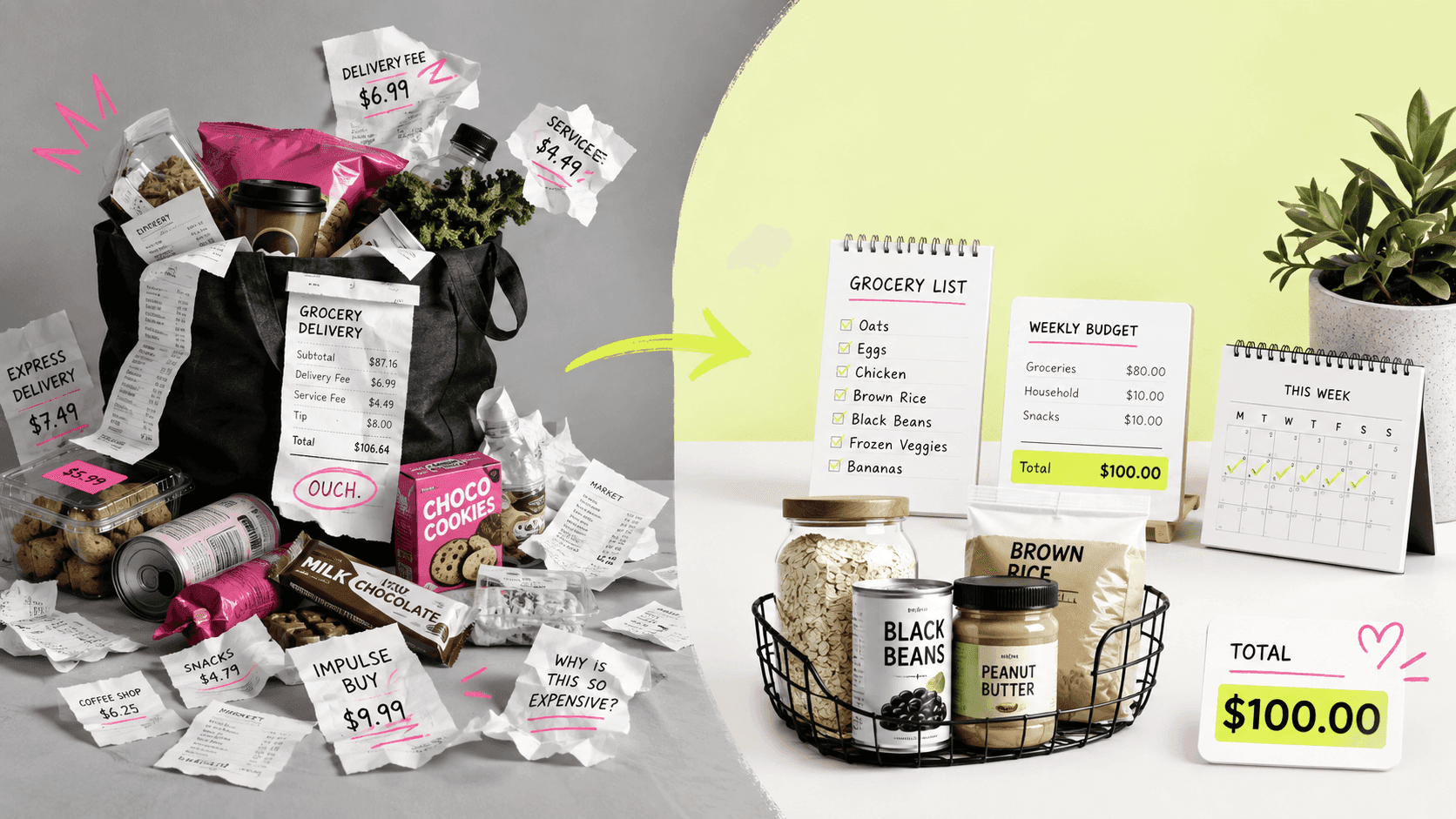
Saving Money on Groceries Is Not a Test of Willpower
Federal data shows six grocery categories moving at different rates, not one bill rising evenly. Why the national CPI, the CES spending survey, and USDA's own forecast are each the wrong number to budget against - and how to build your own monthly figure from 8 to 12 weeks of receipts instead.
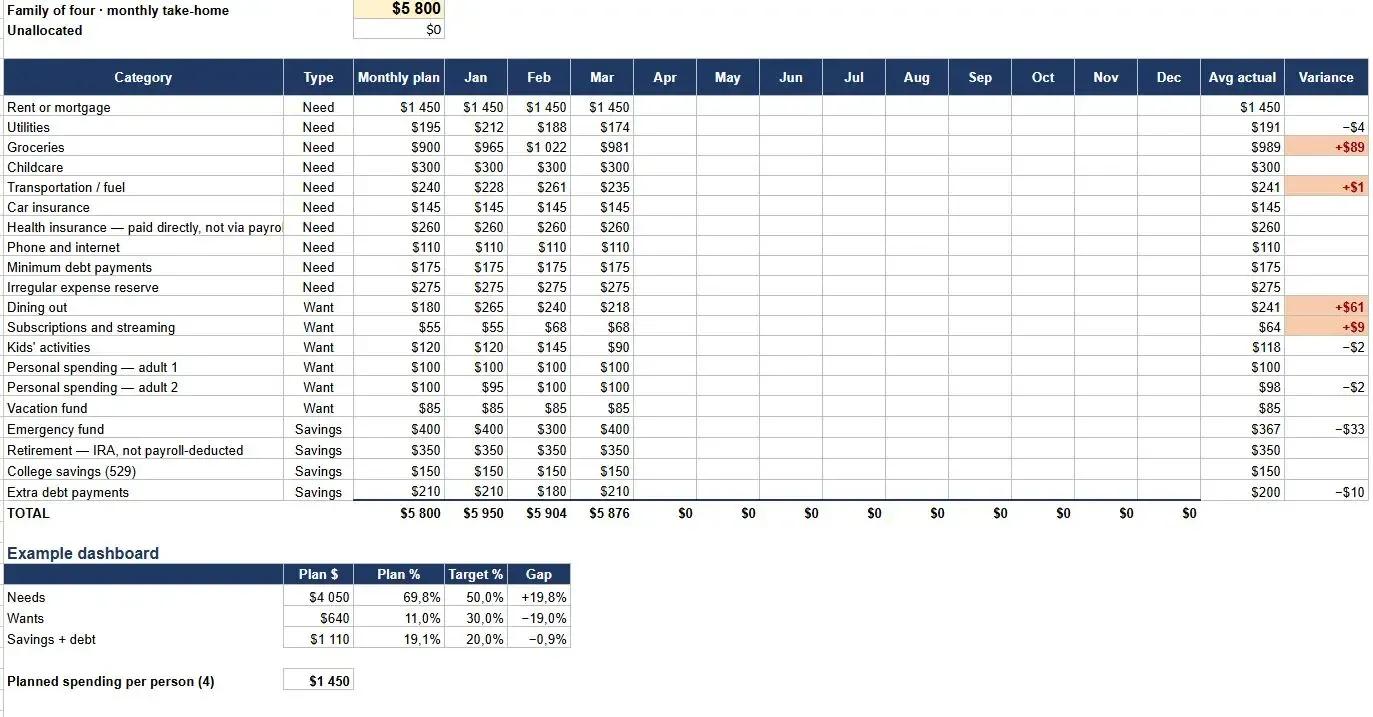
Free Family Budget Template for Excel and Google Sheets
A free household budget spreadsheet for families of three to five, with categories pre-filled and a separate tab that spreads yearly bills like insurance and registration across all twelve months. No email, no sign-up, works in Excel and Google Sheets.

Why Parent PLUS Loans Have Become a Hidden Retirement Crisis for American Parents
Parent PLUS loans can follow parents into retirement, reduce savings, and expose Social Security benefits to offset after default. Here is what near-retirement borrowers should know.