


Bad Credit Loans by Goal – Know These Red Flags, and Legit Checks

Search intent reveals more than any survey. Phrases like i need a loan with bad credit or need a loan today bad credit show urgency tied to a specific problem. The goal matters more than the loan itself.
A borrower fixing a car, covering rent, or consolidating debt faces different risk profiles and loan structures. Treating all bad credit loans as interchangeable leads to poor decisions and unnecessary costs.
This guide reframes borrowing around use-cases, then builds a safety layer to filter out bad credit loan scams and identify a legit loan for bad credit.
Why the goal defines the loan, not the other way around
Lending products vary in structure, pricing, and risk exposure. Choosing a loan before defining the goal reverses the correct sequence.
A borrower who states "need a loan with bad credit" often focuses on approval first. That approach ignores how repayment fits the original problem. Each use-case carries its own timeline, urgency level, and acceptable cost threshold. Aligning these factors reduces both financial pressure and long-term damage.
Emergency expenses: speed vs survivability
Emergency borrowing includes medical bills, urgent travel, or essential repairs. The phrase "need a loan today bad credit" often appears in this context. Speed dominates decision-making, approval within hours feels critical. This is where the highest-cost products cluster.
Short-term loans solve immediate gaps but compress repayment into tight windows. Monthly or bi-weekly payments rise sharply. If income remains stable, repayment works. If income fluctuates, stress builds quickly. A safer approach shifts focus from speed alone to survivability. Even in urgent cases, repayment must fit a realistic cash flow.
A borrower facing a $1,000 emergency should evaluate whether a two-month repayment schedule creates pressure that triggers new borrowing. If yes, extending the term reduces immediate stress, even if the total cost increases.
Debt consolidation: structure over speed
Debt consolidation aims to replace multiple obligations with one structured payment.
Borrowers in this category often say i need a loan with bad credit after juggling credit cards, late fees, and inconsistent payments.
The value of consolidation lies in predictability. A fixed schedule reduces missed payments. A single due date simplifies management. The risk appears when consolidation adds cost without reducing pressure. A new loan with a lower monthly payment but higher total repayment may still help if it stabilizes cash flow. Without that stability, consolidation becomes cosmetic.
The correct metric here is not interest rate alone. It is the ratio between the monthly obligation and income stability.
Income gaps: short-term bridge vs long-term burden
Income disruption creates another common use-case. Reduced hours, job transitions, or delayed payments push borrowers toward quick financing.
In this scenario, the loan acts as a bridge. It fills a temporary gap until income normalizes. The danger lies in misjudging the duration of that gap. If income recovery takes longer than expected, repayment collides with ongoing expenses.
A borrower searching "need a loan with bad credit" under income stress must align the loan duration with realistic recovery timelines. A mismatch leads to overlapping financial pressure.
Planned expenses: when borrowing makes sense
Not all bad credit borrowing comes from crises.
Some borrowers finance necessary expenses such as relocation, education, or essential purchases. These cases allow more control. Time exists to compare offers, verify terms, and plan repayment.
A legit loan for bad credit in this category focuses on transparency and alignment with long-term value. The cost of borrowing must remain lower than the benefit created by the expense. Financing a move that increases income potential may justify a higher interest. Financing discretionary spending rarely does.
How scams exploit urgency and confusion
The overlap between urgency and limited options creates ideal conditions for fraud.
Bad credit loan scams follow predictable patterns. They target borrowers who feel pressure to act quickly and lack time for verification. These schemes often promise guaranteed approval, unusually low rates, or instant funding without checks.
The trap lies in upfront fees. The borrower pays before receiving funds. The lender disappears or continues requesting additional payments. Another common tactic involves identity harvesting. Fraudulent platforms collect personal data under the guise of loan applications.
Recognizing these patterns prevents financial loss and protects personal information.
Red flags that signal a scam
Certain signals appear consistently across fraudulent offers.
- Lack of a physical business address or verifiable registration raises immediate concern
- Pressure tactics push for quick decisions without time for review
- Communication relies on generic email domains instead of corporate channels
- Loan terms remain vague or change after initial discussion
A borrower searching need a loan today bad credit faces these traps frequently because urgency reduces scrutiny.
Legitimate lenders do not guarantee approval. They assess risk and adjust terms accordingly.
How urgency reduces scrutiny
Urgency alters decision-making behavior. A borrower typing i need a loan with bad credit often prioritizes relief over evaluation. That shift leads to acceptance of unfavorable terms.
Three patterns dominate:
- focus on approval instead of cost
- acceptance of the first available offer
- underestimation of total repayment
These patterns repeat across use cases. Awareness alone reduces their impact.
Expert insight: Verification takes minutes, not hours. Checking registration, reading contract terms, and confirming contact details filter out most fraudulent offers before any personal data is shared.
Building a safety-first decision process
A structured approach replaces reactive decisions.
First, define the goal clearly. Identify the exact amount required and the reason behind it.
Second, calculate repayment capacity based on current income and expenses.
Third, verify lender legitimacy before submitting any application.
Fourth, compare at least two offers, even under time pressure.
This process takes less time than recovering from a poor borrowing decision.
Conclusion: control the goal, control the outcome
Borrowing with bad credit does not follow a single pattern. Each situation requires a tailored approach based on the underlying goal. A borrower searching need a loan with bad credit gains leverage by defining the purpose first, then selecting the structure that supports that purpose.
Safety remains equally important. Avoiding bad credit loan scams and verifying a legit loan for bad credit protects both money and personal data. A loan should solve a problem without creating a larger one. That outcome depends less on the lender and more on the clarity of the decision behind it.
Frequently Asked Questions
How to find a legit loan for bad credit?
Verify lender registration, review full terms before signing, and avoid any request for upfront payment.
What are the most common bad credit loan scams?
Upfront fee schemes, fake guaranteed approvals, and platforms collecting personal data without issuing loans.
Can a borrower get a loan the same day with bad credit?
Yes, but fast approval often comes with higher costs. Careful review remains necessary even under time pressure.
What is the safest way to borrow with bad credit?
Define the goal, match the loan structure to that goal, verify lender legitimacy, and ensure repayment fits a stable income.

Denis Goncharenko
Head of Content
Editorial Policy: no secondary statistics. Every claim is linked to an official source and dated — datasets and methods are open for review.

Was this article helpful?
Same blogs
"Easiest Loan to Get With Bad Credit" Decoded: What That Phrase Usually Really Means
Easy approval rarely signals low risk for borrowers—it signals low risk for lenders through higher costs and stricter terms.
APR vs. Interest Rate: Why APR Matters More When Comparing Loans
Discover why APR reveals the true cost of borrowing better than interest rates alone, especially for bad credit loans.
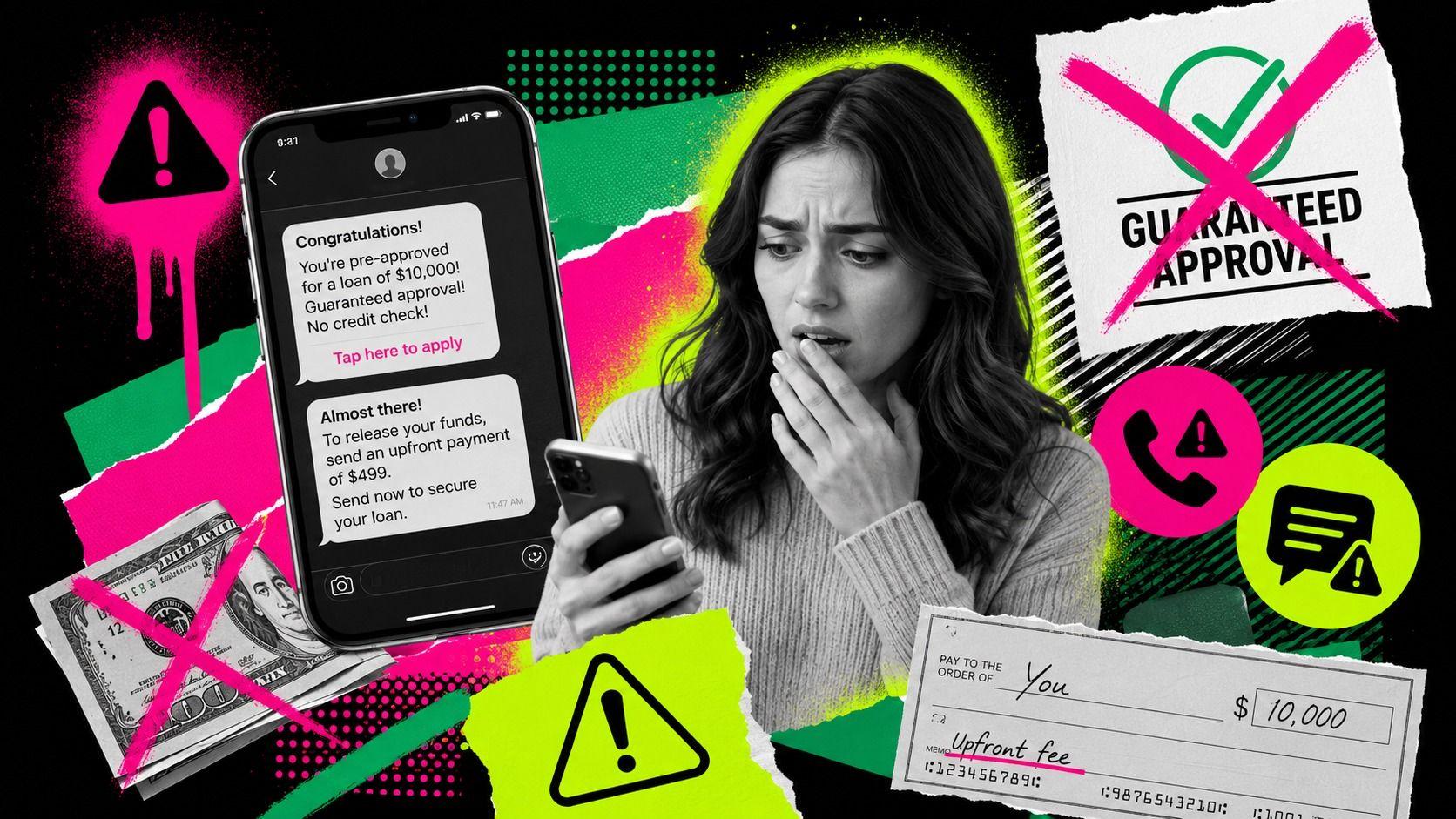
Avoid These Scams: Advance‑fee Loans, "Guaranteed approval", Fake calls/texts
Learn how bad credit loan scams work and how to identify advance-fee fraud, fake guarantees, and impersonation tactics.