


Avoid These Scams: Advance‑fee Loans, "Guaranteed approval", Fake calls/texts
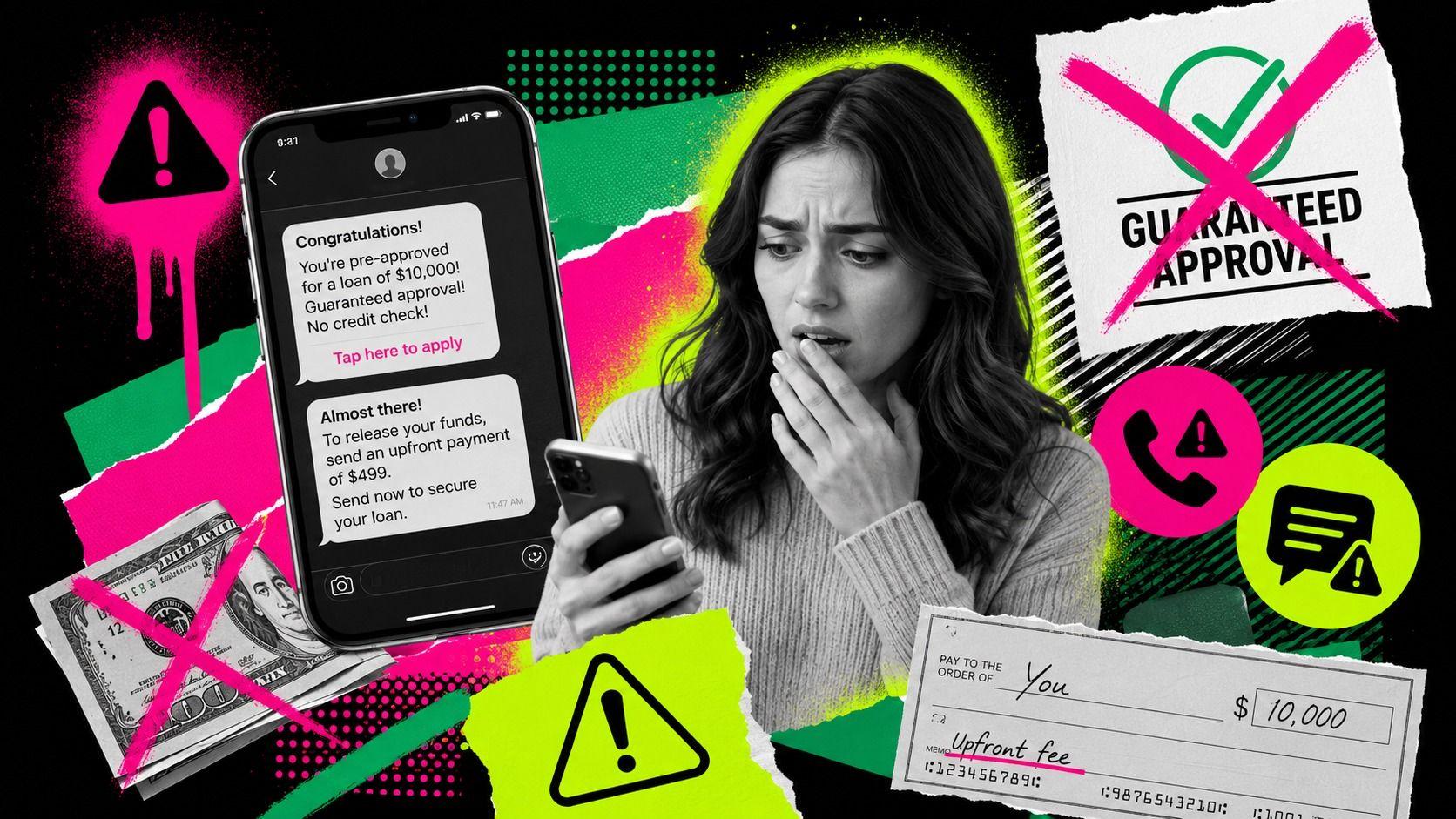
Search phrases like get a loan now bad credit or get a bad credit loan today capture a moment of pressure. Money is needed fast, options feel limited – that combination attracts a specific type of fraud.
Years of reviewing complaints, loan contracts, and lender behavior patterns show one consistent truth. Bad credit loan scams do not rely on sophisticated tricks. They rely on timing, emotion, and predictable gaps in verification. This guide breaks down how the most common schemes work, why they succeed, and how to filter them out before any money or data is lost.
Why bad credit borrowers become primary targets
Fraud follows vulnerability. Borrowers with strong credit profiles compare offers, negotiate terms, and take time to review contracts. Borrowers searching "get a bad credit loan" often operate under urgency.
That urgency compresses decision-making.
Approval speed becomes the priority, and verification steps feel optional. A promise of fast funding outweighs warning signals. Scammers design their approach around this behavior. They remove friction, simplify messaging, and present immediate solutions. Understanding that dynamic shifts control back to the borrower.
Advance-fee loans: the oldest scam still working
Advance-fee fraud remains one of the most common patterns in bad credit loan scams.
The structure looks simple. A lender approves a loan quickly, often within minutes. Before funds are released, a fee is required. It may be labeled as insurance, processing, or verification.
The amount varies, but the logic stays the same. Payment comes first. Funds never arrive. In some cases, additional fees appear after the first payment. Each payment is framed as the final step before disbursement. The cycle continues until the borrower stops paying.
A legitimate lender never requires an upfront payment before releasing funds. Fees are deducted from the loan or included in the repayment schedule.
"Guaranteed approval": the promise that signals risk
The phrase "guaranteed approval" appears frequently in offers targeting borrowers with poor credit. This claim contradicts how lending works.
Every lender evaluates risk. Income, existing debt, and repayment history influence approval decisions. No legitimate system bypasses this process. When an offer promises guaranteed approval, it signals one of two outcomes. Either the loan carries extremely high costs hidden in the terms, or the offer is fraudulent.
A borrower searching "get a bad credit loan today" may see this phrase as reassurance. It functions as a filter that separates vulnerable users from those who are cautious.
Fake calls and texts: impersonation tactics
Another growing category involves unsolicited communication.
A borrower receives a call or text claiming pre-approval for a legit bad credit loan. The message often includes an element of urgency, such as a limited-time approval or immediate funding. The goal is to move the conversation off secure platforms into direct communication channels. Once contact is established, the scammer requests personal information or payment.
Impersonation adds another layer. Fraudsters use names of real lenders, clone websites, and spoof phone numbers. A simple rule reduces exposure. Any unsolicited loan offer requires independent verification before engagement.
Expert insight
The moment a lender reaches out without a prior application, verification becomes mandatory. A legitimate offer withstands scrutiny. A fraudulent one collapses under simple checks.
How scammers build credibility quickly
Fraud does not rely on random messaging. It follows a structured script.
Professional-looking websites create a sense of legitimacy. Logos, testimonials, and detailed descriptions mimic real lenders. Customer service responses appear fast and consistent. This reduces suspicion during early interaction. Documents may be provided, including contracts or approval letters. These often contain generic language and lack verifiable details.
The goal is to create momentum. Each step builds confidence until the borrower commits financially or shares sensitive data. Breaking that momentum requires deliberate pauses and verification.
Red flags that appear before financial loss
Certain signals appear consistently across fraudulent offers.
Requests for payment before loan disbursement indicate high risk.
Unsolicited contact offering pre-approved loans raises immediate concern.
Inconsistent information between the website, email, and phone communication suggests impersonation.
Pressure to act quickly limits time for verification and increases error probability.
A borrower searching get a loan now bad credit encounters these signals frequently. Recognizing them early prevents escalation.
What defines a legitimate bad credit loan
A legit bad credit loan follows a predictable structure.
The lender conducts a verification process that includes income review and identity checks. Approval is not automatic.
All costs appear clearly before signing. Interest rates, fees, and repayment schedules are documented in detail.
No upfront payment is required. Fees are integrated into the loan structure.
The lender maintains a verifiable presence. Registration, address, and contact information can be confirmed independently.
These elements do not guarantee favorable terms, but they confirm legitimacy.
How urgency changes decision quality
The phrase get a bad credit loan today reflects a real need. It also creates cognitive pressure.
Under urgency, the brain prioritizes immediate relief over long-term consequences. This leads to predictable behaviors. The first offer feels sufficient. Details receive less attention. Red flags are rationalized or ignored.
Scammers design their approach to match this state. Fast approval, simple steps, and minimal requirements create a frictionless path to loss. Slowing down interrupts that process. Even a short pause allows for verification and comparison.
A verification process that filters most scams
A practical verification routine removes the majority of fraudulent offers.
Check the lender's registration through official databases. Confirm that the company exists and operates legally. Search for independent reviews and complaints. Patterns of unresolved issues signal risk.
Verify contact details. A legitimate lender maintains consistent phone numbers, email domains, and physical addresses. Review the contract carefully. Missing details or vague language indicate potential problems.
This process takes less than 15 minutes and eliminates most high-risk interactions.
When a loan offer deserves rejection
Certain conditions justify immediate rejection without further analysis.
Any request for upfront payment disqualifies the offer.
Any guarantee of approval contradicts lending logic.
Any pressure to act immediately without time for review increases risk.
Any inconsistency in company identity or communication signals potential fraud.
Rejecting early prevents deeper engagement and protects both finances and personal data.
The role of personal data in loan scams
Financial loss is not the only risk. Many bad credit loan scams focus on data collection. Personal information such as social security numbers, bank details, and identification documents holds long-term value. Fraudsters use this data for identity theft, unauthorized transactions, or resale. Protecting data requires the same discipline as protecting money. Information should be shared only after verifying the lender's legitimacy.
Building a safer borrowing approach
A structured approach reduces exposure to scams and shifts borrowing from reactive behavior to controlled decision-making.
Define the exact need before searching for a loan. This prevents over-borrowing and reduces urgency.
Limit applications to verified lenders. Avoid unknown platforms with no established presence.
Maintain control of communication channels. Initiate contact through official websites rather than responding to unsolicited offers.
Review every detail before signing. Contracts define obligations that extend beyond initial approval.
Conclusion: control replaces urgency
Searches like get a bad credit loan reflect a real financial need. That need does not justify accepting risk blindly.
Bad credit loan scams succeed because they exploit urgency and reduce verification. Recognizing their patterns removes that advantage.
A legit bad credit loan may not offer the lowest cost or fastest approval. It provides transparency, structure, and predictability.
The difference between fraud and legitimate lending often comes down to a few minutes of verification. That small investment protects both immediate funds and long-term financial stability.
Frequently Asked Questions
What is the most common bad credit loan scam?
Advance-fee schemes where payment is requested before loan disbursement.
Are guaranteed approval loans real?
No. Legitimate lenders evaluate risk and cannot guarantee approval without assessment.
How to verify a legit bad credit loan?
Check lender registration, confirm contact details, and review full loan terms before sharing information.
Is it safe to respond to loan offers by text or phone?
Unsolicited offers carry a higher risk. Verification should always happen before any engagement.

Denis Goncharenko
Head of Content
Editorial Policy: no secondary statistics. Every claim is linked to an official source and dated — datasets and methods are open for review.

Was this article helpful?
Same blogs
"Easiest Loan to Get With Bad Credit" Decoded: What That Phrase Usually Really Means
Easy approval rarely signals low risk for borrowers—it signals low risk for lenders through higher costs and stricter terms.
APR vs. Interest Rate: Why APR Matters More When Comparing Loans
Discover why APR reveals the true cost of borrowing better than interest rates alone, especially for bad credit loans.

Bad Credit Loans by Goal – Know These Red Flags, and Legit Checks
Learn how to match bad credit loans to your specific goal and avoid scams with expert verification strategies.