
Verifiable Income
Steady, verifiable income, including wages or benefits, helps a lender review whether the payment can fit your budget. It matters even more when your credit file has some rough edges.

Whether it's Las Vegas, Henderson, or Reno, a Nevada bill that can't wait puts real pressure on a tight week. Bromoney places available personal and installment loan options with scheduled payments side by side for you to review, laid out clearly enough to compare before you commit to anything. The decision belongs to the lender, and no outcome is promised.
No impact to your credit score to check.
Get StartedSecure 256-bit Connection
Your car needs work before Monday, or a medical bill lands out of nowhere. An emergency loan is a personal, installment, or short-term loan used for an unexpected, time-sensitive expense, such as a car repair, medical bill, or urgent home fix. It follows the rules of that loan type, and funding timing depends on the lender and your bank. People also call it an urgent-expense or unexpected-expense loan.
Nevada is home to two Air Force installations, Nellis AFB and Creech AFB. The federal Military Lending Act's 36% MAPR cap on covered credit applies to any servicemember or dependent who qualifies as a covered borrower, whichever lender they end up comparing through Bromoney. Bromoney doesn't lend money itself, and it plays no part in which option a borrower ultimately sees.
Bromoney's state comparison places Nevada's average credit score at 699, 41st of 50 states tracked — a statewide number, not a description of any one file. Nevada law sets no minimum score for a consumer loan, and each request still gets its own review from the lender.
Whatever shows up on the monthly-payment line isn't the whole Nevada picture — total cost climbs with the length of the term even when that monthly number looks fine on its own. License category, loan type, and the amount financed together set the real price, so lining up the APR, finance charge, and total of payments matters just as much as what's due each month.
The Nevada Financial Institutions Division issues licenses to covered nonbank lenders operating in the state and takes borrower complaints as well. Looking up a license takes only a few minutes, and it's worth doing before signing — a request for payment before funds arrive, paired with an already-promised result, is a combination worth treating with suspicion.
The request may take a few minutes. Here's what most Nevada lenders require before they can review your information and decide whether to offer credit.
Steady, verifiable income, including wages or benefits, helps a lender review whether the payment can fit your budget. It matters even more when your credit file has some rough edges.
You'll generally need to be at least 18 and a U.S. resident before a lender can review your loan request.
An active bank account is usually where funds are deposited and payments are drawn. Your bank can also affect how soon money lands after a lender makes a funding decision.
Nevada doesn't set aside "emergency loan" as a distinct legal category — what actually governs a loan comes down to the specific product (personal, installment, or another consumer-credit type), the lender's license category, and how much is borrowed. The Nevada Financial Institutions Division handles licensing and complaint-handling for the state's lenders. Federal law layers on top regardless of what Nevada requires: TILA calls for disclosure of the APR, finance charge, scheduled payment, and total of payments before anything is signed, and the MLA caps covered military borrowers at 36% MAPR.
Regulator
Nevada Financial Institutions Division
This state agency licenses consumer lenders operating in Nevada, and it accepts borrower complaints and license checks.
License required
Yes
Covered nonbank lenders operating in Nevada generally need a state license, while banks and credit unions follow different regulatory frameworks.
Loan types available
Personal, installment, or another consumer-credit product
An emergency loan isn't a separate statutory category — the product used sets the structure and which rules govern it.
Repayment structure
Scheduled payments, or a single payment, depending on the product
Installment and personal loans divide the balance into scheduled payments; a single-payment product concentrates the cost differently.
APR / rate cap
Set by loan type, license category and amount
Nevada does not use one statewide cap for every consumer loan type. Compare the APR and the total of payments for the specific option offered.
Fees
Depend on the loan agreement
Origination and late fees vary by product and lender. Review the finance charge and total of payments in the written terms.
Cost disclosure (TILA)
Required before you agree
Under the federal Truth in Lending Act, the lender discloses the APR, finance charge and total of payments before you become obligated.
Military protection
36% MAPR (federal MLA)
Covered military borrowers and their dependents keep the federal Military Lending Act's 36% MAPR limit on covered credit.
This information is educational and is not legal or financial advice. Which rules govern a specific loan depends on the loan type, the lender's license category and the loan amount under Nevada law, so your actual agreement may differ from the general figures shown above. Nevada consumer lending rules can change; for current requirements, contact the Nevada Financial Institutions Division at fid.nv.gov. Reviewed as of August 10, 2026.
A missed payment on its own doesn't put a Nevada paycheck at risk — a lender needs a lawsuit and a court judgment before wages come into play at all. After a judgment, Nevada generally protects 82% of disposable weekly earnings when the worker's gross weekly wage is $770 or less, meaning no more than 18% of disposable earnings may be garnished. When the gross weekly wage exceeds $770, 75% of disposable earnings is generally protected, limiting garnishment to 25%. If 50 times the federal minimum hourly wage produces a larger exemption, that larger protected amount controls. Before any of that, what typically shows up is phone calls and collection letters, not anything touching a paycheck. A missed payment on a Las Vegas or Henderson bill is a conversation worth having with the lender early, not a reason to assume the worst.
Per the Federal Reserve's 2024 SHED survey, 63% of U.S. adults reported they'd handle a $400 emergency with cash, savings, or a card cleared by the next statement — a national figure that says nothing specific about Nevada. What's actually being measured is the payment method people said they'd reach for, not a gauge of anyone's real financial footing. Checking into a payment plan or local assistance before borrowing sometimes shrinks the amount actually needed.
Census figures put Nevada's median household income at roughly $81,134 (ACS 2024, 1-year) — a statewide middle point, not a description of any specific household's finances. Average consumer debt in Nevada, tracked separately in Bromoney's state comparison, runs around $119,361; neither figure says anything about what a given borrower actually owes or earns. The gap an emergency loan is meant to close is the specific shortfall in front of you, not a broader financial picture.
As of September 2025, Experian pegs Nevada's average credit score at 699, which Bromoney's state-by-state comparison ranks 41st of 50. It's a single statewide figure — individual credit files vary considerably from person to person, and a lender still weighs each request on its own before deciding what to offer.
Before signing anything, it's worth pulling up a lender's license through the Nevada Financial Institutions Division — the division runs a public registry built for exactly this kind of check. Watch especially for one pairing: money requested ahead of any funds showing up, combined with a result that's already been promised. That combination is the cue to stop and look into the company first. Servicemembers and eligible dependents tied to Nellis AFB or Creech AFB hold onto the federal 36% MAPR cap on covered credit regardless. A complaint can go straight to the division if a lender doesn't hold up.
Nevada Financial Institutions DivisionYou fill out one form, then review the options available to you in your account with APR, scheduled payment and payoff date laid out side by side. Bromoney isn't a lender, doesn't make credit decisions, and doesn't push you toward a specific option. You can compare scheduled-payment loans instead of focusing only on a lump-sum product, and walk away if none of it works. It's free to start, with no obligation and no fees to you. We do our best to prevent unwanted calls. The lender decides, and no outcome is promised. Bromoney is operated by Money Broker LLC (DE File No. 10406065).

Estimate exactly how much you'll owe before you commit. Enter your loan amount and repayment term to see total costs, including fees and interest, laid out clearly.
Calculate my loanIf the bill is smaller and the next paycheck is close, a payday loan may be one route to review. Funding may arrive as soon as the next business day with some lenders, but the repayment window is tight and the cost can run higher than other options.
A bigger repair or medical balance can be easier to plan around when payments are spread over a set term. Installment loans give you scheduled payments and a clearer payoff path, so you can compare the payment against your regular income before you choose.
Before you take on a higher-cost loan, check whether a credit-union PAL, biller hardship plan, or local assistance program can cover the gap for less. If one of those works, you may keep more room in next month's budget.
Emergency loans online can look different depending on where you live. State laws may affect how much you can borrow, what terms are available, APR caps, funding rules, and how you repay. Check your state page before you choose, especially if the expense can't wait.
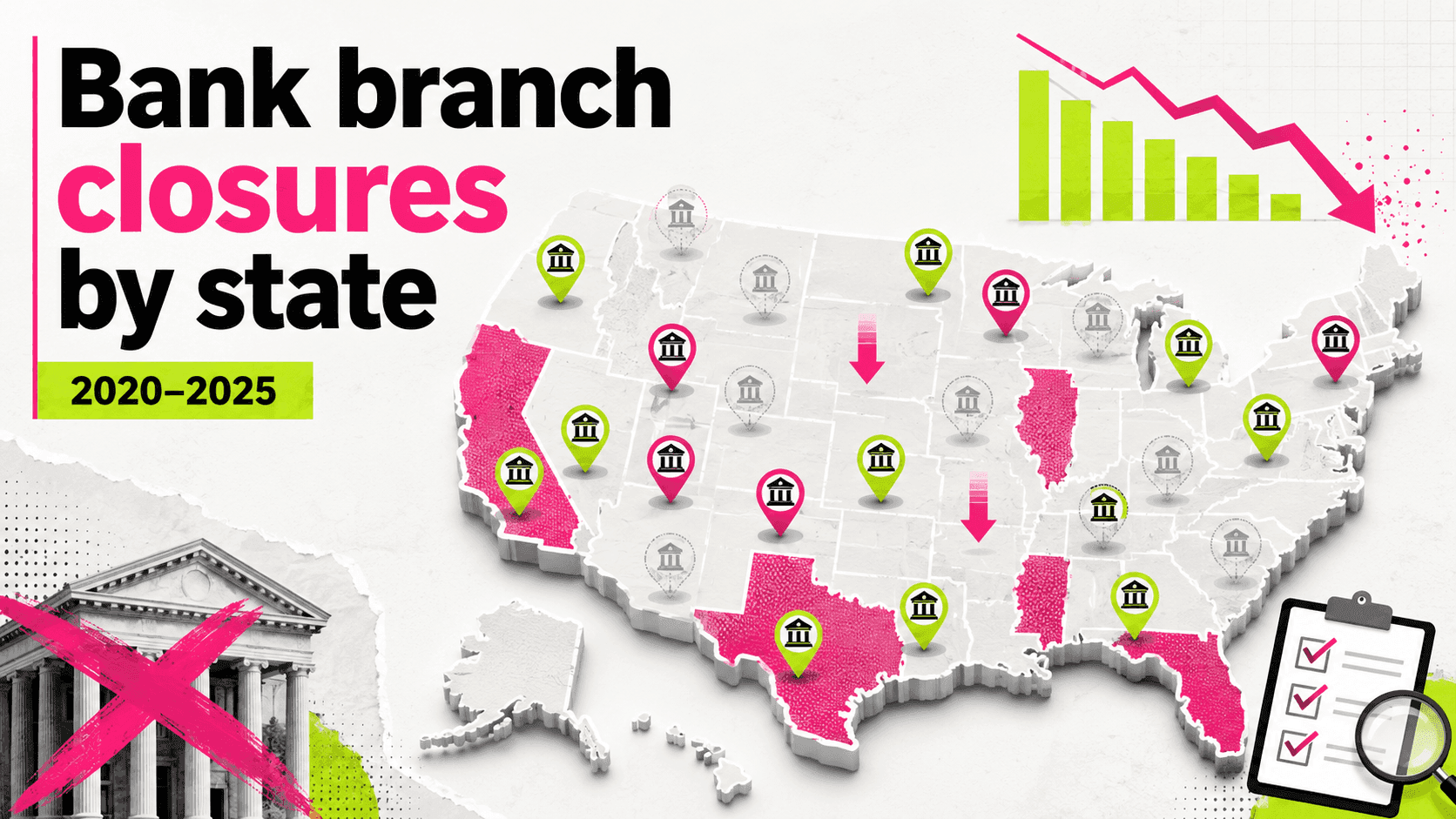
FDIC office records fell 10.4% between June 2020 and June 2025, and every state and Washington, DC, ended lower. See the state ranking, what a statewide count cannot show, the federal notice rules, and a six-step checklist for customers whose branch is closing.

We bridge the gap between your financial goals and premier lending services nationwide.
Bromoney is a free loan marketplace operated by Money Broker LLC (DE File No. 10406065). Bromoney is not a lender and does not make credit decisions. A hard inquiry is possible, and more than one lender may run one, and it can affect your credit score. The decision belongs to the lender, and no outcome is promised. Before you agree to any loan, the lender discloses the loan amount, APR, finance charge, scheduled payment and repayment term, as required by the federal Truth in Lending Act. Submitting a request shares your details with participating providers, who may contact you by phone, text or email. Consumer lending in Nevada is regulated by the Nevada Financial Institutions Division. Covered military borrowers are protected by the Military Lending Act's 36% MAPR limit on covered credit. Bromoney is not available in all states. We do our best to prevent unwanted calls, and you may be contacted about your request by lenders and partners in our marketplace.
Join millions of Americans who trust our platform to compare rates, find the best loans, and rebuild their credit — all in one place

Submitted over a secure connection